


More news on this day
Summer air travel across Europe has been thrown off course as a fresh wave of delays and cancellations ripples through major hubs in Italy, France, Scotland, Greece and Sweden, with data indicating at least 51 flights cancelled and more than 1,600 delayed in a single day, disrupting operations for Air France, ITA Airways, Virgin Atlantic and other carriers from Rome to Edinburgh and Stockholm.
Get the latest news straight to your inbox!
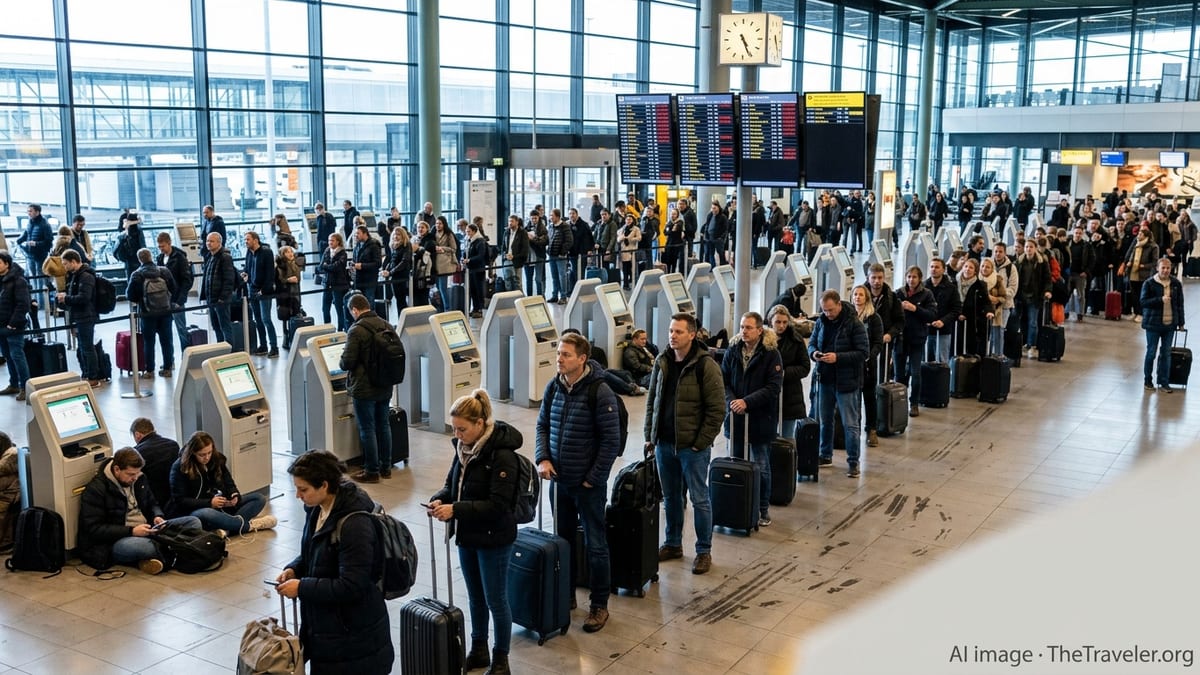
Network Strains Converge At Peak Summer Travel
The latest disruption comes at a time when European air traffic is already running at or above last year’s levels, with Eurocontrol reporting more than 35,000 flights a day across the network in recent weeks. While overall punctuality has slightly improved compared with previous summers, the system remains highly sensitive to local bottlenecks, weather and staffing gaps.
Recent Eurocontrol briefings describe a network in which a relatively small number of “hot spot” states are responsible for a disproportionate share of air traffic flow management delays. France and Greece are repeatedly highlighted for en route congestion linked to air traffic control capacity and staffing, while northern Europe has faced periodic weather and flow constraints. Against this backdrop, even modest local issues can cascade into widespread disruption for passengers.
On the day of the latest disturbance, aggregated tracker data pointed to at least 51 cancellations and roughly 1,600 delays across Europe, affecting not only point to point services but also long haul connections. The disruption cut across full service and low cost carriers alike, with Air France, ITA Airways, Virgin Atlantic, KLM, British Airways and several Scandinavian operators among those registering significant schedule changes.
For travelers, the practical impact was felt as rolling queues at check in and security, late inbound aircraft, missed connections and aircraft going out of rotation. Publicly available airport dashboards and flight tracking tools showed peak congestion around the afternoon and early evening bank of departures, when delays of 30 minutes or more became common on some busy routes.
Rome, Edinburgh And Stockholm Among Hardest Hit Hubs
In Italy, Rome Fiumicino once again found itself at the center of the disruption. Passenger rights organization reporting for early July notes that the Italian network has already seen days with more than 200 cancellations and over 700 delays, with Rome and Milan bearing much of the strain. On the latest day of disruption, Fiumicino recorded dozens of late departures, including services operated by Air France, ITA Airways and other European partners that feed long haul networks.
Edinburgh, a key Scottish gateway for both intra European flights and transatlantic connections, also reported elevated levels of delay. Earlier operational summaries for late June already flagged Edinburgh as one of several European airports dealing with heavy backlogs, alongside London Heathrow, Amsterdam and Frankfurt. The new wave of delays added pressure during peak holiday season, with late arriving aircraft from mainland Europe knocking on to departures bound for hubs such as Amsterdam, Paris and London.
In Scandinavia, Stockholm Arlanda and other Swedish airports recorded a mix of weather related and flow management delays. Independent disruption trackers showed Swedish carriers and European airlines serving the country facing longer ground times and extended taxi out periods, particularly during the afternoon. These operational ripples affected services to and from major hubs, including Paris, Rome and Athens, further complicating recovery efforts for airlines already operating dense summer schedules.
Greece, which Eurocontrol has repeatedly identified as a delay hot spot due to strong demand and airspace capacity constraints, contributed its own share of late departures. Services into popular islands and major airports such as Athens experienced knock on delays, creating an additional layer of complexity for network planners trying to keep aircraft and crews in position.
Air France, ITA And Virgin Atlantic Manage Rolling Disruptions
The disruption was particularly visible across the networks of large European carriers. Air France, which has been operating an expanded summer schedule from Paris Charles de Gaulle to major European cities, saw a number of its regional flights arrive late into onward connection points such as Rome and Stockholm. Historical on time performance data for routes like Rome to Paris already indicate a susceptibility to moderate delays, and the latest network wide issues appear to have compounded this trend for at least one operating day.
Italy’s flag carrier ITA Airways was likewise affected by the combination of local congestion and wider European knock on effects. Consumer advocacy platforms tracking operations in early July report ITA flights among those most delayed at Rome Fiumicino on previous high disruption days, with a significant share of departures running behind schedule. The latest event followed a familiar pattern, with short haul services to northern Europe and domestic links both impacted as aircraft arrived late from earlier rotations.
Virgin Atlantic, which relies on European partners and codeshares to feed its long haul departures from London, experienced indirect effects as well. Industry bulletins show the airline issuing regular operational updates this summer, reminding passengers to ensure their contact details are provided so they can be notified quickly in the event of delays, cancellations or schedule changes. When partner flights from cities such as Edinburgh, Rome or Stockholm arrive late into London, onward connections to North American destinations can be affected, even if Virgin’s own flights remain technically operational.
For travelers on multi segment itineraries, this kind of disruption can be particularly challenging. A delayed feeder flight from Italy or Scandinavia may still operate, but arrive too late for a long haul departure, forcing passengers to overnight or accept rerouting and missed holiday time. Public discussion on consumer forums in recent weeks reflects growing frustration with such scenarios, especially when communication at the airport is limited or last minute.
Why Europe Keeps Seeing Large Scale Delays
The persistence of widespread delays across Europe in summer 2026 is tied to a mix of structural and seasonal factors. Eurocontrol’s recent overviews attribute a large share of en route delay minutes to air traffic control capacity and staffing limitations, particularly in France and Spain, with Greece and parts of Italy also contributing. Transition to new air traffic management systems, such as France’s 4 FLIGHT platform, has added short term complexity to an already busy environment.
Weather remains another major driver, especially convective storms that develop rapidly during hot afternoons. When thunderstorms form over busy corridors or around major hubs, sectors can be closed or flows reduced, forcing aircraft into holding patterns or requiring reroutes that lengthen flight times. Northern states such as Sweden and Scotland also face bouts of low cloud, wind and rain that can reduce runway capacity and increase spacing between arrivals and departures.
At the same time, demand for summer travel remains strong. Eurocontrol data show traffic slightly above 2025 levels, even after a brief slowdown earlier in the year. Airlines have scheduled dense peak season timetables to capitalize on this demand, leaving limited slack in the system. When one part of the network hits a constraint, the impact is quickly felt elsewhere as aircraft and crews are displaced.
Industry analysis suggests that without substantial increases in air traffic control staffing and infrastructure upgrades, Europe is likely to face similar patterns of disruption through the remainder of the summer. While individual days may see better or worse performance, the underlying pressures of high demand, complex airspace and weather sensitivity remain largely unchanged.
What Travelers Can Expect And How To Prepare
For travelers with upcoming trips involving Rome, Edinburgh, Stockholm or other major European hubs, the latest disruption is a reminder to build flexibility into itineraries. Publicly available data from recent weeks show that even on calmer days, a notable proportion of flights depart late, especially in the afternoon peak. Choosing earlier departures, allowing longer connection windows and avoiding tight self booked transfers can reduce the risk of missed flights.
Consumer organizations continue to highlight the importance of knowing air passenger rights under European regulations. Under EU and UK rules that mirror Regulation 261, travelers departing from or flying into Europe with eligible carriers may be entitled to care, rerouting and, in some cases, financial compensation when flights are significantly delayed or cancelled for reasons within the airline’s control. Weather and air traffic control restrictions are generally treated differently from purely operational or technical issues, but in many cases passengers are still owed meals, refreshments and accommodation.
Airlines such as Virgin Atlantic are also emphasizing the value of keeping contact details up to date in bookings, so carriers can send real time updates about schedule changes. In recent cases, passengers who received early notifications of delays or cancellations were able to rebook or reroute before arriving at the airport, avoiding the longest queues at service desks.
With the busy summer period still underway, operational reports suggest that days with more than a thousand delays across Europe are likely to remain common. Travelers heading through Italy, France, Scotland, Greece, Sweden and other key markets should monitor flight status closely, be prepared for last minute changes and factor a higher than usual risk of disruption into their plans.