


More news on this day
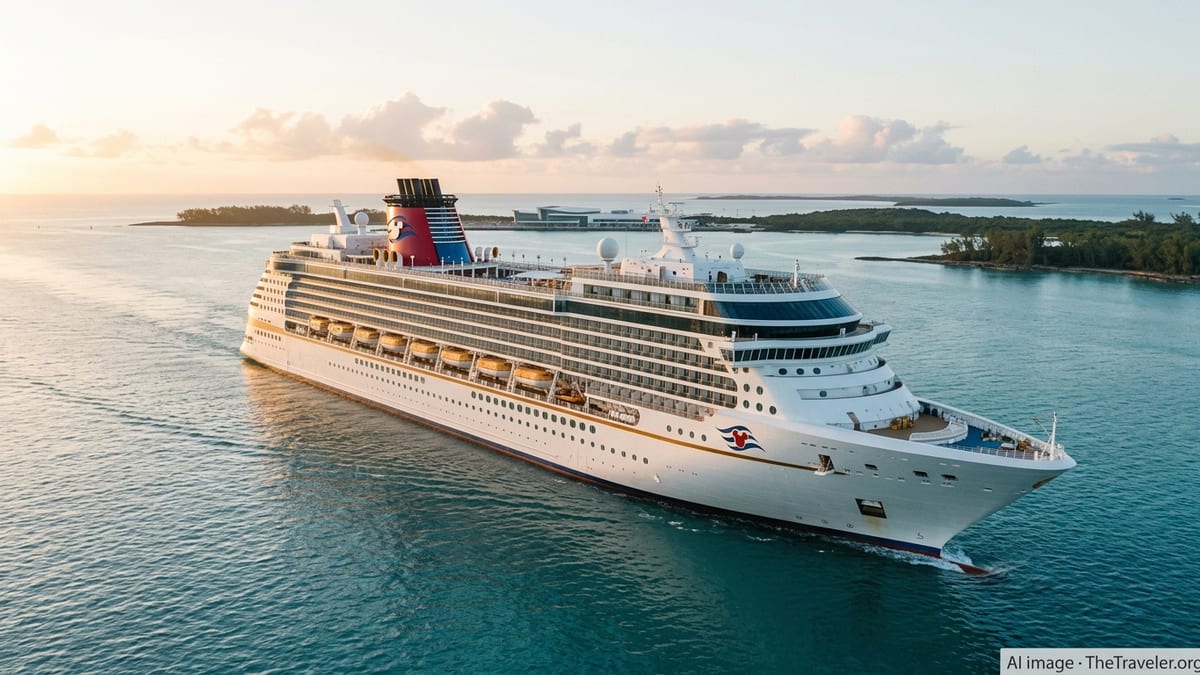
Disney Cruise Line’s decision to significantly expand calls at St. Maarten over the next several years is emerging as one of the clearest signals yet that the company is positioning the northeastern Caribbean as a key stage for its fast‑growing fleet.
Get the latest news straight to your inbox!
A Bigger Role for St. Maarten in Disney’s Caribbean Network
Recent government communications from St. Maarten outline a marked increase in Disney Cruise Line visits, beginning with a series of calls in 2026 and building to a larger program in 2027 and 2028. Local port information indicates that the Disney Destiny’s inaugural call to Philipsburg on July 1 helped mark the start of this expanded relationship, with at least three Disney calls scheduled for 2026 and roughly 14 already projected for 2027.
Port St. Maarten has long served as a marquee stop for major lines, but Disney’s stepped-up presence suggests the island is being integrated more tightly into the brand’s standard Caribbean rotations. With Disney Treasure itineraries already listing St. Maarten for the 2026 season and additional deployments expected as more ships enter service, the island is poised to see a steady stream of family-focused visitors.
For St. Maarten, which has averaged around 1.5 million cruise passengers annually in the past decade, the arrival of additional premium brands supports a wider strategy to protect its status as a leading Caribbean home for large ships. For Disney, partnering with a port that can comfortably accommodate new vessel classes provides welcome flexibility as its fleet count climbs into double digits.
Port Infrastructure Ready for New-Generation Ships
St. Maarten’s ability to attract more Disney calls is closely tied to a multiyear investment program that reshaped the Dr. A.C. Wathey Cruise & Cargo Facilities into a large-ship hub. Port data shows that the newer Pier 2 can simultaneously handle two vessels over 220,000 gross tons each, with combined capacity well beyond 12,000 passengers and crew on a single day. That puts St. Maarten in the small group of Caribbean ports designed specifically with the world’s biggest cruise ships in mind.
Although Disney’s current and future ships are smaller than the very largest vessels visiting the Caribbean, this scale of infrastructure matters. The line is moving toward larger averages, with the Disney Wish and Disney Treasure already representing a bigger generation of ships for the brand and the Disney Adventure set to become its largest ship when it debuts in Asia. Port facilities that can handle the heaviest traffic days comfortably are well positioned to win long-term commitments from cruise operators that are planning for fleet growth.
Publicly available information from Port St. Maarten also highlights the importance of multi-ship days and high-season peaks, with five-ship calls already a feature of the island’s winter calendar. As Disney increases its calls, it will be joining an already dense lineup, relying on the port’s ability to process thousands of guests efficiently while still delivering the smaller-scale experiences that family cruisers expect ashore.
Fleet Expansion Drives Demand for More Berths
Disney Cruise Line is in the midst of what the company itself has described in public filings and presentations as “unprecedented expansion.” The current five-ship operation is being joined by additional vessels, including Disney Treasure and Disney Destiny, along with the Singapore-based Disney Adventure, which will broaden the brand’s reach in Asia.
Corporate announcements and shipyard releases indicate that four more ships have been ordered from Germany’s Meyer Werft for delivery between 2027 and 2031, bringing Disney’s fleet to 13 ships by the early 2030s. A recent fact sheet from Disney Experiences confirms that this pipeline comes on top of the Wish-class newbuilds already entering service, signaling a strategy to increase both global reach and overall passenger capacity.
As that pipeline unfolds, Disney must secure a network of ports able to absorb the extra sailings. The Caribbean remains central to the brand’s deployment, with Port Canaveral and other Florida gateways serving as primary homeports. Secondary ports such as St. Maarten that can accept frequent calls, provide sufficient pier length and offer a compelling destination experience become critical nodes in this expanded web of itineraries.
Industry analysts following the cruise sector have pointed to similar moves by other major brands, which have locked in long-term agreements with key ports to align with their own newbuild schedules. Disney’s increasing presence in St. Maarten fits that pattern, functioning as an early indicator of how and where its future ships will be deployed.
Caribbean Itineraries Evolve Around New Capacity
Disney’s published itineraries for late 2025 and 2026 already show how the Caribbean map is shifting as new hardware arrives. The Disney Treasure is scheduled to operate from Port Canaveral with a mix of Eastern and Western Caribbean sailings, several of which include Philipsburg alongside popular ports such as San Juan and the brand’s Bahamian island destinations.
Travel trade coverage notes that as additional ships join the fleet, Disney is using a blend of classic stops and new ports to diversify its offerings while maintaining a strong presence in family-favorite islands. St. Maarten’s mix of Dutch and French cultural influences, beaches and shopping has long made it a staple of Eastern Caribbean routes, which are often marketed to first-time cruisers.
By aligning an expanded schedule at St. Maarten with the ramp-up of ships like Disney Destiny, the line is effectively anchoring more of its Eastern Caribbean itineraries around ports that can deliver both operational reliability and high guest satisfaction scores. That allows Disney to vary other calls in the region without sacrificing overall itinerary appeal.
Economic and Competitive Implications for the Region
The projected rise in Disney calls has clear economic implications for St. Maarten and its tourism sector. Each additional ship day brings new potential customers for tour operators, retailers and hospitality businesses spread between the Dutch and French sides of the island. Local authorities have framed the strengthening of relationships with premium cruise brands as a way to stabilize visitor numbers and drive higher per-guest spending.
At the same time, Disney’s commitment underscores the competitive dynamics playing out among Caribbean ports. With the global cruise industry introducing ever-larger ships and additional vessels across multiple brands, destinations are investing heavily in berthing capacity and guest facilities to secure their place on future itineraries. St. Maarten’s advanced piers and track record of handling heavy traffic offer a tangible advantage in these negotiations.
For travelers tracking the evolution of Disney Cruise Line, St. Maarten’s upgraded role is a useful bellwether. As concrete schedules for upcoming ships continue to be released, observers can expect the island to feature prominently, reinforcing the idea that more Disney tonnage is headed for the Caribbean in the years just ahead.