


More news on this day
Service on the Sonoma-Marin Area Rail Transit (SMART) system was disrupted Wednesday after a train collided with a bicycle along the North Bay commuter rail corridor, prompting delays and a safety inspection but resulting in no major injuries, according to early reports.
Get the latest news straight to your inbox!
Midday collision prompts operational delays
Initial reports indicate the incident occurred midday Wednesday as a southbound SMART train encountered a bicycle on or near the tracks. Service through the area was temporarily halted while crews assessed the scene, checked for damage to the train and track infrastructure, and confirmed the condition of the rider.
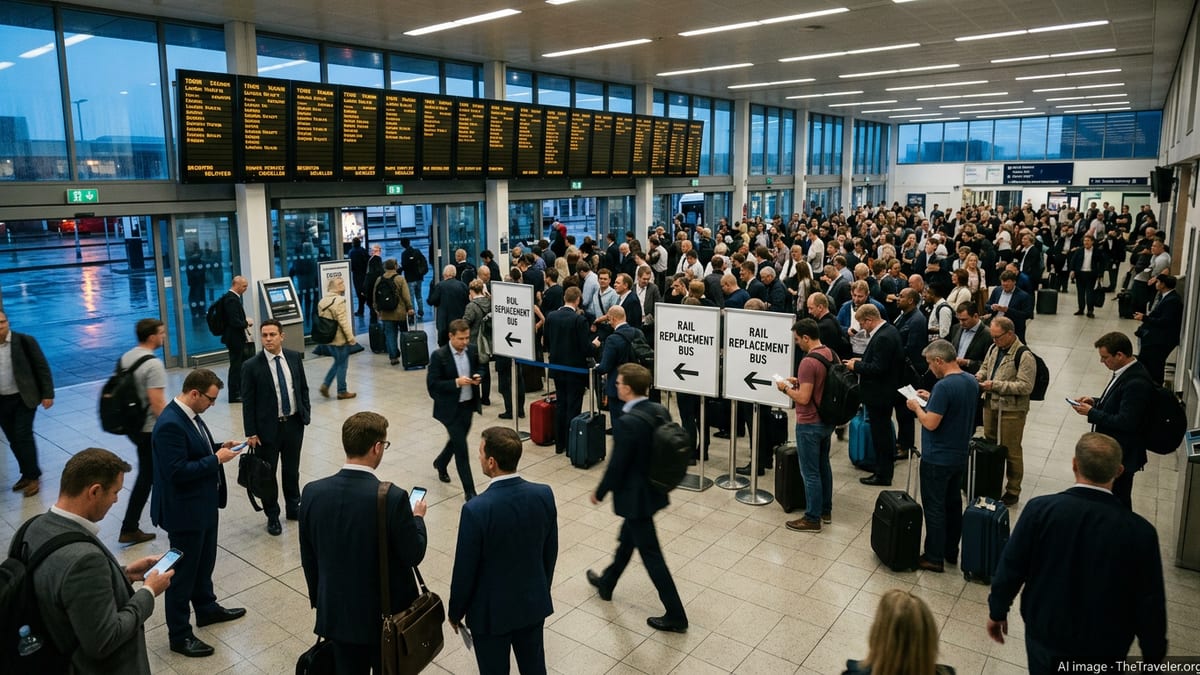
SMART trains behind the affected service experienced delays, and riders reported slower-than-usual travel times through the afternoon period. Some passengers described trains holding at stations while dispatchers evaluated when it was safe to resume normal speeds along the affected stretch of track.
Publicly available information shows that the train was able to continue after on-site inspections, although service remained slower than scheduled for a period as standard post-incident checks were completed. No derailment occurred, and there were no immediate indications of significant damage to rail equipment.
According to published coverage, investigators are reviewing train speed data, horn use and visibility conditions at the time of the collision as part of routine follow-up whenever a train strikes an object or person near the right-of-way.
No major injuries but heightened concern
Reports indicate that no major injuries were sustained in the collision. Early details suggest the bicycle rider either avoided direct impact with the train or experienced only minor injuries, though the full medical status had not been formally detailed in initial accounts.
Even in cases without serious injuries, rail safety specialists note that any collision between a train and a person or bicycle can have lasting consequences for those involved. In similar incidents around the country, riders have sometimes reported lingering physical or emotional effects even when initial examinations suggested only minor harm.
The absence of major injuries has been described in coverage as fortunate, given the difference in mass and speed between a passenger rail vehicle and a bicycle. The outcome has nonetheless added to ongoing public conversations in the North Bay about how to better separate bike routes from the rail line and encourage safe behavior near crossings.
Community discussions on social channels and in local forums quickly linked Wednesday’s collision to broader debates over how to balance the popularity of cycling in Marin and Sonoma counties with the presence of an active regional rail service sharing portions of the same corridor.
Rail corridor shares space with popular bike routes
The SMART corridor parallels well-used bicycle paths and local streets that serve both commuters and recreational riders. In several communities, multiuse paths run close to the tracks, creating locations where people on bikes, pedestrians and trains operate in close proximity.
Planning documents for the system describe a long-term effort to provide more grade-separated crossings, clearer markings, and physical barriers where feasible. However, some segments still rely on standard gates, signage and user awareness to keep people away from the tracks when trains approach.
According to publicly available SMART safety materials, riders are urged to cross tracks only at designated crossings, avoid lingering within the rail right-of-way and stay alert to bells and warning signals. The Wednesday collision is expected to renew calls for reviewing whether additional fencing, improved sightlines or upgraded crossing technology could further reduce risk at specific locations.
Transportation advocates in the region have previously highlighted the popularity of bikes for accessing rail stations, arguing that any safety investments near crossings should be coordinated with improvements in bike access and secure parking, rather than limiting cycling activity near the corridor.
Ongoing review of rail and bike safety
Wednesday’s collision comes amid a broader focus on interactions between trains, bicycles and pedestrians across North America. Transportation safety agencies regularly publish findings emphasizing that low-speed or seemingly minor incidents can still be hazardous, particularly when visibility is reduced or when riders attempt to cross tracks after warning devices activate.
Recent crash summaries from various transit and transportation agencies show that even when trains are operating within speed limits and using horns and bells appropriately, conflicts can occur when cyclists underestimate train speed, attempt to beat crossing gates, or navigate around barriers. These patterns have led many rail operators to invest in education campaigns targeted specifically at bike riders and pedestrians.
In the North Bay, observers expect SMART’s latest annual safety reporting to incorporate data from Wednesday’s collision once the internal review is complete. Such reporting typically examines where incidents occur, the circumstances described in public records, and whether engineering or educational countermeasures could address identified risks.
Local governments along the line have also adopted “vision zero” or similar traffic safety frameworks that encompass rail crossings, seeking to eliminate severe injuries across all modes of travel. Wednesday’s event is likely to feature in those discussions as planners look for ways to keep growing rail ridership and bicycle use compatible along the shared corridor.
Passengers experience delays, call for communication clarity
Riders on affected trains reported modest but noticeable delays on Wednesday, particularly during the early phase of the response when operations paused to confirm there was no remaining hazard on the tracks. As service resumed, some trains continued at reduced speeds through the incident area as a precaution.
Published coverage and commuter accounts suggest that passengers received general announcements indicating a collision on the line and that staff were waiting for clearance to proceed. Some riders later expressed a desire for more specific, time-stamped updates so they could better anticipate missed connections with buses, carpools or appointments at their final destinations.
Transit service analysts note that real-time communication has become a key element of rider satisfaction, especially when safety-related incidents disrupt schedules. Systems across the country have increasingly relied on mobile alerts, platform displays and social feeds to provide more detailed information while investigations continue in the background.
For SMART, Wednesday’s bicycle collision is expected to inform ongoing refinements to both its safety practices and its passenger communications strategy, as the agency balances the need to protect privacy and avoid speculation with the growing expectation that riders receive timely, clear updates whenever service is disrupted.