


More news on this day
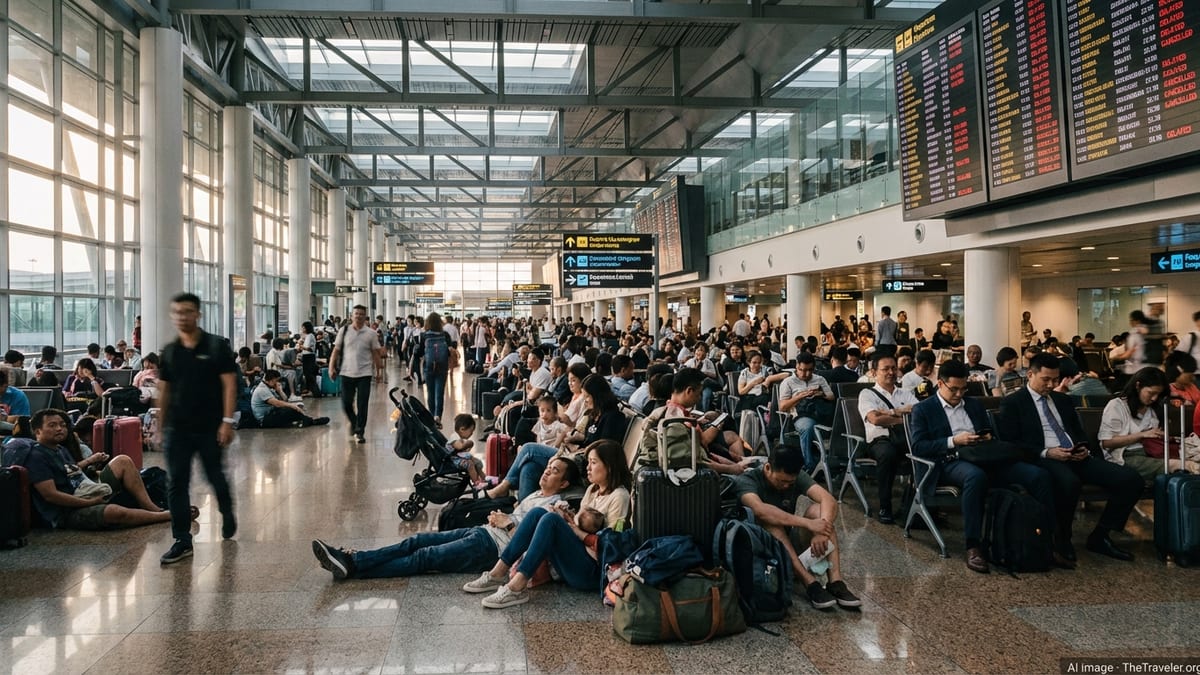
Super Typhoon Bavi is causing extensive disruption to air, sea and land transport across parts of East Asia and the western Pacific, stranding travelers and forcing major changes to holiday and business itineraries at the height of the region’s summer season.
Get the latest news straight to your inbox!
Powerful storm sweeps from Marianas toward the Philippine Sea
Tracking west across the Philippine Sea after striking the U.S. territory of Guam and the Northern Mariana Islands, Typhoon Bavi has transitioned from a Category 5 super typhoon near the Marianas to a still powerful system affecting maritime and aviation corridors across the region. Satellite imagery and meteorological assessments describe peak winds near 180 miles per hour as the cyclone neared the islands on the night of 5 July, bringing torrential rain, coastal flooding and extended periods of destructive gusts.
Public advisories from Guam’s emergency management agencies note that Bavi’s wind field expanded as it moved away from the Marianas, with typhoon-strength winds extending dozens of miles from the center and tropical storm conditions spreading hundreds of miles across open water. Even as the core pulled westward, these broader wind bands continued to affect shipping routes and air approaches around the island chain.
National and regional weather centers now describe Bavi as a weakening but wide-reaching typhoon over the Philippine Sea. Forecast tracks indicate a continued west-northwest motion toward the East China Sea, placing key aviation hubs and seaports in Taiwan and eastern China under threat of heavy rain, strong winds and temporary shutdowns over the coming days.
The storm’s long duration and large circulation mean that different destinations are experiencing multiple phases of impact, from advance preparation and early cancellations to recovery and backlog clearing once local weather conditions begin to improve.
Flights canceled and schedules thinned from Guam to Taiwan
Commercial aviation has been among the sectors most visibly affected. Joint information releases from Guam’s government during the height of the storm advised passengers to check directly with airlines rather than travel to the airport, as carriers adjusted schedules or halted operations while destructive winds swept across the Marianas. Social media posts and airline alerts indicate that some services were canceled outright, while others experienced extended delays as aircraft and crews repositioned.
As Bavi moves farther west, flight disruption has spread along its projected path. In Taiwan, local media coverage describes carriers offering flexible ticket changes and waivers for routes likely to be affected, including domestic and regional services. Some airlines have proactively thinned schedules, anticipating airport closures or reduced runway capacity during periods of strongest winds and heaviest rainfall.
Travelers using major hubs such as Taipei Taoyuan International Airport report schedule changes of several hours and, in some cases, forced overnight stays when connecting flights were canceled. Online travel forums show visitors cutting short trips to island destinations in Okinawa and the western Pacific to avoid becoming stranded, or re-routing through alternate hubs where capacity remains available.
Industry observers note that while airports in typhoon-prone regions are designed to withstand strong storms, the combination of safety protocols, aircraft repositioning, crew duty-time limits and air-traffic congestion can ripple through networks for several days after the worst weather has passed.
Ferries, cruise calls and coastal travel hit by rough seas
Sea travel has also been significantly affected along Bavi’s wide circulation. Maritime advisories from Philippine authorities confirm that ferry services on exposed routes, including northern and central parts of Catanduanes, have been suspended because of dangerous sea conditions linked to the storm’s outer bands. Similar precautions are being reported around the Marianas, where port operations faced high winds and large swells as the typhoon passed nearby.
In Taiwan, coverage by local outlets indicates that ferry links to offshore islands have been halted or reduced as port operators brace for deteriorating conditions. Passenger services that cater to domestic tourists and regional visitors have been among the first to pause, with operators citing passenger safety and navigational risks in heavy seas as primary concerns.
The broader cruise sector is also adjusting. Publicly available itineraries show that some ships operating in the western Pacific have altered routes to avoid the storm’s projected path, skipping scheduled calls or substituting alternate ports. Although such diversions are common during the typhoon season, Bavi’s strength and size are prompting particularly wide detours, adding uncertainty for passengers planning shore excursions and onward travel.
Freight and logistics operators are monitoring the situation closely, as port closures and pilotage suspensions around major export hubs in eastern China and Taiwan could lead to temporary backlogs. Trade-focused reports suggest that some shipping lines are already warning customers of potential delays as Bavi approaches the East China Sea.
Rail and urban transport prepare for high winds and flooding
On land, transport agencies along Bavi’s projected route are preparing rail and urban transit systems for the storm’s arrival. In Taiwan, transportation guidance referenced in local reports indicates that elevated and coastal rail sections are particularly vulnerable to typhoon-force winds and heavy rain. Operators have warned of potential service reductions or temporary closures on exposed lines, including airport connections that run on viaducts or near open coastline.
Discussions on local transit forums highlight past instances in which strong tropical systems caused localized flooding at stations or along low-lying sections of track. Improvements to drainage and pumping systems in recent years have reduced the frequency of severe inundation, but heavy rainfall totals associated with Bavi still present a risk of short-notice slowdowns or suspensions, especially if landslides or debris affect key corridors.
Urban metro networks in cities such as Taipei typically switch to reduced or holiday schedules when local governments declare a typhoon day, preserving core underground services while pausing or limiting operations on above-ground stretches that face higher wind loads. Travelers are being advised to monitor official announcements and be prepared for longer waits, crowding and changes to last trains as agencies adjust to evolving conditions.
Road travel is also expected to be challenging in regions under heavy rain bands. Authorities in affected jurisdictions have announced pre-emptive closures of mountain roads and scenic byways in anticipation of rockfalls, landslides and flash flooding, measures that directly affect visitor access to popular hiking trails, coastal viewpoints and rural homestays.
What travelers should expect in the coming days
With Bavi now a large but gradually weakening typhoon, forecasts suggest that different destinations will move through impact and recovery phases at varying speeds. Guam and the Northern Mariana Islands are beginning damage assessments and cleanup while working through a backlog of delayed and canceled flights. Taiwan, parts of the Philippines and sections of eastern China are bracing for or already experiencing deteriorating conditions, with a focus on minimizing risk along busy transport corridors.
Airlines serving the western Pacific and East Asia have issued travel waivers on select routes, allowing passengers to change dates or routings without penalty during specified windows. Travelers are being encouraged to use airline apps and messaging services for real-time updates, as call centers and airport counters may experience high demand around peak disruption periods.
For those already in affected destinations, tourism agencies and local hospitality providers are emphasizing flexibility. Hotel operators in coastal and mountain regions are offering free or low-cost date changes in response to expected infrastructure impacts, while tour companies are reworking itineraries to avoid closed trails, suspended ferry crossings or unsafe road segments.
Across the region, publicly available information from meteorological agencies and disaster management offices underscores that Bavi remains a serious weather event even as its peak winds subside. Travelers planning trips in the coming week are being urged to build extra time into connections, keep essential items in carry-on luggage in case of unexpected overnight stays, and remain alert to changing forecasts as the typhoon continues its westward journey.