


More news on this day
Thousands of air travelers across Europe are facing long waits, missed connections and unexpected overnight stays after a fresh wave of disruption delayed 3,283 flights and cancelled 77 services at major airports including Paris, Frankfurt and Rome.
Get the latest news straight to your inbox!
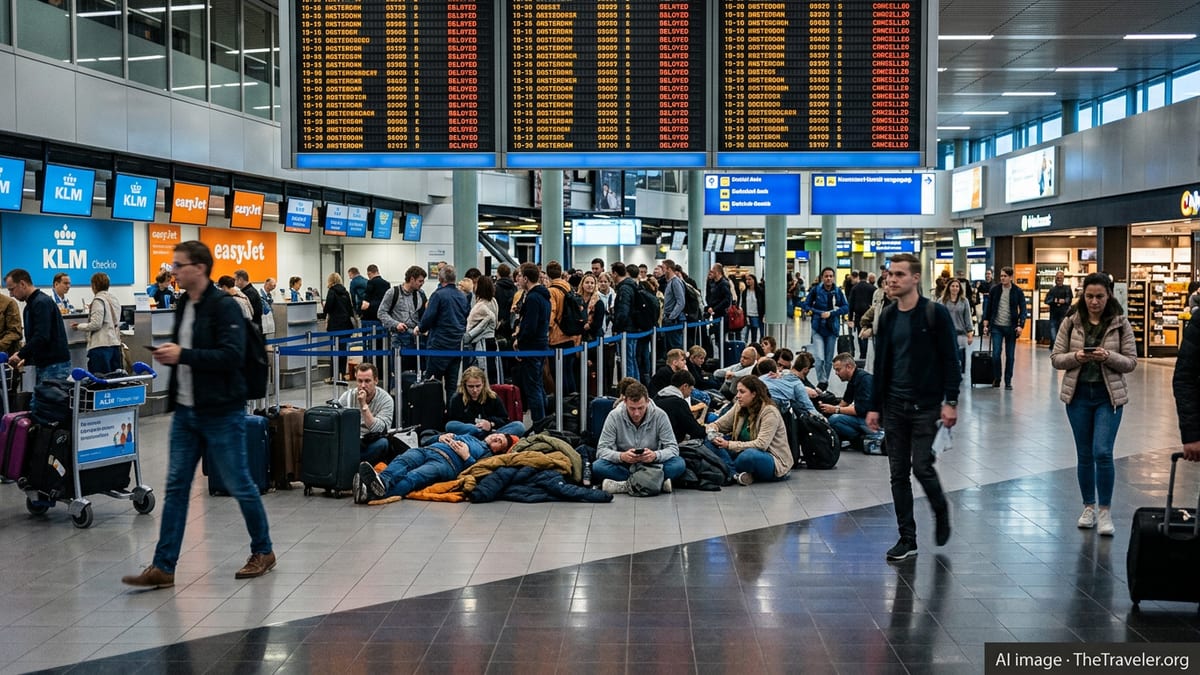
Widespread Disruption Hits Core European Markets
Tracking data compiled from multiple aviation monitoring platforms indicates that airports in Italy, Germany, Belgium, France, the Czech Republic and several neighboring countries have seen severe operational strain within the latest 24 hour period. The combined total of 3,283 delayed flights and 77 outright cancellations has rippled through short haul and long haul networks, leaving departure boards across the continent dominated by red delay notices.
The disruption is most visible at primary hubs such as Frankfurt, Paris and Rome, where dense banks of connecting flights mean even modest delays can quickly cascade across an airline’s entire schedule. Reports from passengers and airport information screens describe hours long queues at check in, security and customer service desks, along with crowded gate areas as travelers wait for new departure times.
Secondary and regional airports in countries such as Belgium and the Czech Republic are also absorbing the impact. As aircraft and crew are held up at major hubs, feeder routes into Brussels, Prague and other regional gateways are being rescheduled, trimmed or cancelled, reducing connectivity and limiting options for rebooking.
Although the volume of cancellations remains lower than at the height of previous European aviation crises, the sheer number of heavily delayed flights means that missed connections, late night arrivals and diversion to alternative routings are affecting a significant share of the day’s passengers.
Major Carriers Struggle To Keep Networks Stable
Lufthansa, ITA Airways and Virgin Atlantic are among the carriers most visibly affected at key hubs, reflecting their reliance on tightly timed wave patterns at Frankfurt, Munich, Rome Fiumicino and Paris. Publicly available flight data shows wide ranging knock on delays on intra European services as well as long haul departures to North America, the Middle East and Asia.
Lufthansa in particular is operating against an already constrained backdrop after previous schedule cuts, fuel driven capacity adjustments and recent strike actions reduced buffers in its summer 2026 program. With fewer spare aircraft and crew on standby, even relatively localized disruptions can translate into rolling delays and cancellations on multi sector itineraries linking cities across Germany, Italy, France and beyond.
ITA Airways, now closely integrated with the Lufthansa Group, is experiencing similar pressure at Rome and on key international routes. When Rome Fiumicino and other Italian airports experience congestion or turnaround delays, the impact can be felt on connecting flights to central Europe, where aircraft are scheduled on tight rotations between multiple cities in a single day.
Virgin Atlantic’s presence at European hubs, particularly through partnerships and transatlantic services touching Paris and other major airports, means that congestion in Europe can quickly affect flights to and from the United States. Delayed inbound aircraft, crew duty time limitations and slot restrictions at busy airports all combine to create a fragile operating environment.
Passenger Experience: Long Queues, Missed Connections, Limited Options
For travelers caught inside this latest episode of disruption, the experience is characterized by uncertainty and limited real time information. Social media posts and traveler reports describe long lines at transfer desks and self service machines, with many passengers relying on airline apps that are themselves struggling to keep up with rapidly changing flight statuses.
At hubs such as Frankfurt and Paris, where many travelers are connecting between non European and intra European sectors, missed connections are a recurring theme. A delay of one or two hours on a long haul arrival can easily cause passengers to miss onward flights to secondary cities in Germany, France, Italy, Belgium or the Czech Republic, especially where minimum connection times are already tight.
Rebooking options are further constrained by high summer load factors and earlier capacity reductions. Even when airlines are able to offer alternative routings, these often involve overnight stays, long detours through different hubs or arrival in a different city, requiring additional ground transport at the traveler’s expense.
While European passenger protection rules provide rights to care and compensation in some circumstances, the practical reality at crowded airports is that hotel rooms, meal vouchers and alternative flights can be in short supply on the day of disruption, leaving many travelers to make their own arrangements while they await confirmation of revised itineraries.
Operational And Structural Pressures Behind The Numbers
Industry analyses of the current disruption highlight a combination of structural and short term pressures on Europe’s aviation system. High fuel prices and a broader jet fuel supply squeeze have encouraged some airlines to trim schedules and consolidate flights, reducing slack in the system. At the same time, staffing levels at airports and ground handlers remain tight compared with pre pandemic norms, limiting the ability to recover quickly after irregular operations.
New regulatory and border control requirements, including the rollout of enhanced entry and exit checks for non EU passengers, are adding processing time at key points in the airport journey. When coupled with late arriving flights, these additional checks can result in missed connections and longer queues, particularly at major Schengen entry points such as Paris and Rome.
Weather remains an unpredictable variable, with seasonal storms and localized adverse conditions forcing temporary capacity reductions at some airports. Even short lived ground stops or runway restrictions can cause a backlog of departures and arrivals that may take hours to clear, especially when airspace is already congested.
In parallel, several leading European airlines are navigating fleet renewal delays and maintenance bottlenecks, leaving them with fewer spare aircraft available for substitution. When a technical issue arises on a single aircraft, it can trigger last minute cancellations or significant delays if there is no immediate replacement available at the affected airport.
What Travelers Can Expect In The Coming Days
Based on recent patterns of irregular operations in Europe, analysts suggest that the aftershocks of the current wave of delays and cancellations are likely to be felt for at least several more days. Aircraft and crew are now out of position across multiple hubs, and rebuilding normal rotations typically requires a series of on time cycles and, in some cases, proactive trimming of schedules.
Passengers scheduled to travel through major hubs such as Paris, Frankfurt, Rome, Brussels and Prague in the near term may encounter residual delays, minor schedule changes or last minute gate alterations as airlines and airports attempt to rebalance their operations. Short haul flights at peak times are particularly vulnerable when turnaround windows are compressed.
Travel experts consistently advise that, during periods of elevated disruption, passengers should allow extra time for connections, monitor flight status frequently through official channels and consider carrying essential items in hand luggage in case of unexpected overnight stays. Where possible, choosing earlier departures in the day and avoiding very tight connections can reduce the risk of being stranded.
With summer demand remaining strong across Europe and airlines operating close to capacity, any additional shocks to the system whether from weather, industrial action, fuel constraints or technical outages could prolong the instability. For now, the latest figures on delays and cancellations offer a clear signal that Europe’s aviation network is operating with little room for error.