


If you have ever driven from Calgary to Banff, there is a good chance you treated Bow Valley as a blur outside the car window. The Trans-Canada Highway straightens out, the peaks rise on both sides, and before you know it you are in the town of Banff, having sped past trailheads, river flats, small campgrounds, and two mountain communities that reward travelers who slow down. Bow Valley often feels like the part of the Canadian Rockies people rush through too fast, yet it holds some of the region’s most rewarding low-key experiences for hikers, families, and road trippers who want more than a postcard stop.
Get the latest updates straight to your inbox!
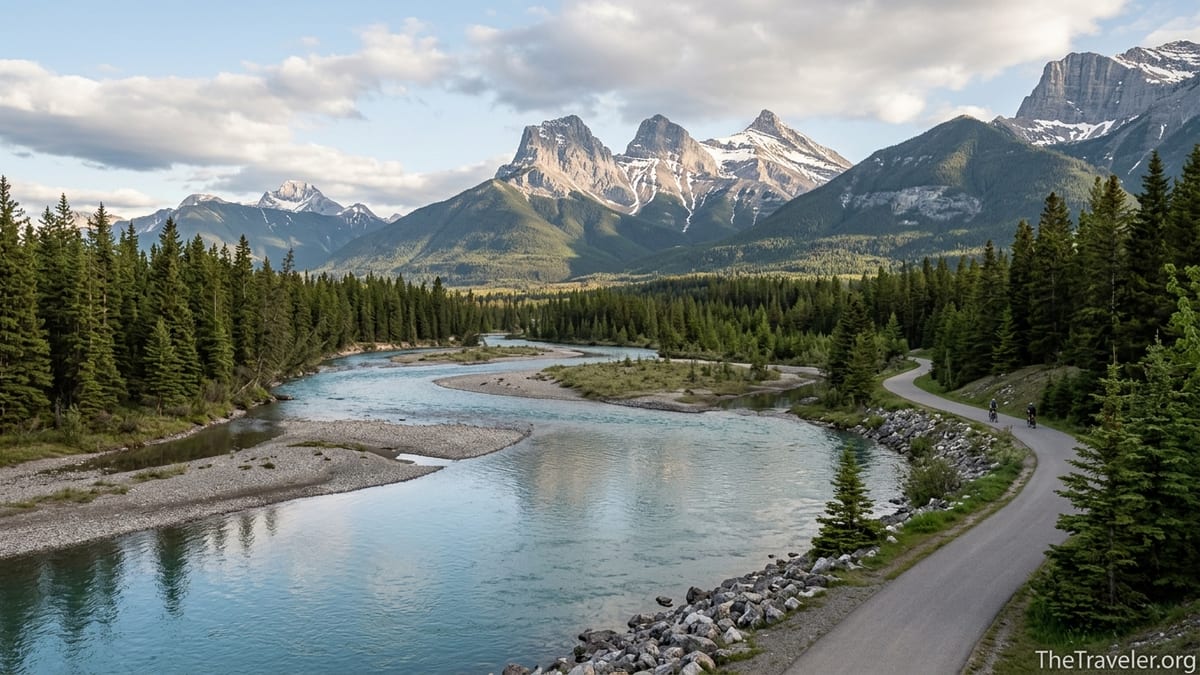
Where Exactly Is Bow Valley, And Why Do People Rush Through It?
Bow Valley follows the Bow River as it runs west from the foothills near Calgary into the heart of the Canadian Rockies. For most visitors, it begins around Bow Valley Provincial Park and the hamlet of Exshaw, passes the town of Canmore, brushes the gates of Banff National Park, and continues along the Bow Valley Parkway toward Lake Louise. Calgary airport arrivals usually pick up a rental car, join Highway 1, and in about an hour and a half are driving beside dramatic cliffs and turquoise water. Yet the default instinct is to keep going until the famous names appear on the road signs.
Part of the reason is psychological. “Banff” and “Lake Louise” are global brands, while Bow Valley Provincial Park, Cougar Creek, or the Three Sisters Pathway mean little to first-timers planning from thousands of kilometers away. Package tours often schedule a straight transfer from Calgary to Banff with maybe a 10-minute photo stop. Independent travelers feel pressed for time and assume the “real” scenery starts at the national park gate. In reality, the skyline of Mount Yamnuska, Grotto Mountain, Ha Ling Peak, and the Three Sisters tells you that you are already deep in the Rockies.
Another factor is logistics. Car rental counters often hand out simple printed maps that show Calgary, Banff, and Lake Louise as the main dots, with everything else left blank. Online booking engines promote hotels inside Banff National Park first, and travel forums are full of “3 days in Banff and Lake Louise” templates that mention Canmore or Bow Valley Provincial Park only as overflow when park accommodation sells out. It creates a feedback loop where the valley becomes a corridor, not a destination.
Yet when you pull off the highway even once, it becomes clear why locals from Calgary and Canmore spend entire summers and shoulder seasons exploring the quieter corners of Bow Valley. Simple river walks, wildflower meadows, and modest peaks here can be just as satisfying as the marquee national park hikes, with less pressure, fewer crowds, and better odds of grabbing a same-week campsite or motel room.
Gateway Landscapes: Bow Valley Provincial Park And The Eastern End
Many visitors do not realize that within an hour of leaving downtown Calgary they could already be on an easy loop through native grasslands and cottonwood forest beside the Bow River. Bow Valley Provincial Park, near Exshaw and Seebe, feels like a gentle gateway to the higher Rockies. Short trails like the Flowing Water, Many Springs, and Montane loops give a close-up look at beaver ponds, aspen groves, and views to Mount Yamnuska without the altitude or exposure that can intimidate new hikers.
The park’s campgrounds, such as Bow Valley and Willow Rock, tend to book up on summer weekends but often have more shoulder-season availability than the big national park campgrounds deeper into the mountains. You still need a reservation in peak summer, but it is more realistic to find a site here for a last-minute June weekend compared with the popular Tunnel Mountain or Lake Louise campgrounds inside Banff National Park, which are often fully reserved months ahead. For a road tripper driving from Calgary, pulling in here for a first night under the pines lets you beat jet lag gently before jumping into higher elevation adventures.
Wildlife sightings in this eastern stretch are also underrated. Elk frequently graze the meadows around the park, osprey hunt over the Bow River, and in late summer you may see the first dustings of snow on distant ridges while standing in warm valley sunshine. These are the sorts of details travelers miss if they only see the area from a highway rest stop. A slow hour sitting on the riverbank, watching rafters float past on the current, can shift the tempo of a trip from hurried to observant.
Practically, the provincial park is easy to access. Day-use parking areas are well signed from Highway 1 and Highway 1X, and washrooms and picnic shelters make it an easy stop with kids. If you have flown into Calgary on an early afternoon arrival and are tempted to push all the way to Banff before dark, stopping here instead can turn a rushed transfer day into the beginning of your trip, with a sunset stroll and a campfire rather than a late check-in and another hour in the car.
Canmore: A Real Mountain Town Hiding In Plain Sight
Ask people planning a Rockies trip where they want to stay, and the answer is usually Banff first, Lake Louise second. Yet many locals and repeat visitors quietly choose Canmore, which sits just outside the Banff National Park boundary and anchors the central Bow Valley. Once a coal-mining town, it has grown into a full-time community of roughly seventeen thousand residents, with year-round amenities and a less overtly touristy feel than Banff’s compact downtown core.
Canmore’s main street is lined with independent coffee shops, bakeries, breweries, and gear stores that feel built for locals first and visitors second. On a typical Saturday morning you might join the queue at a cafe for a flat white and a breakfast sandwich, then wander down to the Bow River for a stroll on the riverside path as the Three Sisters peaks catch the first light. Prices at midrange hotels and condo-style lodges in Canmore can be slightly lower than equivalent options in Banff, especially outside peak July and August dates, and self-catering units make it easier for families or long-stay travelers to manage budgets.
In terms of daily logistics, basing in Canmore opens up both the provincial parks of Kananaskis Country and the national park sights around Banff. Many visitors who rush past only discover after arrival that Bow Valley’s public transit system, Roam Transit, links Canmore with Banff and Lake Louise. Regional buses on the main corridor typically run throughout the day, and one-way fares for the Banff–Canmore route are modest compared with the cost of parking inside Banff for a full day. Frequent visitors simply tap a reloadable transit card and leave their car at their accommodation in Canmore.
Crucially, Canmore has its own network of trails that reward a slower pace. Easy riverside walks like the Bow River Loop or the Policeman’s Creek Boardwalk take less than an hour and can be done directly from town. Moderate hikes such as the Ha Ling Peak trail or the summit of Mount Lady Macdonald offer big-mountain views without the crowds of more famous national park peaks. Even the paved Legacy Trail, a popular cycling path that links Canmore to Banff, gives travelers a chance to experience the valley at bicycle speed rather than highway speed.
A Different Rhythm: Walking, Cycling, And Roam Transit Instead Of Driving
One of the most effective ways to experience Bow Valley as more than a blur is to get out of the car entirely for at least a day. In recent years, local transit provider Roam Transit has expanded service throughout the Bow Valley, with routes connecting Canmore, Banff, the Banff gondola, Lake Minnewanka, and Lake Louise. A typical regional fare between Canmore and Banff is only a few Canadian dollars one way, and visitors can buy day passes that cover unlimited rides on some routes. For a couple or family, a day of bus and walking often costs less than parking multiple times and is far less stressful in peak season traffic.
There is also a growing culture of cycling in the valley. The Bow Valley Parkway and the Legacy Trail have seen periods of reduced private vehicle access, with sections open only to cyclists and transit at certain times of year. When this happens, local cyclists from Banff and Canmore flock to the parkway for a traffic-free ride among forest and cliffs, stopping at viewpoints and picnic areas that most drivers just glance at as they pass. Visitors who rent bikes in either town can join them for a half-day ride to places like Johnston Canyon or Castle Junction, then pick up a Roam bus back if they are tired.
Walking remains the simplest way to slow down. From Canmore or Banff town centers, it is easy to follow riverside trails away from the busiest sidewalks within minutes. In Banff, the path along the Bow River downstream from the bridge by Central Park quickly leaves behind the souvenir shops, leading to quiet benches where locals read or watch the water. In Canmore, a sunset walk along the Bow River Loop with the silhouettes of the Rundle Range and the Three Sisters feels far removed from any resort town, even though you are a 10-minute stroll from restaurants.
Planning a day with no driving also changes your mindset. Without the pressure of finding parking at every attraction, you are more likely to linger at places that feel right, whether that is a small side channel of the river where children throw stones, or a café where an unexpected conversation with a local hiker yields new ideas for tomorrow’s outing. The valley stops being a corridor and starts feeling like a place you live in, even if just for a few days.
Under-the-Radar Trails And Viewpoints Between Calgary And Lake Louise
The stretch of Bow Valley between Calgary and Lake Louise is full of short hikes and viewpoints that most itineraries skip. Instead of racing to join the crowds at Lake Louise parking lots by mid-morning, consider building in one or two half-day stops within the valley itself. These do not need to be big summit days to be memorable.
Near the eastern end, Mount Yamnuska’s lower trails and interpretive walks in Bow Valley Provincial Park give panoramic views back toward the foothills and across the river. Further west near Canmore, the Grassi Lakes trail climbs gently past a waterfall to two vividly coloured pools beneath limestone cliffs. It is popular with locals, especially families, yet many first-time visitors do not hear about it because it falls just outside the national park boundary and therefore outside many guidebooks’ emphasis.
Between Canmore and Banff, short stops like the viewpoint at the Canmore Nordic Centre, or a stroll along the Three Sisters Pathway, reveal the character of the valley floor, with its braided channels and gravel bars. In Banff National Park itself, but still within Bow Valley, the Fenland Trail offers a peaceful loop through white spruce forest near the Vermilion Lakes, while the marshy shorelines of the lakes are accessible from pullouts along Vermilion Lakes Road. Sitting on a dock here at sunset watching kayakers drift past is a very different experience from jostling for space along the main Banff Avenue bridge.
Farther northwest toward Lake Louise, the Bow Valley Parkway parallels the Trans-Canada but feels a world apart. It winds past viewpoints, picnic areas, and access points to trails like Johnston Canyon. During periods when private vehicle access is limited or managed, taking a transit bus or joining a guided biking day here can give you long, quiet stretches of road where you hear the river and the wind in the trees instead of engine noise. These are the kinds of experiences that get edited out of rushed itineraries, yet often become the trip’s quiet highlight when travelers make room for them.
Staying In The Valley: Campgrounds, Cabins, And Lodges
Accommodation in Bow Valley runs from simple provincial park campsites to full-service resorts, and how you choose to stay can shape whether you feel rushed or relaxed. Inside Banff National Park, frontcountry campgrounds along the valley, such as Tunnel Mountain or those near Lake Louise, now require reservations, and prime summer dates often book out within minutes when the federal online system opens each year. Visitors who treat these like concert tickets or a major festival, marking the reservation launch date on their calendar, are far more likely to secure a spot.
For travelers who miss out on those sites or prefer something quieter, the campgrounds in Bow Valley Provincial Park and nearby areas in Kananaskis Country are attractive alternatives. They are still busy in mid-summer but can have more options in June, September, or for midweek stays. A practical strategy is to combine a few nights in a national park campground with a night or two in the provincial park to break up the drive and reduce the pressure to be everywhere at once.
If camping is not your style, small lodges, hostels, and cabins are scattered along the valley corridor. Canmore has everything from hostels with shared kitchens to high-end condo hotels, making it a flexible base if you want to use Roam Transit into Banff for day trips. The town of Banff itself, though more compact, offers classic mountain hotels and motels at a range of price points, but staying here tends to keep you in a busier, more commercial environment. Splitting your stay, with a few nights in Canmore and a few in Banff or at Lake Louise, allows you to experience different moods of the valley.
Whichever you choose, slowing down your accommodation moves can transform your visit. Instead of changing hotels every night along the corridor, treat Bow Valley as a hub. Spend three or four nights in one place and radiate out to different corners of the valley by bus, bike, or on foot. Your days become less about packing and checkout times and more about morning light on the mountains, afternoon swims in the Bow River’s side channels when conditions are safe, and evenings spent strolling to dinner instead of hunting for parking.
Practical Tips For Experiencing Bow Valley At A Slower Pace
To genuinely feel Bow Valley rather than just seeing it through a windshield, the most important step is to adjust your expectations before you arrive. Instead of squeezing Banff, Lake Louise, the Icefields Parkway, and perhaps even Jasper into three days, consider dedicating at least that much time to the valley itself. A sample slower itinerary might look like this: arrive in Calgary, stay the first night in or near Bow Valley Provincial Park, then move to Canmore for three nights of day trips by Roam Transit into Banff and along the Bow Valley Parkway, before finishing with one or two nights at Lake Louise or in the backcountry.
Transport choices matter too. If you plan to use Roam Transit extensively, check route maps and seasonal schedules before you travel, then build flexibility into your day. For example, you might take an early bus from Canmore to Johnston Canyon along the Bow Valley Parkway, hike to the upper falls before the crowds arrive, have a picnic at one of the picnic areas along the parkway, then continue by bus to Lake Louise or back to Banff for the evening. Leaving the car at your accommodation not only reduces congestion but also frees you from having to return to a specific parking lot by a certain time.
Layered clothing, sturdy footwear, and a willingness to adapt to mountain weather will help you enjoy unscripted moments like an impromptu detour to the Fenland Trail in light rain or an extra hour by the river when the sun comes out. In summer, afternoon thunderstorms are common, so treating intense midday heat or showers as a reason to linger in a café or visitor center rather than race to the next view can keep your day relaxed.
Finally, think about your travel in terms of “anchors” rather than checklists. Choose one valley walk, one bike ride or scenic drive, one smaller summit or viewpoint, and one half-day simply to wander a town center or riverside with no fixed plan. By defining success as having lived in the valley’s rhythm for a few days, rather than having ticked off every famous lake and overlook, you give Bow Valley room to surprise you.
The Takeaway
Bow Valley is far more than the strip of highway that brings you from Calgary to Banff and Lake Louise. It is a living landscape of river flats, forests, mountain communities, and quietly beautiful trails that reward time and attention. Travelers who rush through in a single transfer often remember only traffic, parking lots, and quick photo stops. Those who pause in places like Bow Valley Provincial Park, Canmore, and the quieter corners of Banff National Park along the Bow River tend to come away with memories of unhurried walks, conversations with locals on buses and café patios, and evenings when the mountains turned pink while they were not in a hurry to be anywhere at all.
If your instinct is to pack as many icons as possible into a short visit, consider shifting your focus to depth over distance. Treat Bow Valley not as a gap between better-known destinations, but as the heart of your Canadian Rockies trip. Build in an extra day or two, step off the highway, and give yourself permission to miss a few big-name viewpoints in exchange for morning fog lifting off the Bow River, a quiet picnic along the parkway, or a spontaneous detour along a riverside trail. The part of the Rockies many travelers rush through too fast might turn out to be the part you remember most clearly.
FAQ
Q1. Is Bow Valley inside Banff National Park?
Parts of Bow Valley lie inside Banff National Park, especially between the park gates and Lake Louise, while the eastern stretches around Bow Valley Provincial Park and Canmore are outside the federal park boundary.
Q2. Where is the best place to base myself in Bow Valley, Banff or Canmore?
If you prefer a quieter, more local feel and easier access to both provincial and national parks, Canmore is an excellent base; Banff puts you closer to classic national park sights but is busier and often more expensive in peak season.
Q3. Do I need a car to explore Bow Valley properly?
A car is convenient, but not essential. Roam Transit buses link Canmore, Banff, and several major sights, and many trails start right from town centers, so you can combine buses, walking, and bike rentals.
Q4. How many days should I spend in Bow Valley?
To get beyond a rushed impression, plan at least three to four full days in the valley, with time based in one or two locations rather than changing accommodation every night.
Q5. Are there easier hikes suitable for families or beginners in Bow Valley?
Yes. Trails like the Flowing Water and Many Springs loops in Bow Valley Provincial Park, the Bow River Loop in Canmore, and the Fenland Trail near Banff are all short, relatively gentle options with rewarding scenery.
Q6. When is the best time of year to visit Bow Valley?
Late June through September offers the widest range of hiking and camping options, while May, early June, and late September can be quieter shoulder seasons with cooler temperatures and some lingering snow at higher elevations.
Q7. How far is Bow Valley from Calgary International Airport?
Driving from Calgary International Airport to the eastern edge of Bow Valley near Bow Valley Provincial Park typically takes about one to one and a half hours, depending on traffic and exact destination.
Q8. Do I need park passes or permits to stay in Bow Valley?
If you enter Banff National Park, you need a valid national park pass, and camping in national park campgrounds requires both a camping reservation and permit. Provincial parks like Bow Valley Provincial Park have their own fee structures and reservation systems.
Q9. Can I see wildlife safely in Bow Valley?
Wildlife such as elk, deer, and various bird species are commonly seen, and there are occasional bear and bighorn sheep sightings. Observe animals from a distance, never feed them, and follow posted guidance on trails and in campgrounds.
Q10. Is Bow Valley a good option if Banff and Lake Louise accommodations are sold out?
Yes. Staying in Canmore or campgrounds in Bow Valley Provincial Park can be an excellent alternative when in-park options are booked, and with public transit and short drives you can still access the main national park attractions while enjoying a less crowded base.