


More news on this day
Air travel across Europe is facing fresh disruption as 2,911 flights were delayed and 83 were cancelled in a single day, creating bottlenecks at major hubs and rippling through already stretched summer schedules.
Get the latest news straight to your inbox!
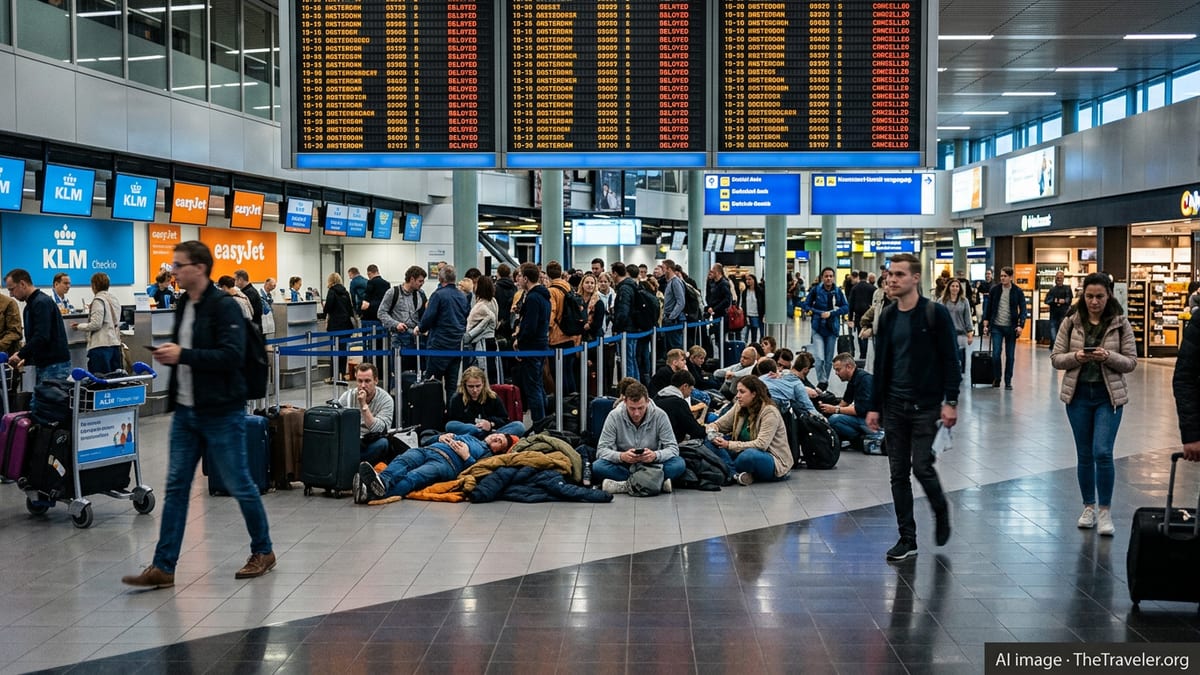
Major Hubs Struggle With a Sudden Spike in Disruption
Published coverage of live flight-tracking data indicates that the latest wave of disruption is concentrated at some of Europe’s busiest airports, including London, Paris, Amsterdam, Frankfurt, Madrid, and Barcelona. London and 15 other large gateways collectively accounted for 2,911 delayed departures and 83 cancellations in a single operational day, a scale of interference that quickly translated into missed connections and lengthy queues at check-in and security counters.
Monitoring platforms that aggregate the number of delayed flights, the average duration of those delays, and cancellation volumes show a clear spike in congestion across Europe compared with recent days. This aligns with broader network statistics from EUROCONTROL, which has recorded average departure delays of more than 16 minutes per flight in recent monthly briefings, underscoring how even a relatively small increase in disruption at key hubs can tip the system into visible chaos.
Travel-focused outlets report that the pressure is most evident at large transfer hubs, where tightly timed connections leave little margin for cascading delays. A late inbound flight can trigger missed onward departures for hundreds of passengers in a single instance, multiplying the disruption well beyond the airports that initially reported weather or congestion issues.
Passengers flying through affected airports have reported multi-hour delays, aircraft held at gates while crews await updated departure slots, and last-minute gate changes that add further stress to an already strained travel day. For many travelers, the cumulative effect is a loss of confidence in same-day connections and an increased tendency to build longer layovers into itineraries across Europe.
Weather, Capacity and Air Traffic Control Feed the Gridlock
Reports from aviation analytics firms and travel rights organizations point to a familiar mix of causes behind the latest numbers. Seasonal thunderstorms and unsettled weather across parts of western and southern Europe have triggered temporary air traffic restrictions, forcing controllers to slow the rate of departures and arrivals at already busy airports. When this happens at multiple hubs simultaneously, the impact can spread quickly across the continent.
EUROCONTROL’s most recent network updates highlight continued pressure in several key pieces of European airspace, including sectors over Spain and Greece that are handling strong growth in leisure traffic. En-route capacity constraints and staffing limitations have contributed to higher air traffic management delays, meaning that flights can be held on the ground or placed into holding patterns even when airport infrastructure is functioning normally.
At the same time, the surge in summer travel is leaving airlines and ground handlers with limited room to absorb disruption. Earlier analyses of major delay days this season show that when flights are pushed back by weather or air traffic control, reactionary delays create a second wave of problems as aircraft and crews end up out of position for later rotations. This can be especially acute for low-cost and leisure carriers operating tight turnarounds at multiple European bases.
Industry data cited by AirHelp and other passenger-rights platforms suggests that congestion spikes similar to the current one have already occurred several times during the 2026 peak season, particularly when adverse weather has overlapped with existing capacity bottlenecks. While overall punctuality levels in some markets have improved compared with previous years, the network remains vulnerable to days when several factors combine.
Passenger Experience: Missed Connections and Overnight Stays
For travelers, the abstract figures translate into very tangible disruption. Coverage from consumer travel outlets describes passengers facing hours-long waits in departure halls, as well as overnight stays when late-evening flights have been cancelled or delayed beyond crew duty limits. Long queues for rebooking desks and customer service lines are a recurring feature of such days, particularly at major transfer hubs.
When multiple flights from a single destination are delayed, hotels near the airport can quickly fill, leaving airlines to arrange accommodation in outlying areas or provide transport back into city centers. Publicly available guidance from passenger advocacy groups notes that, in some cases, travelers are being rebooked on services one or even two days later, particularly on heavily trafficked leisure routes where alternative capacity is limited.
Travelers on multi-leg journeys are particularly exposed. A delay of just an hour or two on a feeder flight into a hub such as London, Frankfurt, or Paris can be enough to miss a transcontinental connection, leaving passengers stranded far from their original departure points. Recent case studies from earlier disruption events this summer show that even when long-haul sectors depart roughly on time, congestion on short-haul networks can still derail entire trips.
The latest figures for Europe also follow a series of regional disruption days earlier in the summer, from localized thunderstorms in the United Kingdom to air traffic control challenges over central Europe. Taken together, these events reinforce a picture of a network that is operating close to its capacity limits, leaving little margin to absorb additional shocks.
What Today’s Chaos Reveals About Europe’s Summer Travel Pattern
The scale of disruption reflected in 2,911 delayed flights and 83 cancellations across Europe in a single day is significant, but it does not occur in isolation. Recent delay analyses from EUROCONTROL for May and June 2026 show that average departure delays have remained in the mid-teens in minutes per flight, a level that indicates persistent structural pressure in the system even on days without headline-grabbing chaos.
Weather remains a central factor, yet the current pattern also illustrates how infrastructure and staffing constraints can prolong the impact of individual storms. When airspace sectors are close to full, controllers have fewer options to reroute traffic around bad weather, increasing the likelihood of airborne holding and ground delays. Airports that handle very high volumes of low-cost and leisure traffic, with frequent short-haul departures, can be especially susceptible to these compounding effects.
Published coverage of recent disruption days across Europe suggests that major hubs are adopting a range of measures to manage the strain, from encouraging airlines to add buffer time to schedules to prioritizing first-wave departures each morning in an attempt to start the day on time. However, as today’s figures show, even modest slippages in the early hours can cascade into widespread delays by late afternoon, particularly during peak holiday travel periods.
Analysts following the European aviation market note that, barring a sudden reduction in demand, days with several thousand delayed flights are likely to remain a recurring feature of the summer travel calendar. For passengers, that reality underscores the importance of building additional time into itineraries, especially when connecting across multiple hubs or relying on the final flight of the day.
Know Your Rights if Your European Flight Is Disrupted
While the operational challenges sit largely with airlines, airports, and air navigation providers, travelers caught up in the latest disruption do have defined protections. Under European Union regulation EC 261 and equivalent national frameworks, passengers on eligible flights are entitled to care and assistance during extended delays, as well as rerouting or refunds when flights are cancelled.
Passenger-rights organizations stress that, during significant disruption, airlines should provide meals and refreshments after certain waiting thresholds, hotel accommodation and transport when an overnight stay is required, and access to communication options such as phone calls or emails. In some circumstances, monetary compensation may also be available, although eligibility depends on factors including the reason for the delay and the length of the disruption.
Recent guidance from travel-compensation specialists highlights that weather-related air traffic restrictions are commonly treated as extraordinary circumstances, which can limit compensation claims even as care obligations remain. However, when disruption is linked to airline scheduling issues, crew resourcing, or technical problems, affected passengers may have stronger grounds to seek financial redress.
For those currently facing delays, publicly accessible advisories recommend keeping boarding passes and any written communication from the airline, as well as documenting additional expenses. Once travel is complete, passengers can use online tools provided by rights organizations and national enforcement bodies to check potential eligibility and submit claims.
Travel And Tour World coverage of 2,911 delays and 83 cancellations across Europe
Flightradar24 Europe airport disruption data
EUROCONTROL all-causes delay brief for June 2026
AirHelp analysis of recent Europe-wide disruption and passenger rights