


More news on this day
Air travel across Europe experienced another sharp disruption as publicly available operational data indicated 2,233 flights delayed and 56 cancelled in a single day, affecting major carriers such as Air France, KLM, Lufthansa and Ryanair and stranding passengers at key hubs including Madrid, Amsterdam and Moscow.
Get the latest news straight to your inbox!
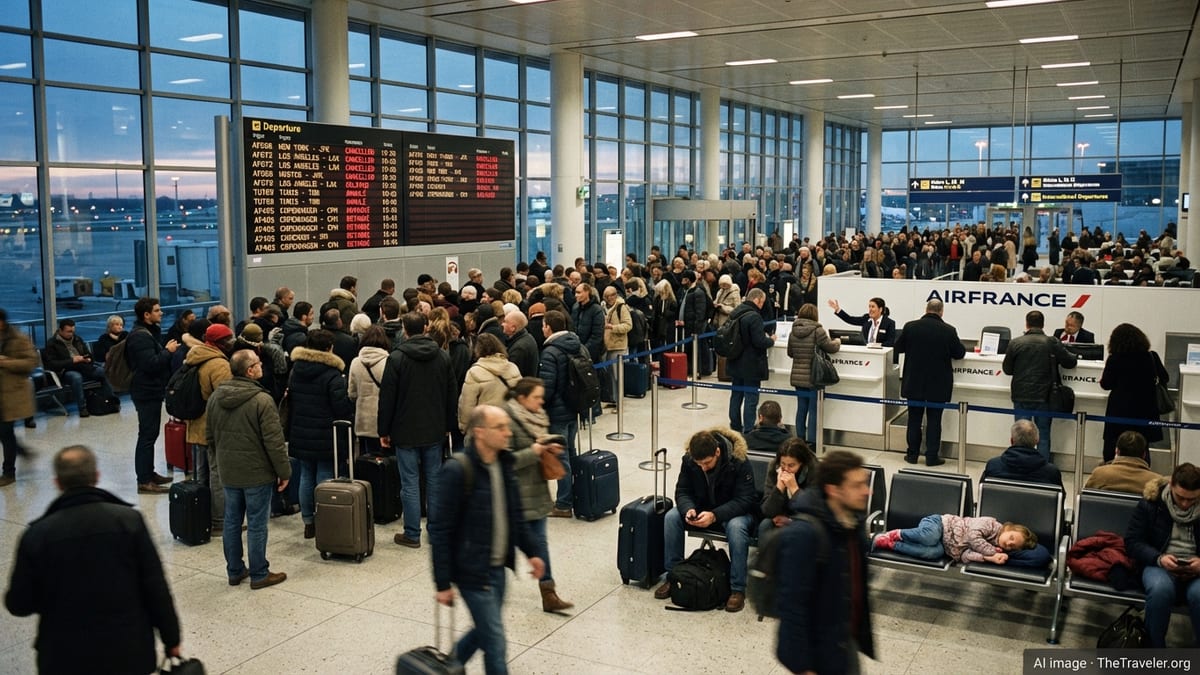
Fresh Wave Of Disruption Across European Skies
The latest wave of disruption follows a pattern of increasingly frequent Europe wide schedule upsets reported since early 2026. Recent analyses of daily performance snapshots show similar large scale events earlier in the year, with more than 1,300 delays and dozens of cancellations already recorded on several winter and spring travel days. These figures underline how vulnerable the region’s air traffic network has become when several problem factors coincide.
In this newest incident, delays were spread across France, England, Spain, Germany, the Netherlands, Russia, Sweden and other markets, indicating that the impact was not confined to a single bottleneck. Knock on effects from one country quickly translated into late departures and missed connections elsewhere as aircraft and crews fell out of position.
Major network airlines, including Air France, KLM and Lufthansa, were among those most affected due to their dense European schedules and reliance on connecting traffic. Low cost operators such as Ryanair and other regional carriers also saw their flights pushed back or scrubbed as congestion grew at busy hubs.
Although the precise blend of causes varied by airport, recent reports highlight a mix of adverse weather patterns, staffing constraints at both airlines and ground handling firms, and the cumulative effect of air traffic control capacity limits that leave little margin when anything goes wrong.
Key Hubs In Spain, Netherlands And Russia Under Strain
Madrid Barajas and Amsterdam Schiphol once again featured prominently among the airports experiencing significant operational strain. Earlier performance reports for 2026 already singled out both hubs on several occasions, noting spikes in delay minutes linked to weather, runway and airspace congestion and knock on effects from disruption elsewhere in the network.
In Spain, Madrid’s status as a major transfer point between Europe and Latin America means that even modest schedule changes can ripple widely. When a critical mass of short haul European services run late or are cancelled, inbound long haul passengers can miss onward flights, forcing airlines to rebook travellers onto later departures and adjust aircraft rotations.
Amsterdam faced similar challenges. As one of Europe’s busiest connecting hubs, Schiphol depends on tightly timed waves of arrivals and departures. Previously reported KLM schedule adjustments and cancellations from Amsterdam in response to operational pressures and staffing limits illustrate how the airport’s performance can influence flight reliability across northern Europe.
Further east, connections involving Moscow were also hit, with delays on European feeder routes complicating travel plans for passengers moving between Russia and cities including Madrid and Amsterdam. While traffic to and from Russia has been structurally lower than in previous years, the remaining services tend to be tightly scheduled, leaving travellers with limited alternative options when something goes wrong.
Airlines Adjust Networks To Contain Knock On Effects
Carriers have increasingly turned to proactive flight reductions in an effort to stabilise operations on days when disruption is expected. Publicly available statements from European airlines earlier this year outlined plans to trim schedules around peak congestion windows to avoid terminal gridlock and cascading delays.
KLM, for example, has already confirmed targeted cancellations within its European network from Amsterdam during pressure periods, aiming to keep the remainder of the schedule more reliable. Similar approaches have been reported at other major flag carriers, including Lufthansa and Air France, which have on occasion consolidated lightly booked services or thinned out marginal frequencies.
Despite these efforts, the scale of the latest disruption shows how difficult it can be to rebalance networks once delay levels pass a certain threshold. With aircraft and crews positioned across dozens of airports each day, the removal of a relatively small number of flights can still leave carriers struggling to reconnect passengers, especially when several large hubs are affected at the same time.
Low cost airlines such as Ryanair and others face a different set of challenges. Their point to point model offers fewer connecting obligations, but high aircraft utilisation means that a lengthy delay early in the day can cascade through multiple subsequent sectors, quickly eroding on time performance across an entire daily roster.
Travellers Face Missed Connections And Crowded Terminals
For passengers, the most immediate impact was felt at departure gates and transfer halls. Rolling delays and sudden cancellations left many travellers confronting busier than usual terminals, long rebooking queues and uncertain arrival times, particularly at large hubs such as Madrid, Amsterdam and other major European airports.
According to recent coverage of similar disruption days, thousands of travellers across the continent have found themselves stranded or forced to extend overnight stays when evening flights were cancelled or pushed back beyond curfew limits. Given the tight connections often sold on intra European itineraries, even relatively short delays can cause travellers to miss onward flights, leading to bottlenecks at airline service desks.
Some passengers have been able to use mobile apps and self service tools to secure new itineraries, but reports from previous large scale events suggest that availability can shrink quickly once multiple airlines begin protecting customers on alternative services. Travellers with flexible plans may accept rerouting through secondary hubs, while others choose to postpone journeys entirely if suitable seats are not available.
As seen in earlier disruptions this year, crowding can also become a concern as security lanes, boarding areas and baggage halls struggle to absorb the volume of delayed passengers. Airport operators in key markets have signalled their intention to review performance data from these events to identify staffing needs and process improvements ahead of the peak summer season.
Ongoing Concerns Over Structural Capacity And Summer Outlook
The latest figures have renewed debate about whether Europe’s air traffic system has sufficient structural capacity to cope with demand spikes and weather events. Industry analyses and recent delay reports for 2026 show that average delay per flight has been trending upward compared with pre pandemic benchmarks, with a growing share of services arriving more than half an hour behind schedule.
Air traffic control capacity, in particular, has been cited as a recurring constraint. Limited ability to add extra routes or airspace sectors in busy corridors means that even modest weather deviations can force traffic into already saturated patterns, compounding delays. This has been visible during previous episodes when storms or heavy winds in one region triggered widespread holding patterns and diversions.
With the busy summer period approaching, travellers and industry observers are watching closely to see whether airlines and airports can adapt quickly enough. Measures such as pre emptive schedule trimming, additional staffing, and better real time information for passengers may help mitigate the worst effects, but the scale of the latest disruption highlights how finely balanced the system remains.
For now, publicly available travel advisories continue to recommend that passengers allow extra time for connections within Europe, monitor flight status frequently, and be prepared for sudden changes to itineraries on days when widespread disruption is reported.