


More news on this day
Hotel booking data and industry forecasts indicate that Europe is entering another strong travel season, as geopolitical tensions in the Middle East, rising fuel costs and shifting consumer preferences redirect demand toward the continent and set the tone for 2026 pricing and capacity decisions.
Get the latest news straight to your inbox!
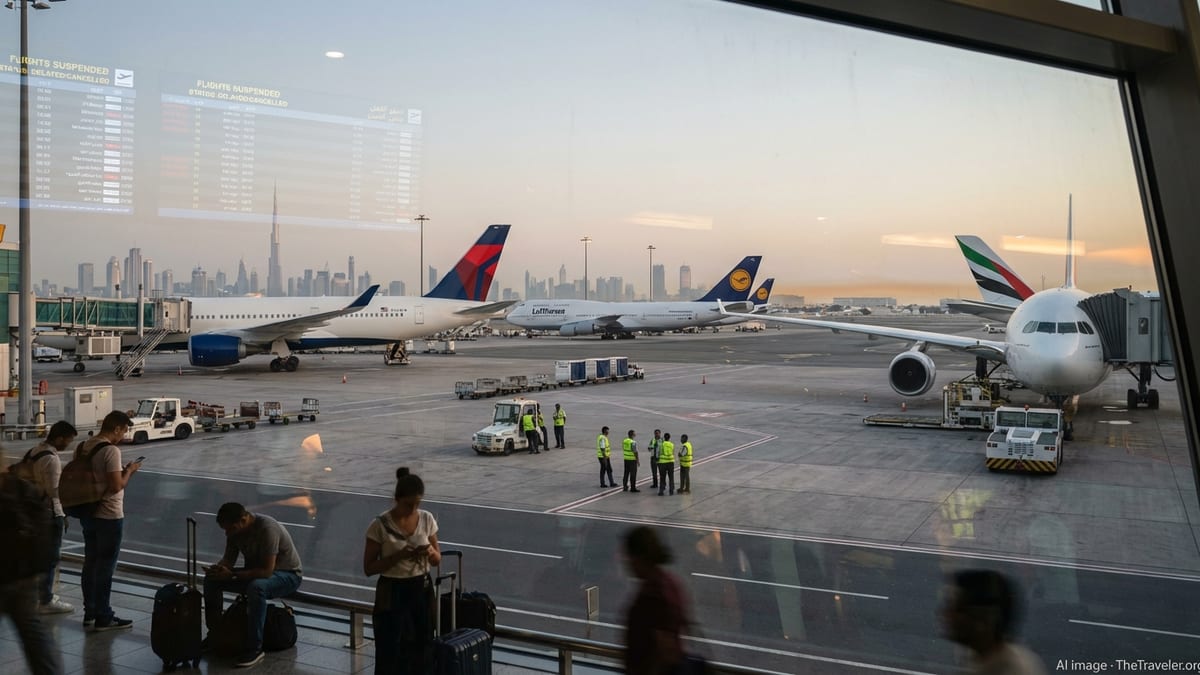
Record Demand Keeps European Hotels Busy
Publicly available tourism statistics show that Europe has moved firmly back into growth territory, with international arrivals and overnight stays exceeding pre-pandemic benchmarks. Estimates compiled from Eurostat and other regional data providers suggest that EU tourist accommodation registered around 3 billion guest nights in 2024, edging above 2019 levels and extending that momentum into 2025 and early 2026.
Within that total, hotels remain the dominant choice for visitors. Sector analyses indicate that close to two thirds of overnight stays across the bloc are now in hotels or hotel-like properties, underlining how traditional accommodation has benefited from the rebound in both leisure and business travel. Major destinations such as Spain, Italy and Greece report year-on-year gains in hotel nights, with Spain’s travel and tourism contribution to GDP on track to surpass previous records in 2025.
Industry research from the World Travel & Tourism Council points to travel and tourism contributing more than 10 percent of the European Union’s economy in 2024, with continued expansion forecast through 2026. Forward-booking indicators cited by hotel investment and valuation firms show that reservations for the peak summer months are currently trending well ahead of last year in many European city and resort markets.
At the same time, observers highlight that occupancy patterns are uneven across the continent. Cities heavily exposed to long-haul business travel are recovering more slowly, while leisure-focused destinations and locations with strong air connectivity are seeing some of the sharpest rises in hotel bookings.
Middle East Tensions Divert Travel to “Perceived Safe” Europe
Geopolitical developments in the Middle East are increasingly shaping where travelers choose to go. After a period of rapid growth for Gulf destinations, forecasts compiled by tourism consultancies now point to a possible fall of roughly 25 to 30 percent in inbound travel to the wider Middle East in 2026 under a prolonged conflict scenario. Analysts at Tourism Economics, cited in sector briefings, link that outlook directly to the current Iran-related tensions and airspace disruptions.
Reports from hotel and airline trade publications describe a notable increase in booking cancellations for trips to parts of the Middle East and Eastern Mediterranean, especially for departures scheduled in the coming peak season. Travel associations in Germany and other major source markets say that some destinations closer to the conflict zone are experiencing slower new bookings, even as demand for travel itself remains strong.
Industry commentary indicates that a share of those diverted trips is being rebooked within Europe. Hospitality market coverage notes that many travelers are opting for destinations they perceive as safer and more stable, such as Spain, Portugal, Italy and parts of Western and Northern Europe. This is particularly evident among European travelers who previously favored winter sun breaks in the Gulf, North Africa and the eastern Mediterranean, and who are now redirecting that spending to short- and medium-haul trips inside the continent.
Analysts caution that the impact is not uniform. Cyprus and some Greek islands in the eastern Aegean, located closer to the crisis region, have reported higher cancellation rates following recent military incidents. By contrast, hoteliers in mainland Greece and on islands further west describe booking levels as resilient, helped by strong intra-European and North American demand.
Rising Fuel Costs and Price Pressures Hit Airfares and Room Rates
The conflict in the Middle East has also fed directly into higher energy and fuel prices, which in turn are pushing up travel costs. Market coverage of the current Strait of Hormuz crisis notes that benchmark crude and natural gas prices spiked sharply in early March 2026, with European gas benchmarks nearly doubling at one point before partially retreating. Jet fuel prices, a major component of airline operating costs, have climbed in tandem.
Airlines operating between Europe, Asia and the Middle East are responding with surcharges and fare hikes. Aviation industry reports highlight examples of carriers in Europe and the Pacific region adding fuel surcharges to long-haul tickets and warning that further increases may be necessary if volatility persists. Lufthansa and other European groups have already acknowledged higher ticket prices on some routes, although they also report that overall passenger demand remains robust for now.
Higher transport costs, combined with broader inflation and rising wage bills, are feeding through to hotel pricing. Forecasts from hotel benchmarking and consulting firms had already anticipated modest average daily rate increases of around 3 to 4 percent in key European business destinations for 2025, driven by tight capacity in popular districts and renewed corporate travel. The added energy and financing cost pressures associated with the current crisis could underpin further price firmness into 2026, especially at the upper end of the market.
However, recent valuation work published by specialist hotel advisers shows that, despite record nominal room rates in some cities, overall hotel asset values across Europe rose only slightly in 2025. The research points to investors taking a cautious view amid concerns about the durability of demand, the possibility of a renewed inflation spike linked to energy markets and the cost of debt.
Overtourism, Taxes and Capacity Shape the 2026 Outlook
The renewed wave of arrivals is reactivating long-running debates about overtourism, local housing pressures and the environmental footprint of mass travel. A 2024 report on overtourism in the European Union, drawing on official Eurostat data, underlined that tourist nights in the bloc have already regained and surpassed historic highs. With 2026 bookings now surging in many major hubs, local authorities are again weighing crowd-control and taxation tools.
Several European cities have recently adjusted tourism-related taxes in response. Amsterdam, for example, has implemented higher city tax rates alongside a rise in value-added tax on hotel accommodation from January 2026. Hotel analysts expect these measures to weigh on budget-conscious leisure demand but note that the city’s core corporate and high-end leisure segments may absorb much of the increase, at least in the short term.
Other destinations are experimenting with reservation systems for popular attractions, stricter rules for short-term rentals and marketing campaigns that encourage visitors to explore less crowded regions and travel outside the peak summer months. Hoteliers in secondary and tertiary cities across Central and Eastern Europe report rising interest from international travelers seeking better value and fewer crowds, helped by expanding low-cost carrier networks.
For hotel operators, the key challenge is balancing rate growth with occupancy and guest satisfaction. Analysts say that properties in saturated urban markets risk pricing out mid-market customers if they push room rates too aggressively, particularly as households across Europe continue to feel the pinch of higher living costs. In contrast, destinations that can add capacity responsibly and differentiate with authentic experiences may be better positioned to sustain growth without triggering a backlash.
What Travelers and the Industry Should Watch in 2026
Looking ahead to the remainder of 2026, observers identify several variables that will determine how Europe’s hotel boom evolves. The trajectory of the Middle East conflict and any further disruption to energy supplies will be central, influencing both traveler sentiment and the cost base for airlines and hotels. A prolonged crisis could entrench the shift in demand away from certain Middle Eastern destinations and toward European and alternative long-haul markets.
Currency movements will also play a role. A strong euro makes Europe more expensive for visitors from the United States and other long-haul markets, even as high-spending travelers from the Gulf and parts of Asia may continue to see the region as a preferred shopping and leisure destination. Conversely, any weakening of the currency could add another layer of demand in an already tight accommodation market.
On the supply side, pipeline data suggest that new hotel openings in Europe are not keeping pace with demand in some hotspots, particularly in historic city centers where planning constraints are tight. This constrained supply environment, combined with redirected travel flows and cost pressures, is likely to keep average rates elevated in 2026, even if occupancy growth slows from current highs.
For travelers, the emerging pattern means earlier booking, greater flexibility on dates and destinations, and close attention to fare and fuel surcharge policies are becoming increasingly important. For the industry, the coming year will test whether Europe can convert this surge in hotel bookings into sustainable, diversified growth rather than a short-lived spike driven by geopolitical turmoil and constrained capacity elsewhere.