


More news on this day
British holidaymakers are set to face shorter passport queues in parts of Europe as Germany becomes the latest country to open automated e-gates to UK travellers, building on a wider post-Brexit push to speed up border checks for British visitors.
Get the latest news straight to your inbox!
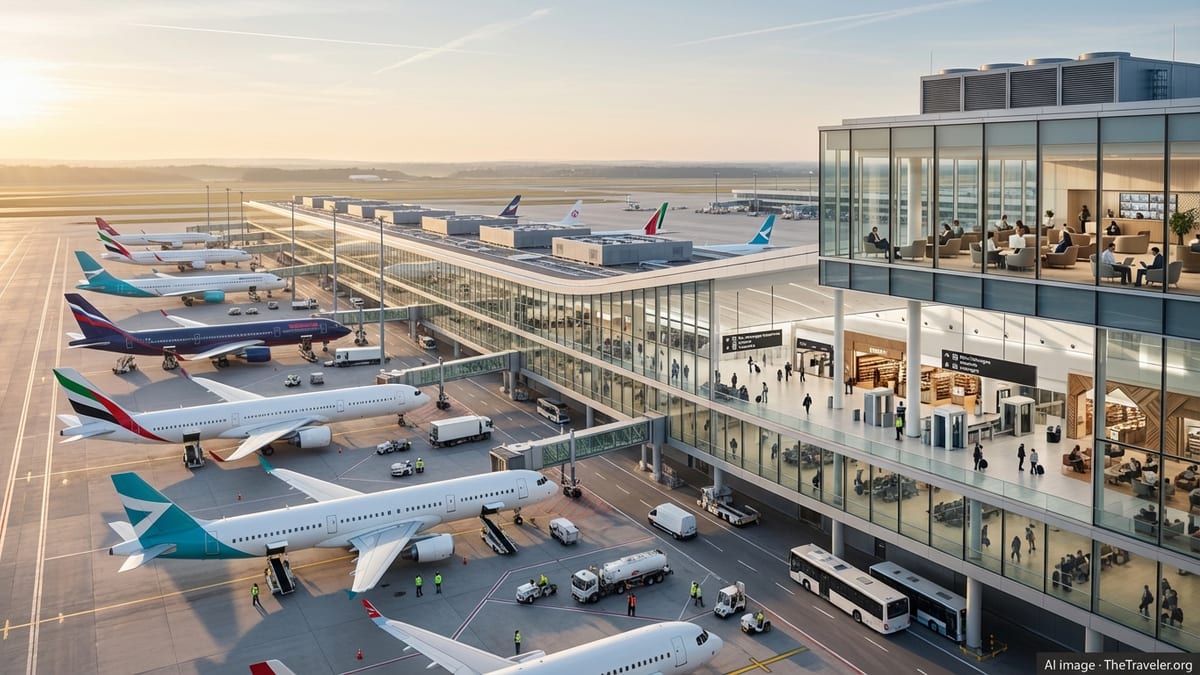
Germany’s phased e-gate rollout for British passport holders
Publicly available government information from mid 2025 shows that Germany has begun opening its automated passport control gates to UK nationals, in what has been described as a first phase of wider access. Initial eligibility focuses on frequent travellers, including Britons who regularly visit family or travel on business, with the roll out scheduled from late summer 2025 at major German airports.
The scheme allows qualifying British passport holders with biometric documents to use the same automated border lanes long available to EU and European Economic Area citizens. Once registered, these travellers can pass through e-gates on arrival, cutting time at manual passport booths and easing pressure on airport staffing.
German hubs such as Frankfurt and Munich are expected to be central to the first phase, given their heavy traffic from the UK and existing networks of automated border control gates. Aviation and travel industry coverage indicates that the move is intended to reduce congestion at peak holiday and business periods, particularly during the busy summer and Christmas seasons.
Officials in Berlin previously signalled support for closer practical cooperation with the UK on mobility questions after Brexit. Opening e-gates to British visitors is being presented in public documents as a technical border management step rather than a change to underlying visa rules, which continue to be governed by European Union law for so called third country nationals.
Spain, Portugal and others already letting some Brits use e-gates
Germany’s decision follows a pattern already visible in several popular sun destinations. Travel advisories, airline briefings and local media across southern Europe show that Spain, Portugal and Italy have all, in different ways, allowed British visitors to use automated passport control at certain airports.
In Spain, regional tourism bodies highlight that British travellers can use e-gates at major holiday gateways such as Málaga, Palma de Mallorca and Alicante during designated periods. These arrangements were introduced to help manage sharp spikes in UK arrivals during school holidays and summer peak weeks after Brexit turned British tourists into third country visitors subject to more detailed checks.
Portugal has developed its own automated system for non EU nationals at a number of airports. Information on the Portuguese RAPID4ALL gates shows that eligible biometric passport holders from a list of non EU countries, including the UK, may use e-gates at key hubs serving leisure and city break traffic. Similar arrangements exist at Prague in the Czech Republic, according to government and airport statements, with British travellers able to access automated lanes under defined conditions.
Other European states are preparing to follow. Estonia has publicly confirmed plans to extend e-gate access to British citizens at Tallinn Airport from 2026, while UK government documents describe continuing discussions with further EU member states about opening their automated gates to holders of UK passports.
Entry/Exit System reshapes how Brits are processed at EU borders
The expansion of e-gate access is closely tied to the European Union’s new Entry/Exit System, a major digital border project that became operational at air and sea borders from 12 October 2025 and reached full deployment across the Schengen external frontier in April 2026. The system automatically records the entry and exit of non EU nationals using biometric data such as fingerprints and facial images.
Before the system went live, most British travellers entering the Schengen area needed both a manual passport check and a physical entry stamp, which limited how far automated lanes could be used. Under the new digital framework, the biometric registration carried out at e-gates or kiosks can replace repeated stamping, removing a key obstacle to wider automation for UK visitors.
European border guidance explains that, once a traveller’s biometric profile is captured and stored in the Entry/Exit System, future crossings are expected to be quicker, provided no issues are flagged on the database. This has encouraged some airports to reconfigure their automated lanes to serve a broader mix of nationalities, including British citizens, instead of reserving most e-gates solely for EU or European Economic Area passport holders.
The UK government has stated in public briefings that there are no legal barriers, under the new system, to EU states choosing to let British nationals use e-gates, so long as the underlying rules for short term visits are respected. As a result, the extent of access is now largely a question of investment in hardware, staffing models at individual airports and the policy choices of each member state.
What e-gates mean for British holidaymakers on the ground
For travellers, the headline attraction of e-gates is the promise of shorter queues at busy arrival halls. Automated gates are designed to process passengers in a matter of seconds once a passport is read and biometric checks are complete, whereas traditional booths can be slowed by manual data entry and secondary questioning during high volume arrival waves.
However, travel advisories stress that not every British visitor will be able to use e-gates on every trip. In many locations, first time users of the Entry/Exit System must still complete a longer registration step, sometimes involving a staffed kiosk where fingerprints and a facial image are captured. Travellers who have not yet enrolled may therefore see little time saving on their first post launch journey, even if automated lanes are available.
Age limits and passport requirements also apply. Most e-gates are restricted to adults holding biometric passports whose facial features can be reliably matched by cameras and algorithms, and some systems exclude younger teenagers and children. In addition, anyone referred for additional questioning, or whose biometric check fails, will still be directed to traditional staffed desks.
Despite those caveats, the growing list of airports where UK passport holders are permitted to use automated gates is expected to be a significant draw in the 2026 summer season. Travel industry analysis suggests that, when e-gates are operating smoothly, they help stabilise waiting times even when sudden surges in traffic occur, such as during weather disruption or aircraft delays.
Patchwork access across Europe keeps preparation essential
While Germany’s decision to open e-gates to certain British travellers marks another step toward easier European border crossings, access remains uneven across the continent. Publicly available parliamentary documents in London describe a patchwork of arrangements, noting that e-gate policies differ not only by country but sometimes by individual airport or terminal.
In some states, e-gates that admit British passport holders are located only on arrival, while departure remains fully manual. In others, British travellers are grouped with a wider pool of non EU nationals in dedicated automated lanes, separate from those reserved for EU citizens. Land borders and smaller regional airports may have no e-gates at all, meaning that queuing is still the norm.
Travel experts therefore advise passengers not to assume they will be able to skip the queue on every leg of a European trip, even if their first entry point offers smooth automated processing. Checking airport specific guidance before travel, allowing generous connection times and being ready for manual checks are still regarded as prudent steps, particularly at the start of school holidays.
Looking ahead, both European and UK policy papers indicate that the direction of travel is towards more automation at external borders, with digital travel credentials and mobile pre registration tools under development. For now, though, British holidaymakers can expect a mixed picture: faster journeys at some hubs, traditional queues at others, and a gradual expansion of e-gate access as more countries follow Germany’s lead.