


More news on this day
Travellers plotting European getaways for late 2026 and beyond are rethinking their plans as new biometric border checks, looming electronic travel permits and simmering visa reciprocity disputes inject fresh uncertainty into trip planning.
Get the latest news straight to your inbox!
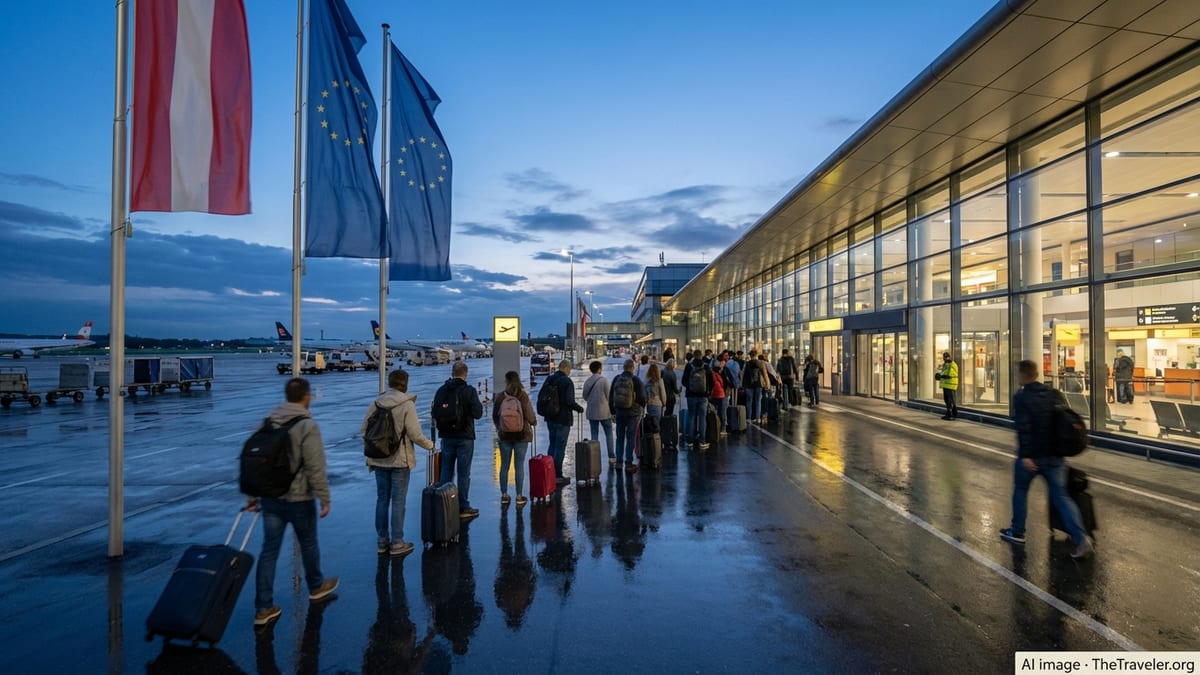
Biometric Entry/Exit System Redefines the Schengen Border
Europe’s new Entry/Exit System, fully operational since April 2026 across most Schengen states, has already begun to change how millions of non-EU visitors arrive and depart. The system replaces routine passport stamping for short-stay, visa-exempt travellers with a digital register of each entry and exit, supported by fingerprints and a facial image taken at the border.
Publicly available information from the European Commission describes the scheme as part of a wider push to modernise external border controls and cut down on overstays. Instead of relying on manual stamps, border guards now see an electronic record showing how long a visitor has spent in the Schengen Area, making it easier to enforce the long-standing limit of 90 days in any 180-day period.
For travellers, the change is most visible at airports and busy land crossings, where new kiosks and e-gates have been installed. Reports from major hubs indicate that first-time enrolment can add several minutes to each screening during busy hours, as passengers queue to provide biometrics. Subsequent trips are expected to be faster, but the transition period has left many summer visitors confronting longer lines than they anticipated.
European briefings point to the rollout as broadly successful from a security standpoint, yet travel industry groups note that the timing, coinciding with peak holiday season and a rebound in intercontinental tourism, has magnified the impact on passengers. Some carriers and airport operators are urging clearer communication to avoid confusion at departure gates and check-in counters.
ETIAS Travel Authorisation Adds Cost and Complexity
On top of the new entry/exit controls, Europe is preparing to introduce the European Travel Information and Authorisation System, or ETIAS, a pre-travel permit for visitors from dozens of visa-exempt countries, including the United States, Canada, the United Kingdom and Australia. Official portals indicate that ETIAS is scheduled to start in the last quarter of 2026, though recent coverage in European media has raised the prospect of further slippage into 2027.
Once live, ETIAS will require most non-EU, visa-exempt travellers to complete an online application before departure and pay a fee currently set at 20 euros for adults. The authorisation is expected to be valid for multiple trips over three years, or until the traveller’s passport expires, offering a multi-journey permission similar in concept to existing systems in the United States and other destinations.
While the financial cost is modest compared with long-stay visa procedures, the new requirement is adding friction to trip planning. Travel agents report that clients frequently conflate ETIAS with a traditional visa, prompting questions over processing times and the risk of being denied boarding if applications are not approved in time.
European Commission material stresses that most ETIAS applications should be processed quickly, many within minutes, though some may require additional checks. Even so, consumer advocates argue that the growing patchwork of digital permits worldwide is making international travel more bureaucratic, catching out infrequent travellers who may not be aware of new steps until shortly before their flight.
Confusion Among North American Travellers
Nowhere is the uncertainty more apparent than among prospective visitors from North America. For years, citizens of the United States and Canada have enjoyed relatively straightforward short-stay access to the Schengen Area, typically needing only a valid passport for up to 90 days of tourism or business. With EES already operating and ETIAS approaching, that simplicity is eroding.
Recent explainers aimed at US travellers highlight a common misconception: Americans do not need a traditional Schengen visa for short stays, but they will be subject to biometric registration under the Entry/Exit System and, in time, to the ETIAS pre-authorisation. Similar advisories are circulating in Canada and the United Kingdom, where travellers are being encouraged to check official portals rather than relying on outdated blog posts or informal social media guidance.
At the same time, long-running debates over reciprocity continue to cloud perceptions. The European Union’s own records note that, as of 2026, the United States still requires visas for citizens of Bulgaria, Cyprus and Romania, even though these countries are part of the EU framework that grants visa-free travel to US nationals. Advocacy groups in Europe periodically call for a tougher response, including the possibility of revisiting visa-free access for Americans, although no such step has been taken so far.
For travellers, the political back-and-forth matters less than the practical question of “what applies to me on my travel dates.” Travel advisers now routinely urge visitors to factor in extra time at departure and arrival airports, to monitor official EU updates on ETIAS launch timing, and to avoid purchasing non-refundable tickets before they understand the rules that will apply when they travel.
Industry Pressure Over Queues and Technical Hiccups
The aviation and tourism sectors are pressing European institutions for clearer timetables and more robust contingency plans after early experiences with EES exposed bottlenecks. Industry associations representing airports and airlines have publicly warned that, without adequate staffing, additional kiosks and well-tested software, the combination of biometric checks and ETIAS pre-screening could overwhelm busy hubs at the height of future holiday seasons.
Reports from several southern European airports suggest that the biggest pinch points occur when multiple long-haul flights land simultaneously, bringing large numbers of first-time EES users to border control. Travellers unfamiliar with fingerprint scanners, camera positioning or the overall procedure often require more assistance, slowing the line for everyone.
To ease the strain, some border authorities are promoting the use of mobile apps and pre-registration kiosks at departure airports, allowing travellers to submit certain data before arrival. European policy papers highlight this digital approach as a way to spread the workload away from the busiest entry points and to reduce time spent at the primary inspection booths.
Nevertheless, travel companies are advising customers to anticipate more rigorous formalities than in the past, particularly if connecting through large hubs with tight transfer times. Package tour operators and cruise lines that rely on rapid disembarkation and re-embarkation are also re-evaluating schedules in border-heavy itineraries.
Planning Ahead: What Tourists Can Do Now
With timelines still evolving, prospective visitors are increasingly focused on what they can do immediately to protect their plans. Travel specialists suggest starting by mapping out trip dates against the latest published schedules for EES and ETIAS, paying particular attention to late 2026 and 2027, when both systems are expected to be in operation.
Checking passport validity remains essential, as both biometric registration and ETIAS approvals will be tied to the travel document number. Travellers may also want to build in additional flexibility, choosing refundable or changeable fares where possible and allowing extra time for connections at European gateways that are known to be busy.
Information from EU institutions signals that short-stay rules themselves are not changing: eligible visitors will still be limited to 90 days in any rolling 180-day period across most of the Schengen Area. What is shifting is the method of enforcement and pre-screening, with digital tools replacing paper stamps and relying more heavily on accurate data entry by both travellers and officials.
For now, experts advise that the safest course is to monitor official European portals and, where relevant, national government travel advisories in the traveller’s home country. As Europe continues to refine its border systems, clear and timely information is rapidly becoming as important to a successful trip as a valid ticket and a packed suitcase.