


More news on this day
A fresh bout of disruption across Europe’s aviation network has led to 52 flight cancellations and 1,863 delays at 14 key airports, with Amsterdam Schiphol and Athens International Airport among the hardest hit, according to aggregated operational data from flight-tracking and aviation performance services on September 11 and 12, 2026.
Get the latest news straight to your inbox!
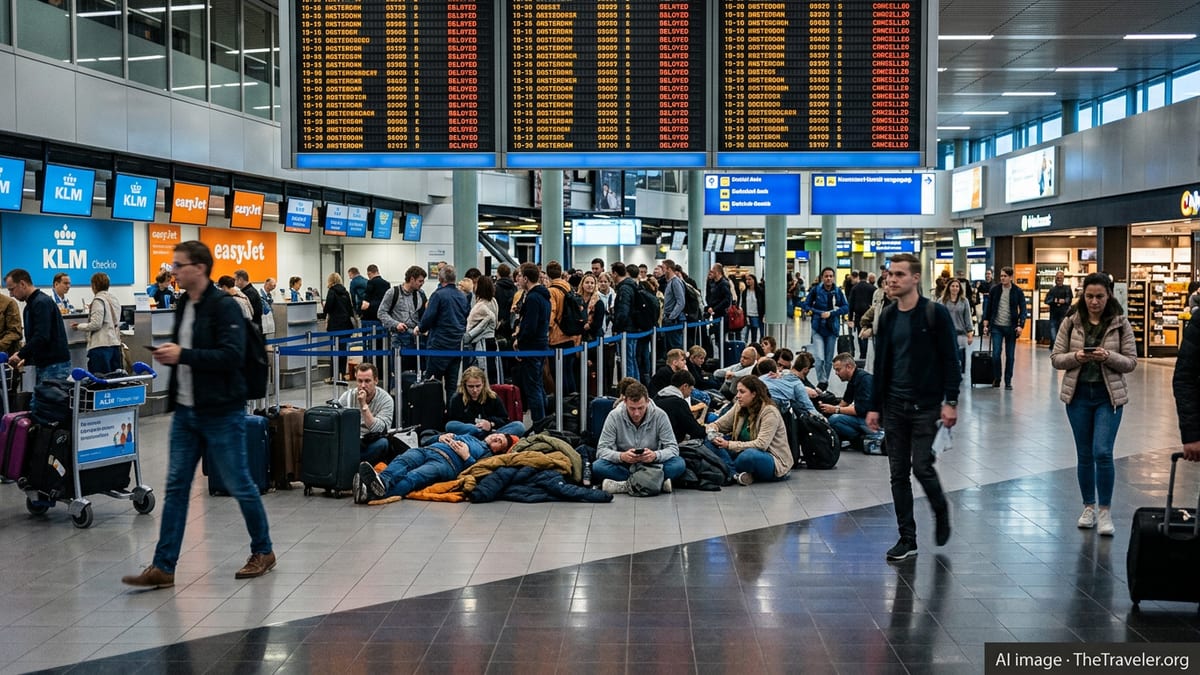
Amsterdam and Athens Among the Most Affected Hubs
Amsterdam Airport Schiphol and Athens International Airport, two of Europe’s busiest hubs, feature prominently in the latest wave of disruption. Publicly available operational data for September 2026 shows Schiphol recording dozens of cancellations for the month so far, alongside a heavy pattern of late arrivals and departures that has continued into this week.
An independent cancellations tracker for Amsterdam indicates that by mid-September the airport had already logged more than 60 cancelled flights for the month, a figure broadly consistent with the scale of cancellations attributed to the Netherlands in wider European tallies for September 11 and 12.
Athens, ranked among Europe’s 20 busiest airports and a key gateway for southeast Europe, has also been operating under pressure. Recent procedural updates around runway works and coordination measures at Athens underline how even short periods of infrastructure constraint can amplify delays when traffic demand is high.
Together, the two hubs serve as major transfer points for intra-European and long-haul routes, meaning disruptions in Amsterdam and Athens can quickly cascade across airline networks.
Network-Wide Gridlock Across 14 European Airports
The 52 cancellations and 1,863 delays reported across Europe over the latest 24-hour period are spread across 14 major airports in at least nine countries, according to compiled data from flight-tracking platforms and aviation news monitoring.
Recent coverage of European air travel on September 11, 2026, highlighted more than 2,500 delays and 62 cancellations across nine nations, including Germany, Italy, France, Spain, Ireland, the Netherlands, Norway, Austria and the United Kingdom. The current figures, focused on 14 airports including Amsterdam and Athens, represent a slightly lower but still substantial slice of that wider disruption, reflecting rolling knock-on effects into September 12.
Key hubs such as Frankfurt, Rome Fiumicino, Vienna and Amsterdam have all reported elevated delay levels, with Schiphol singled out in punctuality and performance reports for regular traffic-flow management restrictions and weather-related impacts in prior months. These structural pressures appear to have carried into late summer 2026, leaving little slack in the system when operational issues arise.
In practice, a single constrained airport in this network can generate widespread disruption, as missed connections, aircraft rotations and crew schedules ripple outward across dozens of routes.
Major Airlines See Schedules Strained
The disruption has affected some of Europe’s largest carriers, including KLM, Aegean Airlines, Transavia and other members of major airline groups operating through Amsterdam, Athens and neighboring hubs. Flight histories for recent Amsterdam to Athens services show late arrivals on multiple days, while consumer reports describe missed baggage connections and onward delays.
For hub-based airlines like KLM in Amsterdam and Aegean in Athens, even modest delay percentages can translate into significant operational strain, as banks of connecting flights depend on tight turnaround times. February 2026 punctuality data for European airports already showed that, while overall on-time performance remained relatively strong, weather and air-traffic management constraints were prominent causes of delay at both AMS and ATH.
As cancellations accumulate, carriers are forced to prioritize aircraft and crew allocation on higher-demand or strategically important routes. That process can leave some regional or off-peak services particularly vulnerable to last-minute schedule changes when systems come under stress.
Reports from recent days also indicate that baggage handling and aircraft turnaround at certain hubs have struggled to keep pace with disrupted schedules, compounding the impact on travelers even when flights ultimately depart.
Passengers Face Missed Connections and Compensation Questions
For passengers, the headline numbers of 52 cancellations and 1,863 delays translate into long queues, missed connections and unplanned overnight stays across the continent. Trip reports from recent Amsterdam to Athens journeys describe significant baggage delays and onward travel complications, underscoring how even a single delayed sector can derail multi-leg itineraries.
Advisory material from flight-tracking and consumer support services stresses that the cause of a delay remains critical in determining whether travelers are entitled to compensation under EU261 or UK261 rules. While these services provide extensive real-time status information, they do not usually receive detailed operational justifications for each disruption, which leaves passengers to rely on airline communication and subsequent claims processes.
Travelers affected by the latest disruptions are being encouraged by consumer advocates to document boarding passes, receipts and written communication from airlines, especially in cases where long delays or overnight stays occurred. With widespread delays recorded at multiple hubs, rebooking options can be limited, increasing the value of early and proactive action by passengers.
Structural Pressures Keep Europe’s Aviation System Vulnerable
The latest figures highlight how sensitive Europe’s aviation network remains to periods of high demand, localized weather, infrastructure work and air-traffic flow constraints. Recent punctuality analyses from airport and air-navigation performance bodies show that even in months with reasonable on-time averages, certain high-traffic airports routinely experience capacity regulations and clustering of delays.
Amsterdam Schiphol has previously been cited in European punctuality reports for persistent traffic-flow measures and weather-related slowdowns, while Athens has been managing both steady growth in passenger numbers and episodic runway works that require careful slot coordination. In combination, these factors create conditions where a bad day at a handful of airports can swiftly become a continent-wide problem.
With autumn traffic building and no fundamental increase in spare capacity at most major hubs, aviation observers expect elevated volatility to continue in the short term. The present tally of 52 cancellations and 1,863 delays across 14 airports is seen as part of a broader pattern of strain rather than a one-off shock, raising questions about resilience as Europe enters another busy travel period.
https://www.nomadlawyer.org/european-airport-delays-cancellations-september-2026
https://whichterminal.co.uk/amsterdam-schiphol-airport/cancellations/september-2026
https://www.aci-europe.org/downloads/resources/APN_E_Punctuality_Feb_2026.pdf