


More news on this day
Travellers across Europe faced fresh disruption on Friday as major hubs including London Heathrow and Amsterdam Schiphol reported more than 1,200 delayed flights and at least 70 cancellations, with knock-on effects for services to France, Norway, Denmark and other destinations.
Get the latest news straight to your inbox!
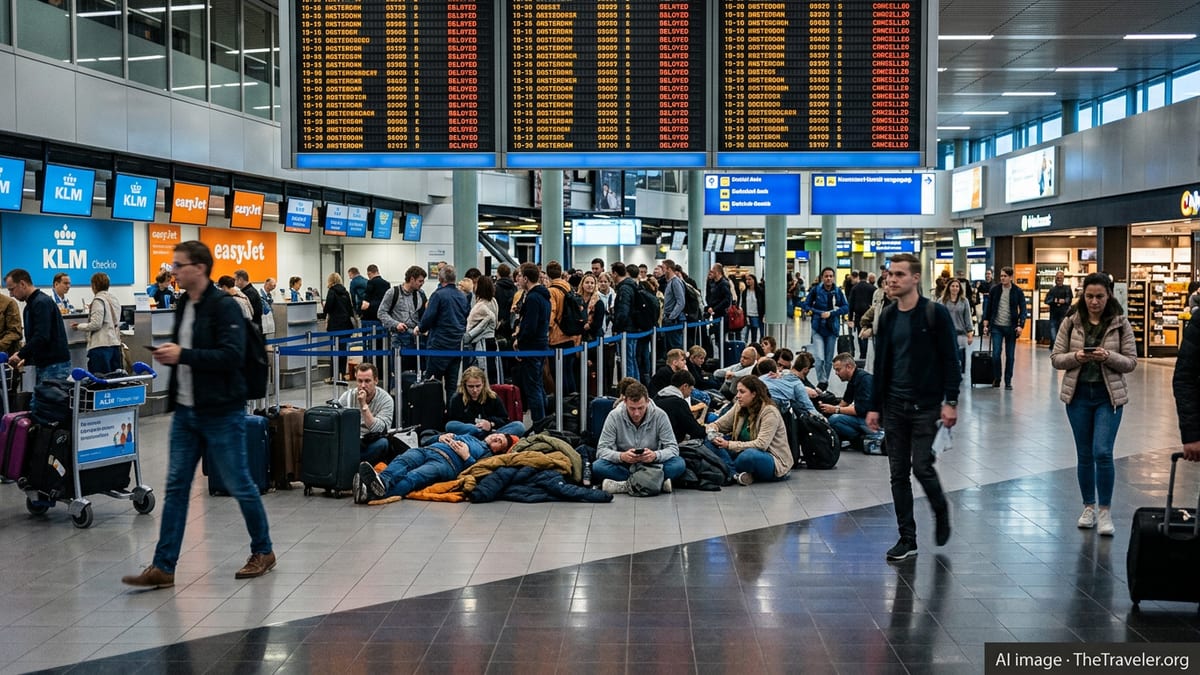
Delays and cancellations ripple from key northern European hubs
Operational data and aviation tracking services on 12 June indicate that around 1,225 flights were delayed and more than 70 were cancelled across a cluster of major European airports, led by London Heathrow, Amsterdam Schiphol, Copenhagen and Oslo. The disruption is concentrated on short haul routes linking the United Kingdom and the Netherlands with France, Scandinavia and wider continental Europe.
Published coverage shows Heathrow once again among the hardest hit airports, with several hundred movements affected by a mix of late arrivals and ground handling bottlenecks. Amsterdam Schiphol, already under scrutiny this year for recurring congestion, has continued to register a higher than usual share of late departures and missed connections, particularly on intra-European services.
In Scandinavia, Oslo Gardermoen and Copenhagen Kastrup are each reporting clusters of delayed and cancelled flights as late running aircraft from the UK and the Netherlands arrive off-schedule. Nordic routes that rely heavily on feed from Heathrow and Schiphol are displaying rolling knock-on impacts, with some passengers facing missed connections onward to regional airports in Norway, Denmark and Sweden.
Tracking platforms and airport disruption dashboards suggest that the disturbance is not limited to one carrier or alliance. Instead, it reflects a broader pattern of congestion across the north European network, where any constraint at one or two major hubs quickly spreads to neighbouring gateways.
KLM, easyJet, Ryanair and others among affected airlines
Among the airlines experiencing operational strain on Friday are KLM, easyJet and Ryanair, alongside other large European carriers. Publicly available status pages show a mix of cancelled rotations and extended delays on routes connecting Amsterdam with London, Scandinavia and regional airports in France.
Recent KLM travel alerts have highlighted a period of network instability stretching into June following months of weather and infrastructure challenges at Schiphol. Earlier this year, KLM already trimmed schedules and cancelled hundreds of flights from Amsterdam to stabilise operations, and reports indicate that further tactical cancellations are being used again to keep turnaround times under control on the busiest days.
Low‑cost operators are also being drawn into the disruption. Recent operational statistics show that easyJet and Ryanair have maintained comparatively low cancellation rates overall in 2026, but both regularly feature in delay tables when congestion grows at major hubs. On Friday, selected departures between UK airports and Amsterdam, as well as flights connecting London with Danish and Norwegian cities, have either been cancelled outright or subject to delays long enough to cause missed onward connections.
Regional and flag carriers based in Scandinavia and France are likewise contending with late aircraft arriving from affected hubs. According to network overviews, this has translated into isolated cancellations on feeder services to smaller airports, even where local conditions at the destination are normal.
Weather, staffing and air traffic constraints combine
Aviation analysts note that the latest wave of disruption is unfolding against a backdrop of persistent structural pressures in European air travel. Recent data from Eurocontrol shows that average air traffic flow management delay per flight in Europe remains elevated compared with pre‑crisis levels, reflecting constrained airspace capacity and lingering staffing challenges among providers of air traffic control and ground services.
In addition to systemic strain, the current week’s operations are still adjusting to a series of earlier shocks. Over recent months, carriers including KLM and Lufthansa have cancelled significant portions of their schedules in response to volatile jet fuel prices, while severe winter weather episodes early in 2026 triggered mass cancellations and left airlines with long rebooking backlogs. Industry observers indicate that these earlier events have reduced schedule resilience for the start of the summer peak.
At airports such as Schiphol and Heathrow, even modest spikes in passenger numbers or short‑lived weather issues can therefore translate into disproportionate numbers of delayed flights. Ground handling providers, security screening and immigration checkpoints all continue to report tight staffing margins, meaning that recovery from any disruption is slower than airlines and airport operators would typically plan for at this time of year.
Operational commentary from passenger rights and legal advisory services stresses that the resulting pattern of delay is highly uneven. Some flights on a given route continue to depart on time, while the rotation immediately before or after may be cancelled or heavily delayed, depending on aircraft and crew availability and the sequence of earlier disruptions in the day.
France, Norway and Denmark feel the downstream impact
While Friday’s problems are most visible at the major hubs, travellers in France, Norway and Denmark are bearing a significant share of the downstream consequences. Routes linking Paris, Lyon, Nice and other French cities with London and Amsterdam are seeing elevated delay levels, which then flow through to services connecting these airports to Scandinavia and central Europe.
In Norway, flights from Oslo to secondary cities and to international destinations via Amsterdam and Copenhagen are experiencing schedule changes as carriers prioritise aircraft to protect long haul and highest‑demand routes. According to airport‑level disruption trackers, some domestic passengers are facing rebookings to later departures or re‑routing via alternate hubs in Germany or Sweden.
For Denmark, Copenhagen Kastrup’s role as a key transfer point between Scandinavia, the UK and continental Europe means that disruption elsewhere can quickly materialise as missed connections. Publicly available route maps show that flights between Copenhagen and UK regional airports, as well as services to Amsterdam and major French cities, have been particularly sensitive to late inbound aircraft on busy travel days this spring.
Travel advisors monitoring the situation note that these stresses add to a wider sense of uncertainty among European holidaymakers heading into the peak summer season. After several years of recurrent disruption, passengers increasingly expect that itineraries involving multiple hubs may be vulnerable to sudden schedule changes, even when weather at departure and destination appears calm.
What passengers can expect and how to prepare
Passenger advocacy groups and legal information platforms are reminding travellers that flights departing from or arriving in the European Union and the United Kingdom are covered by compensation and care rules in many cases of long delay or cancellation. Recent airline rankings for 2026 indicate varying cancellation rates across carriers, but also show that customer experience in disruption events often depends on how quickly travellers act to secure rebooking options.
Advisory articles recommend that passengers keep airline apps installed and logged in, ensuring that contact details are current so that disruption notifications are received quickly. With airports such as Heathrow and Schiphol handling thousands of daily movements, queues at physical service desks can grow rapidly, making digital rebooking tools and call centres the faster route to alternative flights when services are cancelled.
Given the pattern of delays seen on Friday, industry observers suggest that travellers connecting through London, Amsterdam, Oslo or Copenhagen allow extra time in their itineraries where possible and consider earlier departures on the same day for critical journeys. Those with fixed-time commitments at their destination are being advised to monitor flight status closely in the 24 hours before travel and to watch for any signs of accumulating delays on the routes feeding their chosen hub.
With the European summer travel peak still building, aviation data from recent weeks points to a system operating close to capacity, in which even moderate operational shocks can affect hundreds of flights. For passengers in France, Norway, Denmark and across the region, the disruptions recorded on 12 June offer an early reminder to plan for contingencies as they head to the airport.