


More news on this day
Passengers at Bahrain International Airport faced mounting disruption as a cluster of cancellations and delays affecting Saudia, Qatar Airways, Emirates, Gulf Air and Air Arabia grounded flights to major regional hubs including Riyadh, Doha, Abu Dhabi, Dubai and Amman.
Get the latest news straight to your inbox!
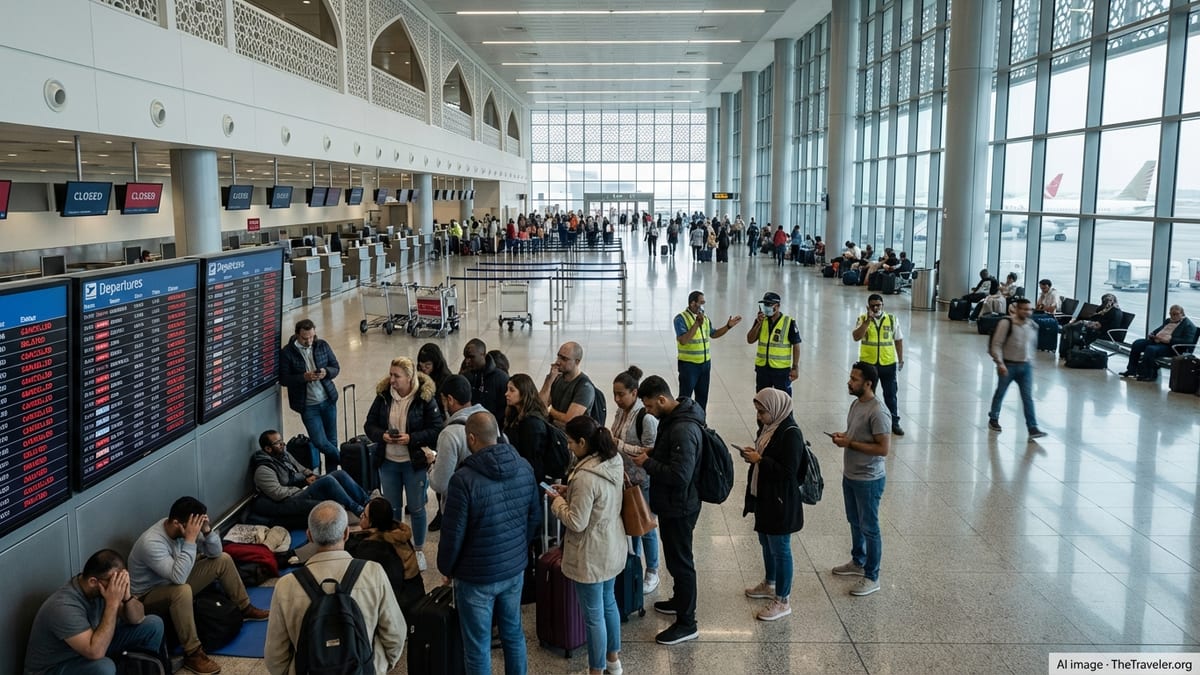
Cluster of Cancellations and Delays at Bahrain Hub
Flight monitoring data and publicly available schedule information show that Bahrain International Airport experienced a fresh wave of operational disruption, with at least four cancellations and 17 delays impacting departures and arrivals across the Gulf and Levant. The affected services include key regional links operated by Saudia, Qatar Airways, Emirates, Gulf Air and Air Arabia, limiting options for travelers who rely on Bahrain as a connecting hub.
Schedules for June indicate that Bahrain remains an important node for traffic to Riyadh, Doha, Abu Dhabi, Dubai and Amman, served both by home carrier Gulf Air and by major Gulf rivals. When several of these tightly timed rotations slip or are withdrawn, the result is a cascading effect across the day, as missed connections force further retimings and aircraft and crews fall out of position.
Tracking platforms and airline status pages point to a mix of outright cancellations and long rolling delays on regional sectors that typically run several times daily. Passengers transiting through Bahrain reported holding patterns on the ground, with departure times repeatedly revised as operations teams sought alternate routings and slot allocations.
The situation developed against a backdrop of continued fragility in regional aviation, where previously scheduled services can be pulled or retimed at short notice in response to changing airspace permissions, congestion in neighboring hubs and broader security considerations.
Regional Airspace Constraints Keep Pressure on Schedules
Recent months have left airline planners across the Middle East navigating a patchwork of airspace restrictions and route suspensions. Public advisories and corporate travel bulletins have highlighted temporary closures or limitations affecting Bahrain, Qatar, the United Arab Emirates, Jordan and other states, forcing carriers to redesign routings and accept longer block times on many services.
Industry circulars issued this spring described a period of suspended or heavily curtailed operations at several leading hubs, including Dubai, Abu Dhabi and Doha, following escalations in regional tensions. Although many airports have since moved toward phased resumptions, capacity remains constrained in places, and some Gulf carriers continue to operate with reduced frequencies and additional contingency time built into their schedules.
For Bahrain International Airport, these regional dynamics mean that even a modest number of cancellations or extended delays can quickly disrupt connections. Flights onward to Riyadh, Amman or Dubai are often timed to feed long haul departures from neighboring hubs, so when upstream services from Bahrain run late, onward itineraries can unravel, prompting airlines to consolidate services or rebook passengers on alternative routings.
Operational updates from travel management firms and corporate risk consultancies have repeatedly warned that travelers in the region should monitor flight status closely and be prepared for short-notice changes, particularly on multi-leg journeys involving more than one Gulf or Levant gateway.
Impact on Key Carriers and Routes
The latest disruptions at Bahrain International Airport touched several of the region’s best known airlines. Gulf Air, which uses Bahrain as its primary hub, has already spent much of the year adjusting its network in light of earlier airspace closures, at one stage using Dammam in Saudi Arabia as an alternate gateway for some services. Any fresh irregular operations at its home base magnify the pressure on its fleet and crew planning.
Saudia, Qatar Airways and Emirates each operate dense networks that rely on predictable Bahrain feeder traffic into their respective hubs in Riyadh, Doha and Dubai. When Bahrain departures run late or are cancelled, passengers can miss onward long haul flights, forcing airlines to find seats on later departures or reroute via alternative hubs such as Jeddah or Abu Dhabi, where capacity is also in high demand.
Air Arabia, which serves Bahrain from the United Arab Emirates, adds another layer of complexity. Low cost operations typically depend on tight aircraft turnarounds and high daily utilization. Even a short delay on a sector into or out of Bahrain can propagate across multiple rotations, affecting travelers who may not have realized their journey depends on aircraft originating in another constrained airspace.
Routes linking Bahrain with Amman, Riyadh and other Levant and Gulf cities are particularly exposed, since they often operate using narrow scheduling buffers and share air corridors with flights that must detour around restricted zones. Analysts note that in such an environment, disruption at one airport rarely remains a purely local issue, instead feeding into a wider pattern of missed connections and last-minute rebooking across the region.
Stranded Passengers and Travel Planning Challenges
Travel forums and social media posts from recent weeks suggest that passengers affected by disruptions in and around Bahrain are facing long waits for rebooking, sometimes over multiple days, depending on their final destination and ticket type. While airlines have generally offered rerouting where seats are available, reduced frequencies and altered routings mean that the usual same-day connection options are not always possible.
Travel advisories circulated to corporate clients encourage those transiting Bahrain and other Gulf hubs to build in longer connection times than they might have chosen before the current period of instability. Advisers also recommend keeping itineraries as simple as possible, minimizing separate tickets and last minute self-connections, which are more vulnerable when delays accumulate.
For leisure travelers, the disruption translates into uncertainty around trip start and end dates and, in some cases, lost hotel nights and prepaid excursions. Travel insurance providers have reported elevated levels of claims associated with Gulf airspace issues, including for missed tours, additional accommodation near airports and alternative transport arrangements.
Airline policy pages indicate that carriers continue to apply standard disruption policies, including options to rebook at a later date, accept travel vouchers or, in some situations, request refunds. However, processing times can be extended when many passengers are affected simultaneously, and customer advocates advise keeping detailed records of delays and expenses.
What Travelers Using Bahrain Airport Should Do Now
Publicly available guidance from airlines, airports and travel management companies converges on several key recommendations for those planning to travel through Bahrain International Airport in the coming days. First, passengers are urged to check the status of their flights repeatedly in the 24 hours before departure, using official airline channels or airport flight information services, since schedules can change at short notice.
Second, travelers are encouraged to allow extra time for connections, particularly when routing onward from Bahrain to hubs such as Riyadh, Doha, Abu Dhabi, Dubai or Amman. Where possible, booking a longer layover can provide a buffer against knock-on delays and reduce the risk of misconnecting onto a long haul leg.
Third, both leisure and business travelers may wish to review the terms of their tickets and any associated travel insurance before departure, to understand what flexibility and coverage they have if cancellations or long delays occur. Policies differ between airlines and fare classes, and some disruption waivers in the region have been time limited.
While the cluster of four cancellations and 17 delays at Bahrain International Airport represents only a fraction of the airport’s daily movements, it underscores the fragility that still characterizes air travel across parts of the Middle East. Until airspace restrictions and security concerns ease more decisively, Bahrain and its neighboring hubs are likely to remain vulnerable to sudden bouts of disruption.