


More news on this day
Travellers planning trips to Dubai this summer are being urged to double check their bookings, as a shifting mix of airspace restrictions, security concerns and operational limits continues to push some major international airlines to cut or cancel flights into the Gulf hub.
Get the latest news straight to your inbox!
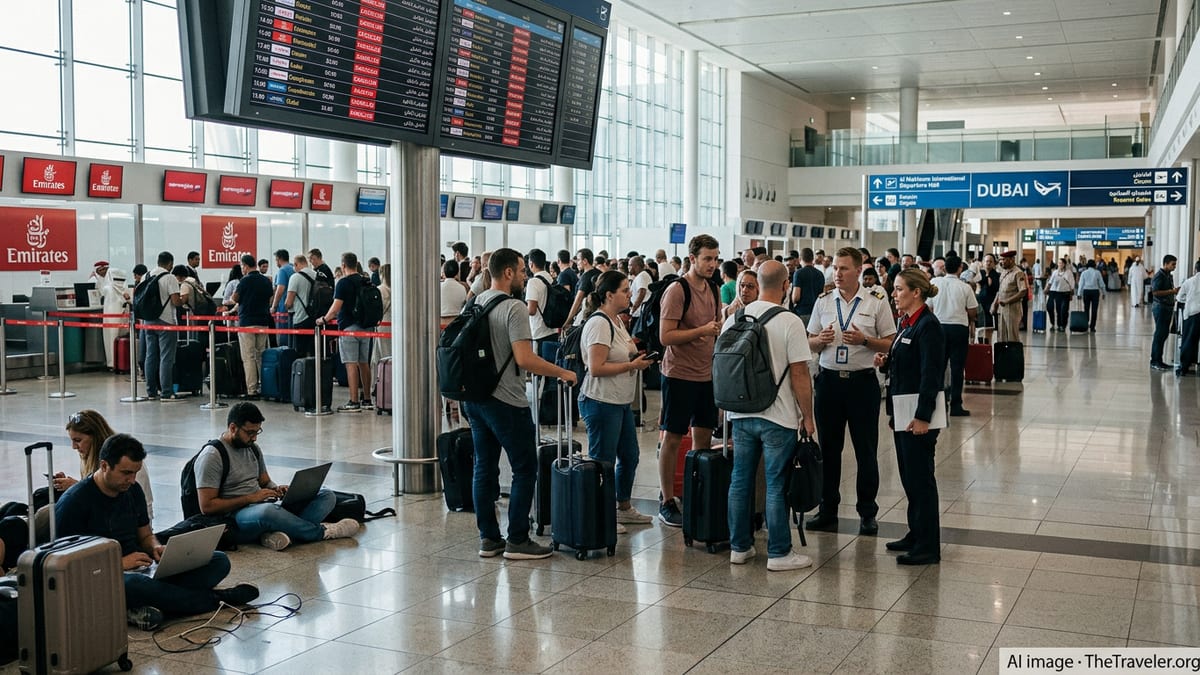
Summer in Dubai, But Not for Every Airline
Dubai International Airport remains one of the world’s busiest long haul gateways, yet the 2026 summer schedule into the city is thinner than usual as some foreign carriers hold back from a full return. Industry data and published advisories point to a patchwork of cancellations, service suspensions and reduced frequencies stretching well into the traditional June to August peak.
The disruption is rooted in a series of shocks that began with regional airspace closures and strikes in late February, which briefly shut both Dubai International and Al Maktoum airports to regular traffic. Although core Gulf carriers have largely restored operations, foreign airlines have been slower or more selective in rebuilding their Dubai schedules, citing indirect routings, higher insurance costs and tight aircraft availability.
For passengers, the result is a more volatile timetable than pre‑crisis summers. Flights that do appear in booking engines are more vulnerable to last minute retiming or consolidation, while some routes that once operated daily are only available a few days a week, if at all.
European Carriers Trim Back or Stay Away
Among the most visible changes for Dubai‑bound travellers this summer are on European airlines, several of which have either pushed back their full return or sharply thinned services. Industry reports indicate that a major Central European group has postponed the restart of its Dubai route network until early September, cancelling or rebooking passengers with tickets through the end of August and advising customers to consider connections via other hubs.
Additional travel‑trade guidance from the United Kingdom describes British carriers maintaining a more limited footprint at Dubai than originally scheduled, with some flights suspended for extended periods and flexible rebooking policies in place. Travel agencies report that passengers holding summer Dubai tickets on certain European airlines have been offered waivers to reroute via partner hubs in the Gulf or to shift holidays to later in the year.
These decisions are shaped partly by the longer, more complex routings now required to avoid sensitive airspace, which add flight time and fuel burn on already stretched fleets. European airlines have also had to weigh Dubai against competing summer priorities such as Mediterranean leisure routes, where demand is strong and operational risks are lower.
Regional and Asian Airlines Navigate Ongoing Uncertainty
Gulf and regional airlines have generally moved faster than their European counterparts to rebuild schedules into Dubai, but they are not immune to cancellations. Passenger‑facing disruption snapshots from March and April showed repeated days with double‑digit cancellations and widespread delays across carriers operating from Dubai, Sharjah and Ras Al Khaimah, including Emirates, flydubai, Air Arabia, IndiGo, Gulf Air and EgyptAir.
Operational summaries from aviation data providers noted that some Asian and Middle Eastern airlines temporarily suspended Dubai services altogether at the height of airspace closures, while others maintained skeleton operations shaped around available corridors and airport capacity. Even as more regular flying resumed in late spring, timetables have continued to shift, with select frequencies cut and overnight flights consolidated to manage crew and aircraft positioning.
For travellers originating in South Asia or the wider Middle East, this means fewer one‑stop options into Dubai on familiar regional brands and a greater likelihood of being moved onto alternative routings or different departure days. Some airlines have responded by offering broader change‑fee waivers for itineraries touching the Gulf, reflecting the reality that schedules may need further adjustment as the season progresses.
Why Flights Are Still Being Cancelled
The pattern of summer cancellations into Dubai is tied to a combination of security, regulatory and commercial factors rather than a single event. Analysis from aviation consultancies points to continuing restrictions and advisories across parts of Middle Eastern airspace, forcing airlines to reroute around certain countries and conflict zones. These diversions lengthen flights between Europe or Asia and the Gulf, squeezing aircraft utilisation and raising operating costs.
At the same time, the sudden shock earlier in the year left airlines with damaged booking curves and uncertain demand forecasts on Gulf routes. Some carriers have chosen to cap exposure by pulling weaker flights from their schedules and focusing on routes with clearer profitability. Insurance and fuel expenses have also risen for operators flying near the region, tilting the economics further against marginal services.
Airport capacity and staffing constraints add another layer of complexity. After periods of suspended or reduced activity, ramping back up to full summer volumes requires careful sequencing of slots, ground handling and security resources. Publicly available updates from Dubai’s aviation authorities and airport operators have repeatedly urged passengers not to travel to the airport without confirmed bookings, signalling that contingency operations remain in place even as runways and terminals stay open.
What Passengers Should Expect This Summer
For anyone planning a summer trip to Dubai, the current environment calls for closer attention to the fine print of airline policies and to the status of individual flights. Consumer advisories from travel organisations and airline websites emphasise that a confirmed reservation is no guarantee the original schedule will hold, especially for itineraries booked months in advance.
Passengers holding tickets on foreign carriers that have scaled back their Dubai operations may see their flights retimed, rerouted via alternative hubs or cancelled outright with offers of refunds or rebooking on later dates. Those travelling on Gulf‑based airlines are more likely to find a wider choice of departures, but should still be prepared for schedule tweaks, longer flight times along diverted routes and busier‑than‑usual peak periods at Dubai International.
Industry analysts suggest that while the worst of the sudden shutdowns appears to have passed, the region is set to remain one of the most operationally challenging for global aviation through the 2026 summer. That means travellers bound for Dubai can expect a season defined less by headline‑grabbing mass cancellations and more by rolling, flight‑by‑flight adjustments that reward careful monitoring and flexible plans.