


More news on this day
Eurostar passengers endured a six hour delay on a halted cross channel service this week after extreme heat triggered operational restrictions and widespread disruption across the high speed rail network.
Get the latest news straight to your inbox!
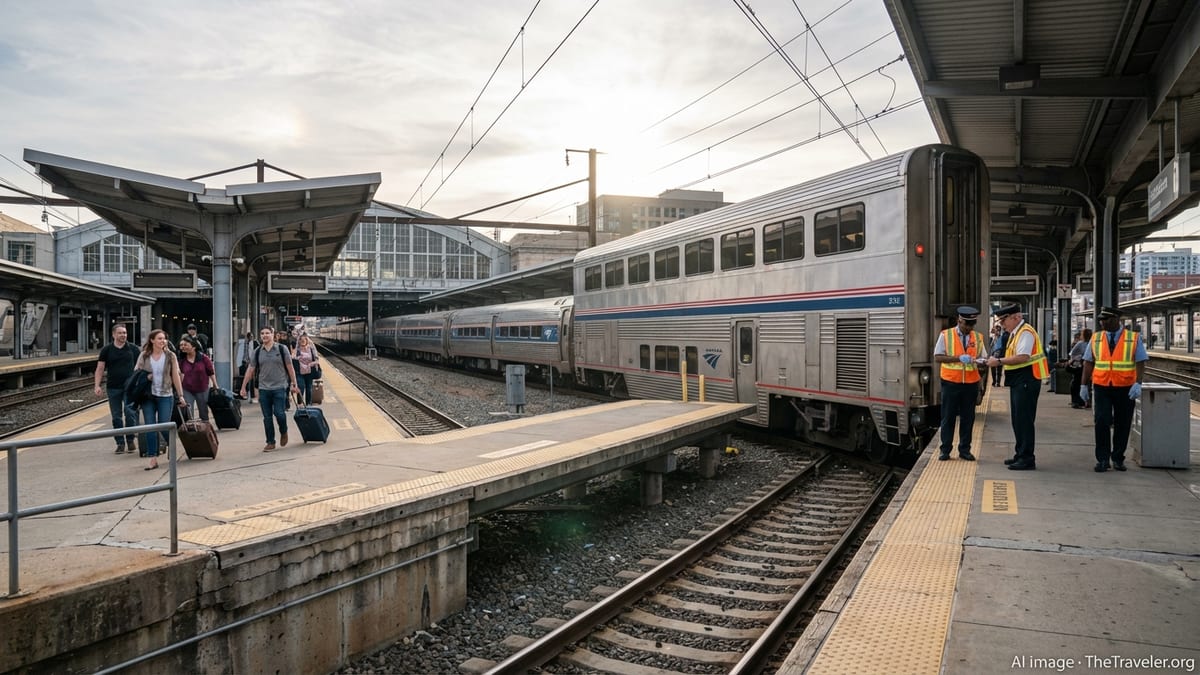
Six hour standstill amid European heatwave
Reports from passengers and local media indicate that a Eurostar service on the north European high speed network was brought to a prolonged halt as temperatures climbed and infrastructure operators imposed restrictions because of the heat. Travellers described remaining on board for around six hours while the train stood still, transforming what should have been a routine journey of a few hours into an extended ordeal.
The disruption occurred as parts of France, Belgium and the United Kingdom were placed under severe heat warnings, with rail infrastructure managers introducing speed limits and tighter safety margins on sections of track and overhead power equipment considered vulnerable in extreme temperatures. Publicly available information from Eurostar and partner operators shows that services across the network were already operating on constrained timetables as a result.
While the affected train ultimately completed its route, passengers reported missed connections, ruined holiday plans and late night arrivals at their final destinations. Social media posts described carriages becoming increasingly uncomfortable as the hours passed, despite modern rolling stock being fitted with air conditioning and sun protection glazing.
The incident added to a growing list of recent long duration stoppages that have affected international rail passengers in Western Europe during bouts of exceptional weather or infrastructure failures.
Extreme heat forces cancellations and speed restrictions
According to published disruption updates, Eurostar has been cancelling and retiming services between June 25 and June 30 as an exceptional spell of heat sweeps across its core routes. The operator has cited temperature related operational restrictions on the high speed network, where track stability and overhead power systems are closely monitored during hot weather.
Rail infrastructure managers in France and other affected countries routinely apply reduced speed limits and modify train paths when sustained high temperatures risk causing rails to expand or catenary wires to sag. These safety measures lower the likelihood of equipment failures but significantly reduce line capacity, creating knock on delays that can quickly cascade across dense international timetables.
Eurostar’s online travel advice has urged customers to check their journey status before heading to stations and has offered options to exchange tickets or postpone non essential travel during the heatwave period. Travel industry guidance notes that passengers on severely delayed trains on cross border routes may be entitled to compensation under European rail passenger rights legislation, subject to specific conditions.
The six hour delay on the halted service illustrates how extreme weather can still overwhelm mitigation plans, especially where failures or incidents occur on already constrained sections of line or in tunnels and cuttings where temperatures can remain high even after sunset.
Passenger experience highlights communication challenges
Accounts shared by travellers suggest that the most stressful aspect of the six hour stop was not only the delay itself but uncertainty over what was happening and how long it would last. Several passengers described long gaps between announcements and limited real time information being displayed on on board systems as operational staff liaised with rail traffic control and maintenance teams.
Recent coverage of other Eurostar and high speed rail disruptions has highlighted similar concerns around communications when trains are immobilised for extended periods. In previous incidents affecting the Channel Tunnel and northern France, passengers have reported running low on food and water, facing uncomfortable temperatures and struggling to make alternative arrangements because they did not know whether to expect resolution in minutes or hours.
Consumer advocates argue that clear, frequent updates, even when little new information is available, can significantly reduce stress for families, older passengers and those with onward connections. They also point to the importance of visible staff presence in the carriages during long stoppages and structured distribution of water and basic refreshments where possible.
Operators across Europe have been reviewing contingency plans in recent years, including the availability of rescue locomotives, procedures for train to train transfers and criteria for evacuating trains in tunnels or remote sections. The latest incident is likely to renew debate over how quickly such measures should be deployed when immobilisation occurs during extreme temperatures.
Growing tension between climate resilience and high speed demand
The six hour stoppage has unfolded against a broader backdrop of climate related stress on Europe’s railways. Meteorological agencies have reported an increasing frequency of intense heat events across Western Europe, putting strain on infrastructure that was often designed for milder historical conditions.
High speed rail lines are particularly sensitive to temperature variations because trains operate at up to 300 km/h and rely on precise tolerances in track geometry and overhead power equipment. When temperatures exceed certain thresholds, infrastructure managers must protect safety by lowering speeds or suspending traffic on vulnerable sections. This protects passengers but clashes with rising demand for fast, frequent international services linking major cities such as London, Paris, Brussels and Amsterdam.
Industry analysts note that rail remains a lower carbon alternative to short haul flying on these corridors, and governments have promoted services like Eurostar as part of wider decarbonisation strategies. At the same time, investing in climate resilience for rail infrastructure, including upgraded materials, better monitoring and enhanced ventilation in tunnels, requires significant long term funding.
The latest delay, triggered amid an official extreme heat warning, underlines how achieving both reliability and sustainability will require continued adaptation of infrastructure and operations as European summers become hotter and more unpredictable.
What affected passengers can do next
Travel rights guidance for international rail suggests that passengers delayed for several hours may be eligible for partial refunds or vouchers, depending on the length of the delay and whether they chose to complete their journey. Eurostar’s own published policies typically offer graduated compensation levels once delays exceed one or two hours, though the exact thresholds and amounts can vary over time.
Advisers generally recommend that travellers keep boarding passes, booking references and any receipts for essential expenses incurred as a direct result of the delay, such as last minute accommodation, meals or alternative transport. Claims are usually submitted online through the operator’s customer service portal, with processing times dependent on the volume of cases following major disruption.
Passenger groups also encourage affected travellers to document their experience, including approximate timings and any communication received on board, as this can support claims and help operators refine contingency plans. Some rail users choose to share feedback with national rail regulators or consumer bodies if they feel minimum standards for care, information or temperature management were not met.
For future trips during forecast heatwaves, travellers are being advised by transport agencies and tourism bodies to build more buffer time into itineraries, travel earlier in the day where feasible, and monitor operator updates closely. While the six hour Eurostar standstill remains an exceptional event, it serves as a reminder that climate related disruption is now a central consideration for anyone planning cross border rail journeys in Europe’s peak summer season.