


More news on this day
A sudden air traffic control strike in France has exposed how a single industrial dispute can ripple across Europe, leaving easyJet passengers unexpectedly stranded hundreds of kilometres away in Malaga.
Get the latest news straight to your inbox!
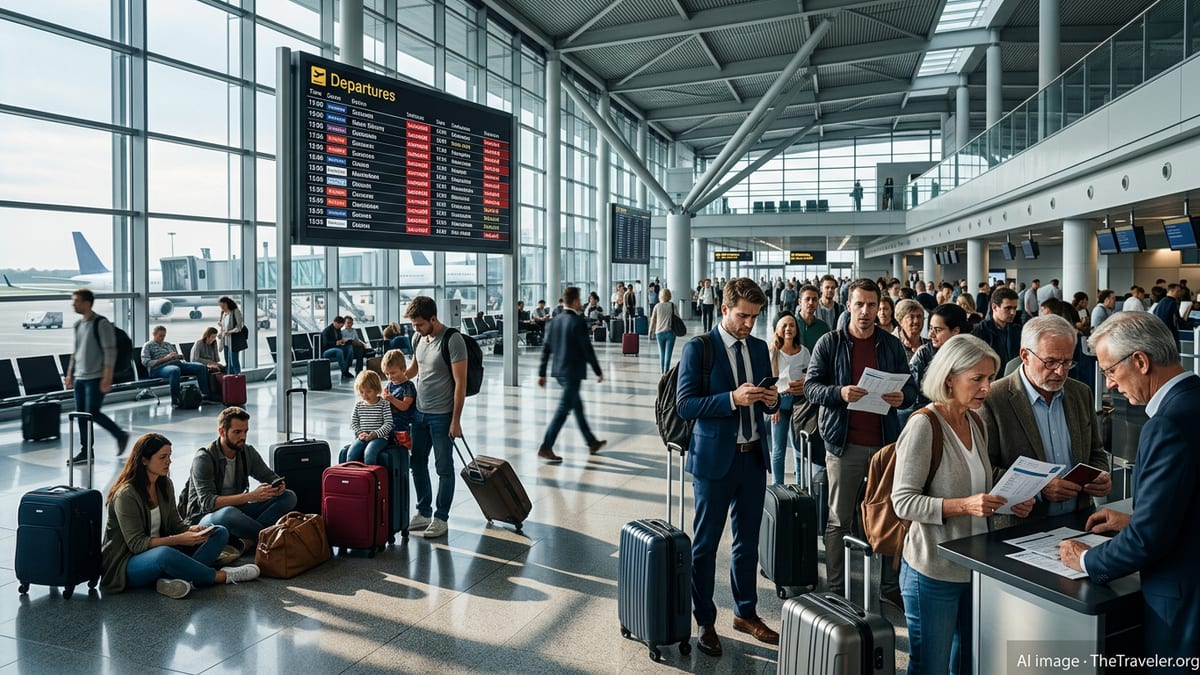
From French picket lines to a bottleneck in Malaga
According to regional coverage in Spain, travellers booked on an early morning easyJet service from Malaga to London Gatwick on Friday June 26 arrived at the airport to find their 6 a.m. departure cancelled at short notice. The airline reportedly informed passengers that the aircraft due to operate the flight had been forced to remain overnight at another airport because of air traffic control restrictions linked to industrial action in France.
Reports indicate that the disruption stemmed from strike activity by French air traffic controllers, who have staged a series of stoppages in 2024 over workload and modernisation plans. Although the walkout was focused on French airspace and airports such as Paris Orly and regional hubs, the knock-on effect reached much farther, affecting aircraft and crews positioned around the network.
With the outbound aircraft trapped outside Spain, easyJet was unable to reposition a replacement in time for the dawn departure from Malaga. Passengers were offered rebooking options later the same day or on subsequent days, but a lack of available seats at the height of the summer travel season meant some travellers faced overnight stays or extended delays before reaching the United Kingdom.
The incident underlined how strikes that do not directly involve Spanish workers or Malaga Airport can still immobilise aircraft and disrupt schedules along popular leisure routes, particularly those linking southern Spain with major hubs in northern Europe.
Why a strike in France disrupts flights that never land there
French air traffic control plays a pivotal role in European aviation because a large share of north–south and west–east traffic passes through its airspace. Industry data published by Eurocontrol and other network managers show that a stoppage by controllers in France can affect up to a third of flights across the continent on a given day, as carriers divert routes or accept lengthy slot restrictions.
Low cost airlines such as easyJet, which operate dense point to point networks between the UK and Mediterranean destinations, are particularly exposed. Many flights between Spain and the UK either cross French airspace directly or depend on French control centres to manage adjacent sectors safely. When staff walk out, authorities often impose flow limits that sharply reduce the number of aircraft that can enter or transit affected regions.
In practical terms, that can mean aircraft and crews are not where they are supposed to be the following morning. A plane scheduled to overnight in the UK so it can run an early rotation to Malaga may instead be held on the ground elsewhere in Europe while French airspace is constrained. The following day, the lack of an available aircraft cascades into cancellations or significant delays on routes that passengers might assume are unrelated to events in France.
The Malaga to Gatwick case illustrates this domino effect. Even if the flight itself would only overfly a narrow band of French territory, restrictions can snarl the inbound sector that positions the aircraft, breaking the carefully choreographed pattern of short-haul rotations that airlines rely on to keep planes busy from dawn until late at night.
Passengers face long waits and limited alternatives
For the travellers stranded in Malaga, the timing of the cancellation created an additional set of problems. The decision reportedly became clear only close to departure time, by which point many passengers had already travelled to the airport, some in the early hours of the morning. With alternative easyJet services from Malaga to London already heavily booked, re-accommodating everyone proved challenging.
Publicly available information and consumer advocacy commentary suggest that, while airlines are generally required to provide care in the form of meals and, if necessary, hotel accommodation when flights are cancelled at short notice, the practical delivery of that support can vary widely. At busy holiday airports, queues at customer service desks and limited stock of nearby hotel rooms can leave passengers managing their own arrangements and seeking reimbursement later.
In the Malaga incident, some passengers were reportedly rebooked via indirect routings or on flights departing the following day, effectively turning what should have been a straightforward return journey into a multi day ordeal. Families with children, travellers on tight work schedules and those with non refundable onward connections were among the hardest hit by the lack of flexibility in the system.
The disruption also coincided with a broader period of heightened summer demand, meaning that spare capacity on other airlines was limited. Even when seats were available on competitor carriers, prices were often significantly higher at short notice, making it costly for travellers to take matters into their own hands rather than wait for an airline allocation.
Complex rules on compensation and responsibility
The French strike highlighted once again the complexity of air passenger rights in Europe when cancellations are caused by factors beyond an airline’s direct control. Under UK and EU regulations, passengers are generally entitled to care and rerouting when their flight is cancelled, but compensation payments for inconvenience depend on whether the cause is considered an extraordinary circumstance.
Legal guidance and recent case handling suggest that airlines frequently argue that air traffic control strikes fall into this category, meaning they are not obliged to pay fixed compensation on top of providing a refund or an alternative routing. Consumer groups, however, often stress that the obligation to organise timely rerouting and practical assistance remains, regardless of the strike’s origin.
In the case of the Malaga to London Gatwick cancellation, this distinction is crucial. Travellers may find that they are eligible for hotel costs and meals but not for an additional lump sum, even if their disruption stretched well beyond a day. Some law firms and claims management services actively monitor such incidents, encouraging passengers to submit detailed evidence in order to test whether the airline took all reasonable measures to avoid or reduce disruption.
The situation also exposes a grey zone for passengers whose journeys cross multiple jurisdictions. With British travellers flying from Spain, on a UK based carrier, affected by a French labour dispute, understanding which legal framework applies and how to pursue a claim can be daunting, especially for those stranded abroad and focused on simply getting home.
Growing concern over repeated French ATC stoppages
The Malaga disruption occurred against a backdrop of mounting concern about the frequency and impact of French air traffic control strikes. Over recent years, unions representing controllers have staged a series of walkouts over pay, staffing and reform plans, leading to repeated waves of cancellations and diversions across the European network.
Travel industry commentators and aviation bodies have warned that repeated stoppages can erode confidence in cross border air travel, particularly during key holiday periods. Airlines serving Mediterranean destinations have reported increased operational complexity, as they attempt to build more slack and contingency into schedules that are already tightly optimised to keep fares low.
Policy debates within France and at the European level have explored possible reforms, including proposals to guarantee minimum service levels or restrict strike days during major events. Critics argue that such moves could undermine workers’ rights, while supporters claim that they are necessary to protect millions of passengers from disproportionate disruption caused by labour action in one country.
For easyJet and its customers, the latest stranded passengers in Malaga are a reminder that, until a durable solution is found, even a seemingly localised industrial dispute can leave holidaymakers sleeping in unexpected places, their plans upended by events unfolding hundreds of kilometres away in the control towers that manage Europe’s crowded skies.