


More news on this day
An evacuation order has been lifted in Bucyrus, Ohio, after a freight train derailment involving a tanker carrying hydrochloric acid prompted residents within a one-mile radius of the crash site to leave their homes overnight, according to multiple local and regional news reports.
Get the latest news straight to your inbox!
Evacuation Order Canceled as Risk Assessment Changes
Publicly available information from Crawford County emergency management updates indicates that the evacuation order, issued late on July 5, was fully lifted by late Monday morning on July 6. The change followed site inspections and monitoring that found no active leaks from the railcars involved in the derailment near Whetstone Street and Auto Avenue on the city’s west side.
Initial guidance asked residents in a one-mile area around the derailment to leave their homes because of concern that a tank car loaded with hydrochloric acid could be compromised. Subsequent assessments allowed the evacuation radius to be reduced to a quarter mile before the order was ultimately canceled, based on reports that no hazardous material had escaped and that there was no immediate threat to public safety.
Local coverage indicates that Bucyrus High School opened as an emergency shelter for evacuees during the height of the incident, providing a temporary refuge for households forced to leave quickly on Sunday night. By Monday, residents were being told they could return, although access to the immediate crash zone remains restricted.
Details of the Bucyrus Derailment
The derailment occurred shortly before 9 p.m. on Sunday, July 5, when several cars of a Norfolk Southern freight train left the tracks at a grade crossing in Bucyrus, a small city in Crawford County in northern Ohio. Reports from regional outlets describe multiple derailed cars, including at least one tanker containing hydrochloric acid and others said to be carrying nonhazardous cargo.
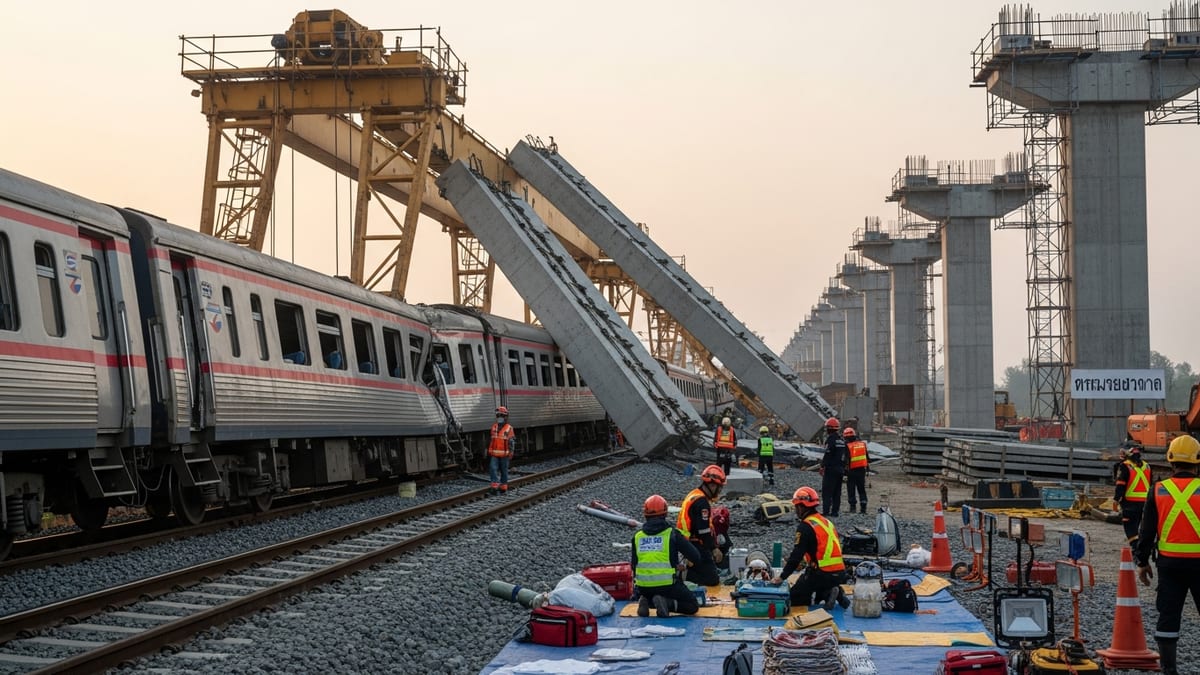
Images shared in local news coverage show overturned and jackknifed railcars lying alongside the tracks and within a nearby industrial area. The tanker of greatest concern came to rest entangled with other cars, prompting an extensive hazardous materials response as crews worked through the night to stabilize the equipment and evaluate potential leaks.
Published information indicates that there were no reported injuries among train crew or residents. However, the combination of a hazardous cargo tank, a dense residential area, and nighttime conditions led to a cautious approach that prioritized evacuation until more detailed inspections could be completed in daylight.
Ongoing Cleanup and Disruption Around Whetstone Street
With the evacuation order lifted, attention in Bucyrus has shifted to cleanup and infrastructure repair. Reports from Ohio news outlets describe heavy equipment working to rerail or remove damaged cars, clear debris, and inspect track and roadbed conditions before normal rail operations can resume through the corridor.
Whetstone Street, a key local route that crosses the tracks near the derailment site, remains closed to through traffic while recovery operations continue. Publicly available updates suggest that the road is expected to reopen as early as Tuesday, though timelines may change as crews progress with repairs.
Nearby residents are being advised in local coverage to avoid the immediate derailment zone to give work crews space and to reduce the risk of secondary incidents. Rail and contractor teams are also expected to conduct follow-up environmental checks to confirm that soil and air remain within acceptable safety thresholds around the site.
Community Jitters in a State Marked by Past Derailments
The Bucyrus incident arrives in an Ohio community already familiar with national headlines about freight rail accidents. The state continues to reckon with the legacy of previous high-profile derailments involving hazardous materials, including the 2023 disaster near East Palestine, which led to significant environmental concerns and policy debates about rail safety standards.
While current reporting on the Bucyrus derailment emphasizes that no hazardous release has been detected and that testing has not revealed an ongoing chemical threat, the visible presence of overturned tank cars and hazmat teams has renewed public discussion about what trains are carrying through residential areas and how risks are managed.
Local and national coverage of rail safety over the past several years has highlighted recurring questions about train length, staffing levels, track maintenance, and the handling of hazardous cargo. The Bucyrus evacuation, even though short-lived, is likely to feed into those broader conversations among residents, advocates, and policymakers concerned about the balance between freight efficiency and community protection.
Next Steps for Rail Operations and Oversight
As cleanup continues in Bucyrus, investigators and regulators are expected to focus on determining what caused the Norfolk Southern freight train to leave the tracks at the Whetstone Street crossing. Early reporting does not indicate a confirmed cause, and it will likely take time for formal findings to emerge from technical reviews of track conditions, equipment performance, and train handling.
Publicly available federal and state transportation data show that derailments involving hazardous materials, while relatively rare compared with total train movements, can carry outsized consequences when evacuations and chemical risks intersect with populated areas. Episodes like the Bucyrus derailment typically prompt renewed scrutiny of emergency planning, communication practices, and railroads’ internal safety protocols.
For residents of Bucyrus, the lifting of the evacuation order marks an immediate return home but not necessarily an end to concern. Many communities along busy freight corridors are likely to watch closely how this incident is investigated, how quickly the site is restored, and whether any new commitments are made around transparency about hazardous cargo moving through northern Ohio.