


More news on this day
Evacuation and shelter-in-place instructions were lifted Tuesday evening after a freight train derailed near Feasterville-Trevose in Bucks County, Pennsylvania, briefly raising concerns about potential hazardous materials and disrupting travel around a busy rail corridor.
Get the latest news straight to your inbox!
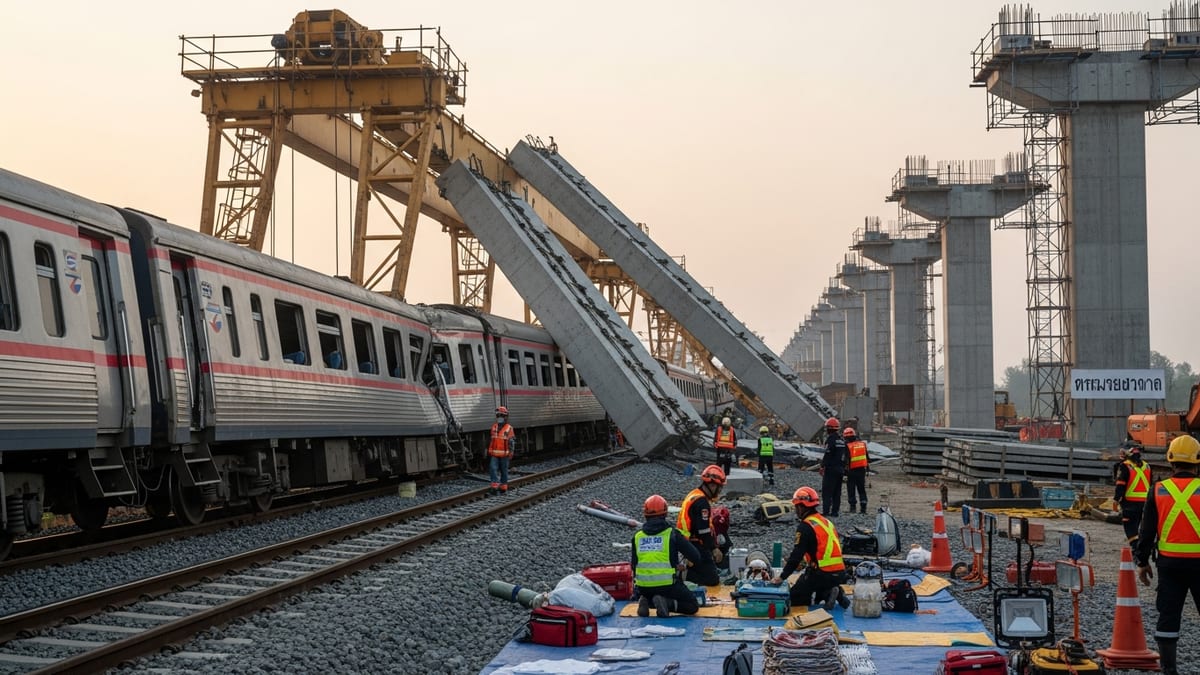
Derailment Near Neshaminy Falls Halts Local Activity
Publicly available reports indicate that at least a dozen freight cars left the tracks Tuesday afternoon in the area between Street Road and the Neshaminy Falls station, close to Feasterville-Trevose in Bucks County. The derailment occurred along a freight line that runs through a mix of residential neighborhoods, commercial corridors and light industrial properties north of Philadelphia.
Images shared by regional news outlets showed several cars tilted or on their sides near the tracks, with emergency vehicles converging on nearby streets. Coverage from Philadelphia-based broadcasters and local digital outlets described a significant emergency response involving police, fire companies, emergency medical teams and hazardous materials specialists.
Initial information from local public safety agencies described the incident as a freight derailment with possible hazardous cargo, prompting rapid precautionary measures for people living and working near the scene. Rail traffic through the immediate area was halted while crews assessed track damage and checked the derailed cars.
The affected stretch of track sits close to major commuter routes and shopping areas in Lower Bucks County, and the derailment quickly rippled into traffic congestion as roads were blocked around the site. Images distributed through wire services showed barricades and police vehicles sealing off key intersections.
Shelter-in-Place and Evacuation Instructions Issued, Then Lifted
According to published coverage from regional television and newspaper outlets, local public safety agencies responded by issuing both evacuation and shelter-in-place instructions for an area around the derailment. Residents and businesses near the tracks were advised either to leave a defined zone or to remain indoors with windows and doors closed while hazardous materials teams evaluated the scene.
Alerts circulated through municipal notification systems and social media channels, describing a controlled perimeter and a request that people avoid the area. Local reports describe a temporary sense of uncertainty as residents weighed whether to relocate or wait for updated guidance, while traffic was rerouted around the closed blocks.
Within a few hours, rail company representatives and emergency responders had completed initial inspections of the derailed cars. Coverage from Philadelphia newsrooms and national outlets indicates that those checks did not detect any release of hazardous substances from the train. Publicly available information states that air monitoring in the vicinity showed no concerning readings.
Based on those assessments, local agencies lifted both the evacuation and shelter-in-place instructions later in the day. Residents were told they could return to homes and businesses inside the earlier exclusion zone, and normal outdoor activity gradually resumed, though some road and rail restrictions remained while cleanup continued.
Hazmat Response and Safety Assessments Shape Travel Guidance
The incident prompted a full hazardous materials response, reflecting heightened sensitivity in the region and nationwide to freight trains that may carry chemicals or other regulated cargo. Reports from outlets including CBS Philadelphia, NBC affiliates and Reuters describe hazmat units positioning along Old Lincoln Highway and nearby roadways while crews checked the train consist and individual cars for leaks or structural damage.
According to multiple news summaries, the freight consist included at least some cars permitted to carry hazardous materials, though it remained unclear from early reporting which specific substances, if any, were present in the derailed section. As a result, responders treated the incident with caution until field readings and visual inspections could rule out active leaks.
Travel guidance for drivers and nearby residents evolved as those assessments progressed. Early in the response, authorities strongly discouraged nonessential travel through the wider Feasterville-Trevose and Bensalem area, in part to keep access routes clear for emergency vehicles. Once monitoring suggested no serious air-quality concerns and no active spill, local reporting indicates that the focus shifted from public health risk to congestion management and access for rail recovery crews.
For much of the afternoon and evening, barricades and posted officers blocked segments of Bristol Road, Pine Road and other local streets near the derailment site. Drivers in Bucks County were advised by regional traffic reports to use alternate routes, with some commuters facing extended delays as they tried to navigate around the closure.
Rail Operations and Clean-Up Efforts Continue
While immediate public safety concerns eased as the day progressed, rail and infrastructure recovery are expected to take longer. Coverage by local newsrooms and national wire services notes that multiple cars left the tracks and that at least some sustained visible damage, raising questions about track conditions, potential equipment issues or other factors that will be examined in a formal investigation.
Railroad contractors and specialized heavy-equipment crews typically handle the process of rerailing cars, clearing debris and repairing track. According to regional transportation updates, work lights and cranes were brought in as evening fell, with the aim of stabilizing derailed cars and preparing them to be moved off the damaged section.
Passenger and freight schedules using nearby corridors may experience residual disruptions while that work is underway. Travelers who rely on regional rail lines in Bucks County were advised by local transportation coverage to check updated schedules and service alerts, although the affected line primarily serves freight traffic rather than regular commuter trains.
Formal findings on the cause of the derailment had not been published in the immediate aftermath. Past incidents of this type in the region have ultimately been attributed to a combination of track defects, mechanical issues or operational factors, and independent agencies typically review data recorders, inspection logs and maintenance history before releasing conclusions.
Community Impact and Ongoing Preparedness Concerns
The Fredericksville-Trevose derailment adds to a series of rail incidents across the United States that have intensified public attention on hazardous materials routes and emergency preparedness. Residents in Bucks County, already familiar with busy rail corridors and heavy truck traffic, encountered a real-time test of notification systems, evacuation protocols and coordination among multiple departments.
Editorial commentary and analysis from regional outlets noted that Tuesday’s response appeared to follow a conservative approach, with rapid adoption of shelter-in-place instructions and an evacuation zone, followed by scaling back once data suggested low risk. That pattern reflects guidance used in other rail events in Pennsylvania and neighboring states, where early caution is often favored in densely populated areas.
Local coverage highlighted the disruption experienced by households and small businesses within the affected perimeter, some of whom reported temporarily closing shops, delaying appointments or relocating vehicles while waiting for updates. Visuals distributed through wire services showed residents packing cars during the evacuation period and later returning home once barricades began to come down.
In the longer term, the derailment is likely to feed into ongoing discussions about rail safety regulations, track maintenance standards and routing of hazardous materials through suburban communities. Public meeting agendas, planning documents and state-level transportation debates in recent years have increasingly featured questions about how best to balance freight efficiency with neighborhood safety, and Tuesday’s events near Feasterville-Trevose appear poised to become another reference point in that conversation.