


More news on this day
Newark Liberty International Airport is once again under scrutiny as a wave of significant delays has rippled through one of the country’s busiest aviation hubs, throwing United Airlines and JetBlue schedules into disarray and stranding thousands of passengers across the United States and beyond.
Get the latest news straight to your inbox!
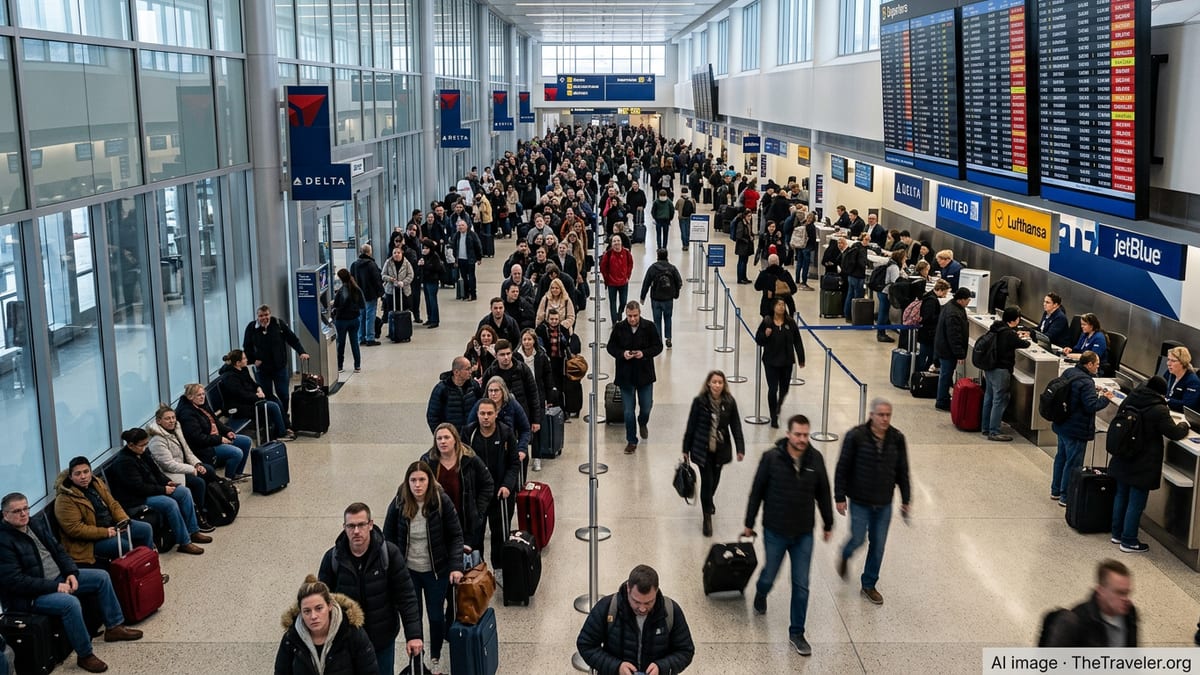
Heavy Disruptions Ripple Across United and JetBlue Networks
Recent operational data and industry tracking reports show Newark Liberty at the center of a new spell of large-scale disruptions, with rolling delays that have hit United’s dense hub schedule particularly hard and compounded ongoing reliability concerns for JetBlue. A mid-June disruption event alone was linked to hundreds of affected flights into and out of Newark, including domestic departures along the East Coast and key transatlantic services.
Publicly available delay tallies indicate that United, by far the largest carrier at Newark, has seen extensive knock-on impacts when the airport slows, from late-night banked departures to early-morning transcontinental services. A single day of irregular operations this month was associated with well over 200 delayed or disrupted departures and arrivals tied to United and its regional partners, affecting travelers as far afield as Europe, Florida and the Mountain West.
JetBlue, which maintains a smaller but strategically important presence at Newark, has also been swept up in the congestion. Traveler accounts and schedule data point to multi-hour waits, rolling departure times and late-night arrivals that have disrupted connections throughout the carrier’s network, especially on routes overlapping with United’s dominant schedule in the New York and New Jersey airspace.
The timing of the latest disruption coincides with the start of the peak summer travel season, magnifying the impact on leisure travelers heading to Europe, the Caribbean and domestic vacation hotspots. With many aircraft and crews already tightly scheduled, even moderate delays at Newark have cascaded into broader timing problems that can take days to unwind.
Weather, Congested Airspace and ATC Staffing Drive New Delays
Newark Liberty has long been considered one of the most challenging airports in the United States for air traffic flow, and recent weeks have underlined why. Thunderstorm systems moving along the East Coast have periodically limited arrivals and departures, forcing ground stops and extended airborne holding that push aircraft and crews outside planned operating windows.
Industry commentary and official policy documents highlight that air traffic control staffing shortfalls in the New York terminal area remain a key vulnerability. Federal notices on Newark’s operations point to persistent constraints in the regional control environment, which can rapidly translate into capacity reductions when demand spikes or weather deteriorates. The result is a fragile operating picture in which a single storm cell or staffing alert can trigger wide-ranging restrictions.
At peak times, Newark’s tightly scheduled banks of United flights, augmented by services from JetBlue and other carriers, leave little room for recovery once delays begin. When arrival rates are cut, inbound flights stack up, gates become scarce, and outbound departures wait for both crews and aircraft that are stuck elsewhere in the system. Travelers experience this as late gate assignments, aircraft swaps and rolling projected departure times.
Summer thunderstorm patterns add an extra layer of unpredictability. Even when conditions at Newark appear acceptable to passengers inside the terminal, convective weather along common arrival and departure routes can force rerouting or slowdowns that ripple through the New York airspace and beyond, snagging flights that never actually fly through visible bad weather.
United’s Hub Strategy Tested by Newark Constraints
United’s decision to lean heavily on Newark as a primary East Coast hub means any deterioration in the airport’s performance has an outsized impact on the carrier’s global network. The airline relies on Newark as a transatlantic gateway and a key domestic connection point, routing large volumes of connecting traffic through the airport each day.
Flight performance records for recent days illustrate how even relatively modest individual delays at Newark, such as late-evening arrivals pushed into the night by weather or flow restrictions, can disrupt crew duty limits and aircraft rotations. When those rotations span key domestic and international routes, delays can propagate quickly, particularly during already busy holiday and summer weekends.
United’s operations at Newark also remain under the microscope following a high-profile landing incident earlier this year involving a widebody aircraft arriving from Europe. While that event did not cause injuries, subsequent investigation updates have focused attention on safety margins and procedural rigor at an airport where runway configurations, high traffic volumes and frequent weather challenges already demand tight operational discipline.
As regulators and the airline refine schedules and procedures, there is growing scrutiny on whether the current volume of United’s Newark flying is sustainable under existing air traffic control and infrastructure constraints. Further schedule adjustments, particularly during the busiest periods of the day, remain a possibility if delay patterns do not improve.
JetBlue Retrenches as Reliability Pressures Mount
JetBlue faces a different but related challenge at Newark. The carrier has signaled plans to scale back some of its New York area operations and consolidate resources in Florida, a move that analysts say reflects both intense competition and chronic reliability headwinds in the congested Northeast corridor.
Recent announcements indicate that JetBlue will close certain operational bases at Newark and LaGuardia later this year, while maintaining flying but with a leaner on-the-ground footprint. Publicly available coverage of these changes suggests the airline is trying to simplify its operation in a region where weather, slot constraints and air traffic control limitations frequently upend daily schedules.
Customer accounts circulating online depict a pattern of extended delays and last-minute schedule shifts on some JetBlue services touching Newark, with frustration heightened when competing carriers manage to depart only marginally late from the same airport. Analysts note that, with a smaller fleet and fewer alternative hubs in the Northeast, JetBlue has less flexibility to reassign aircraft and crews quickly when Newark slows down.
The combination of a constrained operating environment and strategic retrenchment has raised questions about JetBlue’s long-term role at Newark. Some frequent flyers have already begun reconsidering their loyalty, citing an expectation that United’s deep network at the airport may offer more options when disruptions occur, even if the hub itself remains delay-prone.
Regulators Extend Flight Limits as Passengers Seek Workarounds
In response to persistent congestion and reliability problems at Newark and other New York area airports, federal regulators have moved to extend temporary caps on scheduled flights. Recent announcements outline limitations on the number of operations permitted during key periods at Newark, John F. Kennedy International and LaGuardia, with the aim of matching schedules more closely to what the air traffic system can reliably handle.
Policy documents and public statements emphasize that these measures are designed to reduce excessive delays by keeping hourly arrivals and departures within realistic bounds given air traffic control staffing and infrastructure. For passengers, the practical effect is fewer scheduled flight options at peak times but, in theory, better odds that the remaining flights will operate closer to plan once weather and other variables are factored in.
Travelers, however, continue to report long lines, crowded gate areas and uncertainty about both departure times and rebooking options when disruptions strike. Many are turning to proactive strategies such as booking earlier flights in the day, routing through alternative hubs outside the New York area, or building longer connection buffers when itineraries require a change of planes at Newark.
With the busy summer period still unfolding, the latest wave of Newark delays underscores the delicate balance between airline scheduling ambitions and the operational limits of one of the nation’s most complex airspaces. For United, JetBlue and their customers, the coming weeks will test whether a mix of regulatory caps, schedule tweaks and traveler caution can meaningfully blunt the airport’s recurring bouts of travel chaos.