


More news on this day
Flight operations at Germany’s Leipzig/Halle Airport remain partially disrupted after the discovery of a drone carrying explosives near a cargo area led to the closure of one runway and forced a freight aircraft to abort its landing earlier this week.
Get the latest news straight to your inbox!
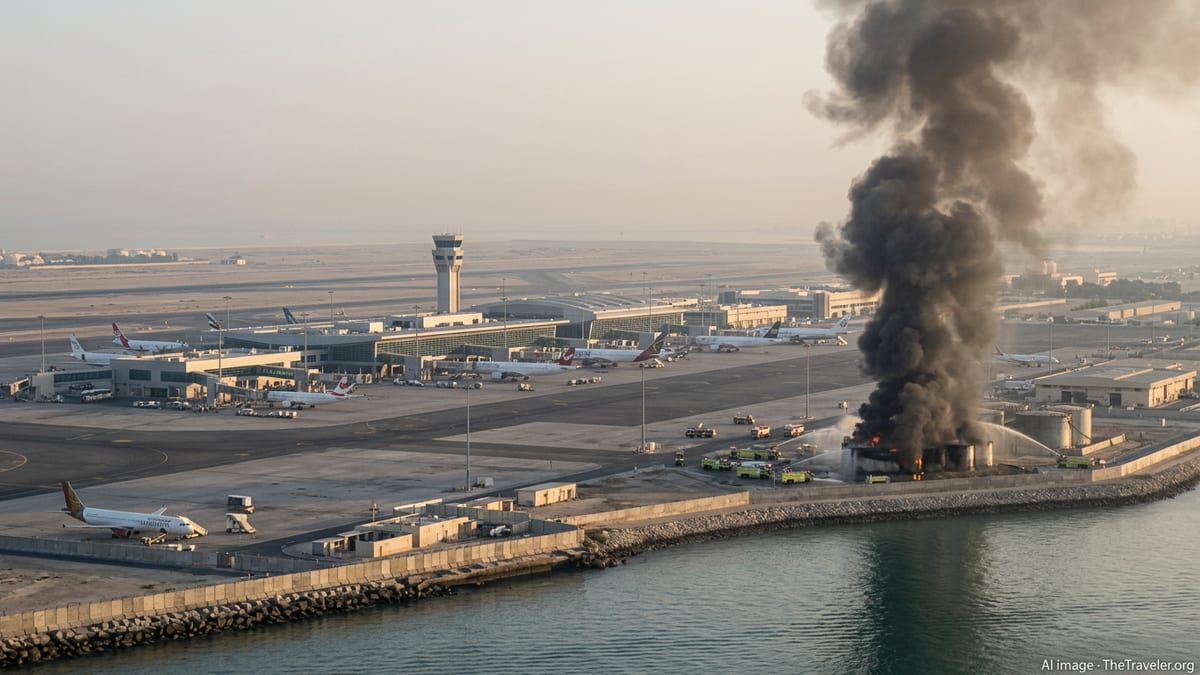
Runway closure and diverted flights at Leipzig/Halle
According to published coverage, the incident unfolded late on Tuesday at Leipzig/Halle Airport, one of Europe’s key cargo hubs. Airport personnel reportedly discovered a small unmanned aerial vehicle, described as a quadcopter, near the cargo facilities and close to one of the runways. The device was believed to be carrying explosives and a detonator, prompting an immediate security lockdown in the affected area.
Reports indicate that the southern runway was taken out of service while explosives experts were deployed to secure and neutralize the device. Air traffic data and news reports show that at least one incoming cargo flight aborted its landing during the closure and entered a holding pattern before being diverted. Other flights experienced delays as airport operations were temporarily reconfigured around the remaining open runway.
Publicly available information suggests that passenger traffic at Leipzig/Halle was less affected than freight operations, as flights were rerouted to the still-available runway where possible. Nevertheless, the sudden capacity loss at a major cargo hub has raised concerns among logistics operators that rely on tight schedules and overnight turnaround times.
As of the latest reports on Sunday, one runway remains closed while investigators continue their work on the ground. Airport communications indicate that the second runway is supporting a reduced but functional level of traffic, with airlines and cargo operators advised to anticipate possible delays and operational adjustments.
Explosive drone raises fears of a new threat level
German media coverage and statements from national security officials quoted in that reporting describe the discovery of an explosive-laden drone on airport grounds as a significant escalation compared with previous drone-related disruptions. Earlier incidents in Germany and elsewhere in Europe have typically involved sightings of unidentified drones near airports, triggering precautionary suspensions of operations without any confirmed explosive payload.
In this case, however, publicly available information indicates that the drone recovered at Leipzig/Halle was modified to carry an explosive substance and a triggering mechanism. The device was reportedly rendered safe by bomb disposal specialists at the scene. While the precise type and quantity of explosive material have not been made public, analysts cited in German and international coverage view the incident as evidence that disruptive drone activity around airports may be entering a more overtly hostile phase.
Aviation security observers note that, unlike previous episodes in which drones appeared to be flown by hobbyists or unidentified operators testing restricted airspace, a drone equipped with explosives inside a busy cargo perimeter suggests intent to damage aircraft, infrastructure or both. Although no injuries or structural damage have been reported, the fact that a suspected weaponized drone reached the vicinity of an active runway is prompting calls for a reassessment of risk at European airports.
The event is being framed in German and international commentary as part of a broader pattern of hybrid or “grey-zone” activity, in which relatively low-cost tools such as drones are used to create strategic disruption without open armed confrontation. For the aviation sector, this development underscores that drone incursions can no longer be viewed solely as a safety hazard but may also represent a direct security threat.
Ongoing investigation and search for the operator
Security agencies are now working to determine who was responsible for the drone and how it penetrated airport defenses. According to European press reports, investigators are examining flight data, surveillance footage and communications records to reconstruct the drone’s path and identify any accomplices who may have launched or guided the device from outside the airport perimeter.
Published accounts indicate that the drone was found near an area used by Ukrainian cargo aircraft, prompting heightened media attention and speculation about possible geopolitical motives. At this stage, publicly available reporting does not point to any confirmed perpetrator or state sponsor, and officials cited in those reports have been cautious about attributing responsibility while forensic and intelligence work continues.
Investigators are expected to analyze the drone’s components, onboard electronics and explosive remnants to trace their origin. Similar past cases have sometimes yielded clues through serial numbers, off-the-shelf parts, or distinctive modifications that match previous incidents. In parallel, law enforcement agencies are reviewing recent drone purchases and registrations in the wider region, though many consumer devices can be acquired anonymously.
Until more details emerge, the working hypothesis presented in several media analyses is that the Leipzig/Halle incident may be part of a pattern of attempts to test or probe critical infrastructure vulnerabilities across Europe. The possibility that the aircraft or airport may have been deliberately targeted is a key focus of the current investigation.
European airports confront mounting drone risks
The episode at Leipzig/Halle comes against a backdrop of rising concern about drone interference at European airports. Over the past decade, a series of high-profile disruptions, including prolonged runway closures at major hubs, has highlighted how even unarmed drones can halt air traffic and inconvenience tens of thousands of travelers. Specialist aviation safety studies note that the number of reported drone sightings in controlled airspace has climbed steadily, even as passenger traffic fluctuated during the pandemic years.
Previous cases documented by aviation authorities and international organizations include runway shutdowns at major airports in the United Kingdom, Scandinavia and Germany following suspected drone sightings. In many of those incidents, no device was ever recovered, raising persistent questions about detection capabilities and the potential for false alarms. The Leipzig/Halle case is different in that an actual drone, reportedly carrying explosives, has been physically recovered inside a secure zone, providing investigators with concrete evidence to examine.
Industry experts quoted in European media coverage argue that the incident underscores the need for more robust counter-drone systems around airports, including radar optimized for small targets, radio-frequency detection and, where permitted, jamming or interception tools. However, they also acknowledge that deploying such systems at scale is complex, costly and constrained by national regulations on radio interference and the use of force in civilian airspace.
Airlines, airport operators and air navigation service providers are watching the Leipzig/Halle investigation closely, aware that its findings may shape future regulatory requirements, insurance expectations and investment in protective technology. For travelers and cargo customers, the most visible impact may be an increase in precautionary shutdowns whenever suspicious drone activity is reported, as operators seek to err on the side of safety in a heightened threat environment.
Implications for travelers and cargo through central Germany
For now, travelers passing through Leipzig/Halle are being advised through airline channels and travel alerts to check the status of their flights and prepare for potential schedule changes. With one runway still closed, the airport has less flexibility to absorb delays or accommodate irregular operations, particularly during peak periods. Passengers on connecting itineraries through central Germany may face missed connections if departure slots shift at short notice.
Cargo flows are also feeling the impact. Leipzig/Halle serves as a key European hub for overnight freight carriers, and the temporary loss of one runway has complicated the tight turnaround windows that define express logistics operations. Industry publications report that some freighter movements have been rerouted to alternative airports, while others have had to adjust departure times to fit the reduced capacity at Leipzig/Halle.
Travel industry analysts note that, while the immediate disruption remains localized, the psychological effect on passengers and logistics clients could be broader. The image of an explosive drone discovered close to a runway amplifies longstanding concerns about the vulnerability of air travel to small, hard-to-detect devices, even in highly regulated environments.
As investigators work to identify who was behind the drone and how it reached the airport’s operational area, the Leipzig/Halle incident is likely to become a reference point in debates over drone regulation, airport security investment and the balance between efficient air transport and protection against emerging threats. For now, the continued closure of one runway is a visible reminder of how a single unmanned aircraft can disrupt one of Europe’s busiest cargo gateways.