


More news on this day
Passengers caught in the Bedford-area train crash are describing a scene of sudden impact, flying debris and makeshift triage on carriage floors, as emergency services report dozens of casualties and at least one fatality.
Get the latest news straight to your inbox!
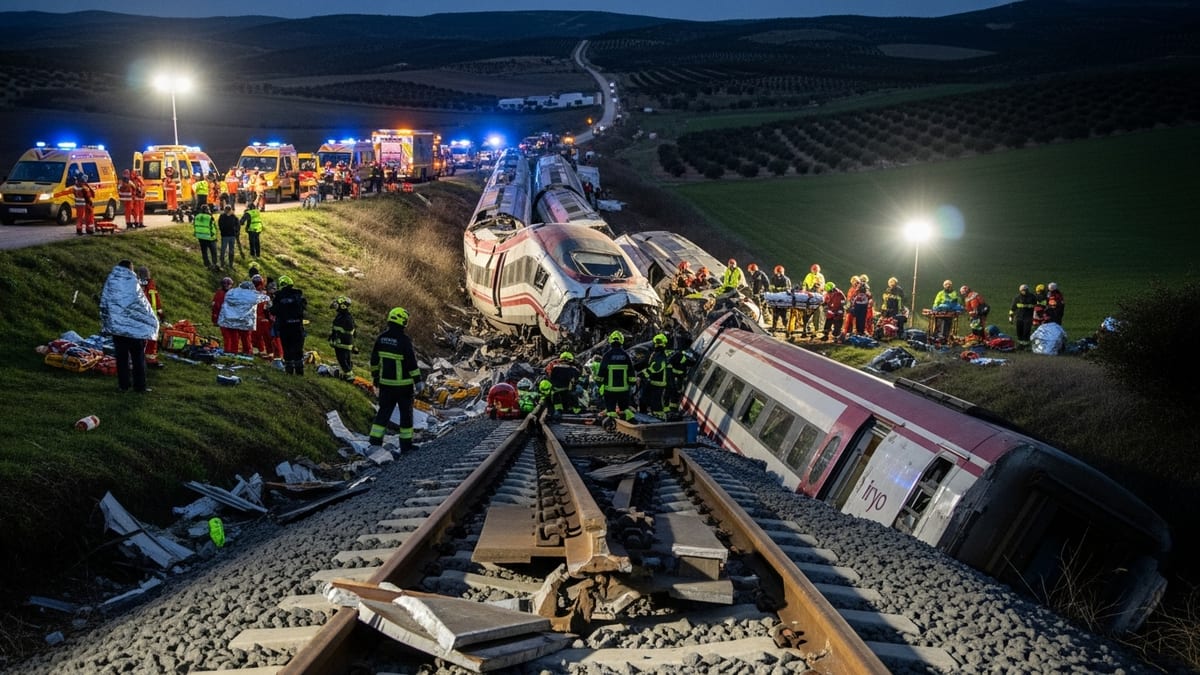
Sudden impact on a routine Friday journey
Two southbound passenger services collided near Bedford on Friday afternoon, turning what had begun as a routine commute and intercity journey into a mass-casualty incident. According to publicly available information, the crash involved an East Midlands Railway intercity service and a Luton Airport Express train on the busy Midland Main Line between Bedford and Flitwick.
Initial reports indicate that one train was stationary or moving slowly when it was struck from behind, causing significant damage at the front of one unit and to the rear of the other. Images from the scene show crumpled metal at one cab, shattered windows and buckled interior fittings, while other carriages appear largely intact. Rail crash investigators and specialist teams are examining the scene as services remain suspended through the area.
Rail forums and early media coverage describe the driver of one train as having suffered fatal injuries in the collision, while scores of passengers sustained wounds ranging from minor bruising to life-threatening trauma. The scale of the response, with multiple ambulances and air ambulances deployed, led local health services to declare a major incident and advise residents to avoid hospital emergency departments unless absolutely necessary.
Passengers describe confusion and scenes of injury
Eyewitness accounts posted on social media and rail enthusiast forums describe a jolt strong enough to throw standing passengers to the floor and hurl luggage along the carriages. Several accounts mention people left dazed and struggling to understand what had happened in the seconds after the impact, with alarms sounding and lights flickering as the trains came to a stop.
Passengers speaking publicly online describe blood on the floors and seats, as people with head wounds and facial cuts tried to move away from broken glass. One survivor wrote that many on board were able to walk off the train with bruises or minor injuries, while others nearer the point of impact appeared to have suffered more serious trauma. Images shared from inside the carriages show emergency lighting, dislodged ceiling panels and belongings strewn across aisles.
Several accounts describe an initial period of confusion in which passengers attempted to call emergency services, comfort injured fellow travelers and look for safe exits. With doors initially locked and the trains on live railway lines, many reported waiting for instructions while tending to those who were bleeding or in visible pain.
Improvised triage before rescue teams arrive
While formal casualty figures are still being updated, ambulance services have reported a large number of injured people, including a significant group with serious or very serious injuries. Passengers describing the aftermath online recall seeing those most badly hurt being encouraged to lie down on seats or on the floor while others tried to keep them warm and calm.
According to these first-hand descriptions, travelers used items such as scarves, shirts and tissues as makeshift bandages for cuts and lacerations. Some passengers with first-aid training reportedly took the lead in assessing who needed urgent help, directing others to fetch water, search for clean cloths or reassure children caught up in the crash.
People posting from the scene describe paramedics eventually boarding the train, moving systematically through the carriages to prioritize patients. Those with suspected spinal or head injuries were carefully immobilized before being moved, while passengers with minor injuries were guided off the train and escorted along the track to safer areas for further assessment.
Emergency response and hospital pressures
Publicly available information from local health services indicates that hospitals in the Bedford area rapidly activated major incident plans once the scale of the crash became clear. Ambulances and air ambulances were dispatched to the railway, and non-urgent activity was reportedly reduced to create capacity for incoming casualties.
Commentary from local residents and staff shared online suggests that emergency departments experienced immediate pressure as patients were transported from the crash site. Bedford’s main hospital urged the public to attend accident and emergency only in cases of genuine need, a common step in mass-casualty situations to preserve resources for those most seriously hurt.
Rail operators and transport agencies reported widespread disruption along the route, with services between London and key Midlands and northern cities cancelled or severely delayed. Replacement buses were organized where possible, though some travelers described overcrowding and extended journey times as the rail network adjusted to the line closure and ongoing investigation.
Questions over train protection and passenger safety
Rail commentators and industry observers are already raising questions about how two modern passenger trains came to collide on a heavily signaled main line. Discussions on specialist forums point to the role of signal aspects, train protection systems and cab crashworthiness in shaping the outcome, although investigators have yet to release any formal findings on cause.
Images shared from the site show that one of the trains was an East Midlands Railway “Aurora” intercity unit, introduced to modernize the route’s long-distance fleet, while the other appears to have been a commuter or airport express train. Rail enthusiasts note that different rolling stock types offer varying levels of cab protection, something that may be closely examined in light of the reported fatal injuries to a driver.
For passengers who walked away, many accounts focus on a sense of shock that a normal Friday journey could turn so suddenly into a disaster, followed by relief at having survived. Others writing from hospital or recovery share images of bandaged limbs and bruised faces, underlining both the violence of the impact and the role of carriage interiors, seating layouts and luggage in how injuries were sustained.
As investigators continue their work alongside rail operators and safety bodies, attention is expected to remain on how the signaling system, train handling and rolling stock design interacted in the moments before the crash. For those who endured the collision from inside the carriages, however, the most vivid memories are likely to remain the confusion, the injuries around them and the improvised acts of care that followed.