


More news on this day
Thousands of passengers across the United States faced hours-long delays after the Federal Aviation Administration instituted a ground stop at two of the country’s busiest airports, creating a knock-on effect that rippled throughout the national air travel system.
Get the latest news straight to your inbox!
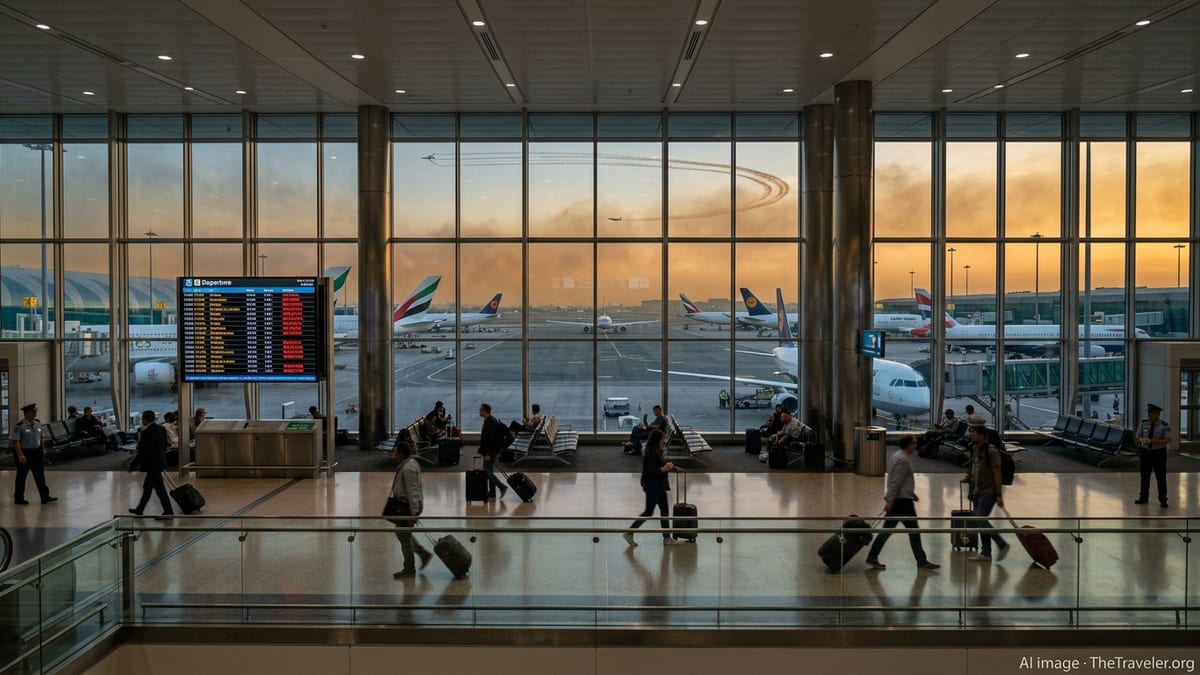
Ground Stops At Key Hubs Trigger Nationwide Disruption
Publicly available FAA advisories show that a sudden halt to takeoffs and landings at two major hub airports led to widespread congestion and schedule chaos, with flight-tracking data indicating thousands of delays across the country. The restrictions were announced late Sunday and into Monday local time, catching many travelers at the height of the early-summer travel period.
Ground stops are among the most disruptive tools available to U.S. air traffic managers, requiring certain flights bound for affected airports to remain on the ground at their departure points. When imposed at high-volume hubs that handle hundreds of movements per hour, the impacts tend to spread quickly as aircraft and crews fall out of position, leaving airlines struggling to restore normal operations even after the formal stop is lifted.
Reports from multiple outlets indicate that flights connecting through the affected hubs experienced the sharpest disruption, with missed connections and rolling delays persisting well beyond the initial suspension period. Passengers in cities far from the immediate weather or operational issues reported extended waits, gate changes, and last-minute cancellations as carriers reshuffled their networks.
By Monday afternoon, most restrictions had shifted from full ground stops to ground delay programs, which meter the flow of arrivals but still limit the number of aircraft that can land each hour. Even under these looser controls, the backlog of flights proved difficult to clear, particularly at already congested airports with limited runway capacity.
Weather, Safety Rules And Infrastructure Strain All Play A Role
The latest disruption comes at a time when several large U.S. airports are juggling a combination of severe weather, new safety procedures, and long-running construction projects. Recent coverage out of San Francisco has highlighted how the loss of a primary runway and tighter federal safety rules have reduced the number of flights that can land there in marginal conditions, making that airport more vulnerable to delays and stoppages when low clouds or storms move in.
Elsewhere, thunderstorm outbreaks over major hubs in Denver and Atlanta have repeatedly forced temporary pauses in arrivals and departures as lightning, wind shear, and rapidly shifting storm cells move across approach and departure paths. Television reports from those cities over recent months have shown departure boards packed with late and canceled flights whenever storm systems line up over the busiest corridors.
At the same time, inspections and equipment issues at key air traffic control facilities have periodically restricted traffic into and out of major metropolitan areas, as seen in recent ground stops affecting the Washington, D.C. region. Public letters and oversight documents have called attention to the age of some critical FAA infrastructure and the challenge of upgrading radar, communications, and safety systems without triggering further disruptions.
Aviation analysts note that any one of these factors, taken alone, might be manageable. The concern is that when weather, construction, staffing pressures, and new safety mandates intersect at a high-volume hub, the system reaches a tipping point more quickly, leaving little margin before regulators impose the kind of sweeping measures that led to the latest nationwide wave of delays.
Impact On Travelers: Missed Connections And Crowded Terminals
For passengers, the immediate consequence has been a familiar mix of crowded terminals, long customer service lines, and uncertainty about when flights might actually depart. Social media posts and local broadcast coverage from multiple cities have shown packed gate areas and snaking queues at airline counters as travelers attempt to rebook itineraries disrupted by the ground stops.
Because many of the delayed flights were part of complex hub-and-spoke schedules, a single cancellation or multi-hour delay at one airport often translated into a cascade of missed connections elsewhere. Travelers on multi‑segment journeys reported being re-routed through alternative hubs or forced to wait until the following day for open seats, particularly on popular transcontinental and international routes.
Airlines have responded by issuing travel waivers for certain routes, allowing customers to change flights without standard penalties when itineraries touch the most heavily affected airports. Publicly available information from carrier advisory pages suggests that many are prioritizing getting crews and aircraft back into position, even if that means consolidating lightly booked flights or adjusting frequencies on short-haul routes.
Staffing at airports has also come under renewed strain. Images from some impacted hubs show dense security and baggage-claim crowds as passengers arrive in large waves once a ground stop is lifted. Airport operators and local media have warned travelers to build in additional time for check-in and security during this unsettled period, and to monitor airline notifications closely.
What Ground Stops Reveal About System Vulnerabilities
Experts often point to events like this as stress tests for the broader U.S. aviation network. Ground stops at major hubs tend to expose weaknesses that are less visible on normal days, including thin staffing reserves, tight turnaround times for crews, and limited runway or gate capacity at some of the busiest airports.
Recent regulatory filings and policy discussions indicate that federal planners have been working to rebalance schedules at key hubs, including imposing seasonal limits on operations at certain congested airports. These measures are intended to reduce chronic delays but can be quickly overwhelmed when unexpected events such as severe storms or technical glitches force temporary shutdowns.
Industry observers also highlight the growing complexity of managing air traffic in dense metropolitan regions where several large airports share the same airspace. A disruption at one airport can easily spill over into others when controllers must reroute traffic, shift holding patterns, or temporarily close certain arrival and departure corridors for safety reasons.
For travelers, the recurring pattern of widespread delays following ground stops is likely to fuel questions about how quickly promised infrastructure upgrades and technology improvements will materialize. While federal modernization programs are under way, many of the most visible benefits, such as more precise navigation and better real-time traffic management, are rolling out gradually rather than all at once.
What Travelers Can Expect In The Coming Days
Given the scale of the disruption, schedule ripple effects are expected to persist for at least another day or two, even as FAA advisories shift away from full ground stops. Airline operations teams typically need several cycles to reposition aircraft and crews, meaning early-morning departures and late-evening flights may continue to see irregular operations.
Travel experts advise that passengers with flexible plans consider rebooking outside peak hours or traveling on less congested days where possible. Morning flights are often recommended, as they tend to be less affected by same-day knock-on delays, though the latest disruptions have shown that early waves can also be hit when ground stops begin overnight or at dawn.
For those already ticketed through the affected hubs, the most practical step remains close monitoring of airline apps and alerts, as departure boards at airports may lag behind operational changes. Publicly available data suggests that same‑day standby options are limited on many popular routes while carriers work through the backlog, underscoring the value of acting quickly when rebooking windows open.
As the system gradually stabilizes, attention is likely to turn to how future storms, infrastructure work, and safety directives will be handled at the nation’s busiest airports. The latest round of FAA ground stops has once again demonstrated how disruptions concentrated at just a few key hubs can ripple across the entire U.S. air travel network within hours.