


More news on this day
The Federal Aviation Administration has begun introducing a new artificial intelligence based traffic management tool aimed at predicting congestion earlier and reducing flight delays across some of the busiest air corridors in the United States, marking one of the most visible uses of AI in the nation’s airspace so far.
Get the latest news straight to your inbox!
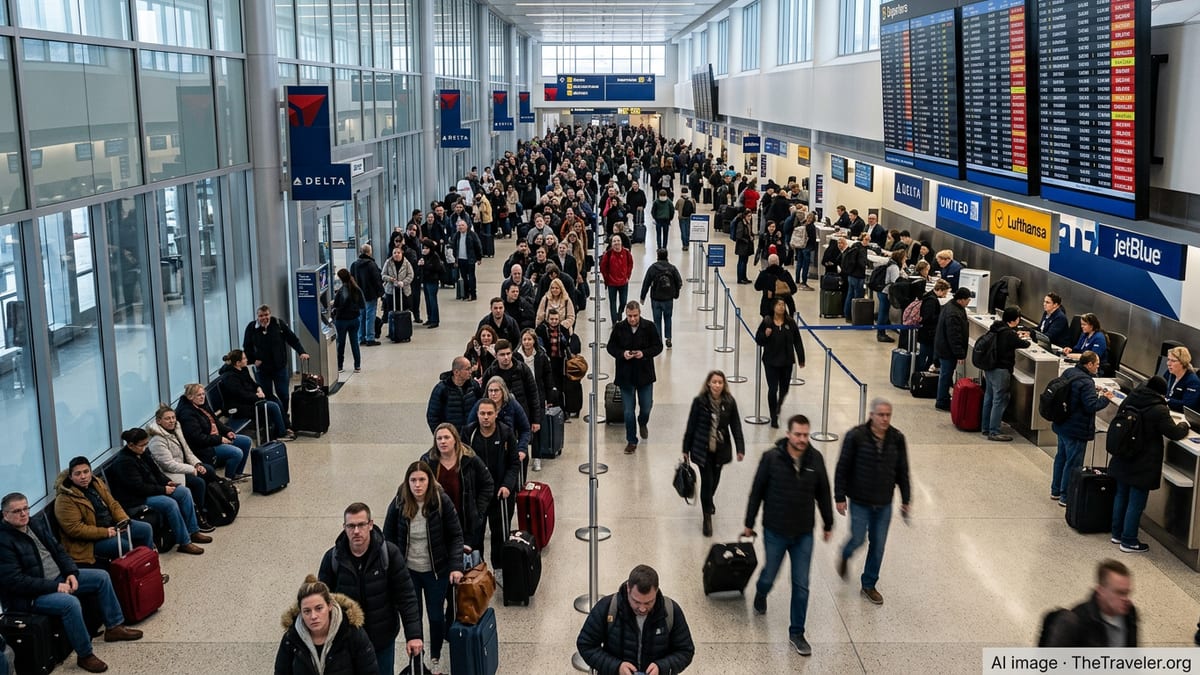
A data driven effort to untangle crowded skies
According to recent coverage of the initiative, the new system is being deployed first in a heavily traveled corridor where chronic congestion and frequent weather disruptions have ripple effects on airline schedules nationwide. Publicly available information describes the software as part of a broader modernization push that uses machine learning to forecast where bottlenecks are likely to form and how different rerouting options will affect traffic hours in advance.
The concept reflects years of joint research by NASA and the FAA on tools that can integrate arrival, departure and surface operations into a single predictive picture. NASA documentation describes earlier testbeds in Charlotte and Dallas Fort Worth that used similar techniques to create virtual queues at the gate, saving fuel and cutting taxi delays by better timing pushbacks and takeoffs. Those demonstrations helped prove that AI assisted scheduling can trim both travel time and emissions when rolled out at scale.
The new tool, now moving into operational use at the FAA’s Air Traffic Control System Command Center, extends that predictive approach beyond a single airport. By analyzing planned schedules, active flight data, airspace capacity, and changing weather patterns over large regions, it is designed to suggest route and timing adjustments that keep traffic flowing while avoiding the worst choke points.
Planning documents for the agency’s 2024 to 2028 research portfolio indicate that such capabilities are intended to support more strategic management of demand and capacity, reducing the need for broad reroutes that can push delays from one part of the country to another. The goal is a system in which controllers and airline operations centers can see the likely impact of decisions earlier and select options that minimize disruption for passengers.
How the AI tool fits into the FAA’s modernization push
The new delay reduction software is being introduced alongside a larger technology backbone for traffic management known as the Flow Management Data and Services platform. Public FAA descriptions characterize this platform as a consolidated source of operational data for the national airspace system, feeding information to multiple decision support tools used by traffic managers.
Within that environment, the AI application, sometimes referred to in public materials as a strategic management enhancement, runs large scale simulations to test how different routing and scheduling scenarios would play out. By drawing on historical patterns and real time inputs, it can flag emerging constraints and propose more targeted interventions than traditional measures that often rely on wide area ground stops or large blocks of airspace restrictions.
The effort builds on years of NextGen investments in digital automation, from satellite based surveillance and advanced weather products to surface management systems such as the Terminal Flight Data Manager, which is being deployed at major airports to streamline departures. NASA reports show that earlier machine learning tools used at airports like Dallas Fort Worth have already saved tens of thousands of pounds of fuel by predicting runway availability and enabling more efficient departure sequences.
Officials at both agencies have framed these technologies as part of a gradual shift from reactive traffic management to a more predictive, collaborative model. Under that vision, airlines, air traffic facilities and airport operators share a common picture of future demand, allowing them to hold aircraft at the gate a bit longer, adjust departure times, or accept slightly longer routings in exchange for fewer wholesale cancellations and long onboard delays.
What passengers and airlines can expect
Industry briefings and recent reporting suggest that travelers are unlikely to notice the system directly when it begins operating, but may see incremental improvements during peak travel periods and disruptive weather events. Instead of last minute cancellations and extended tarmac waits when thunderstorms or congestion appear, the AI tool is intended to help shift some of that adjustment earlier in the day, when airlines still have more flexibility to reassign aircraft and crews.
For airlines, the tool promises a more nuanced understanding of how national level traffic management initiatives will affect their individual networks. Publicly available FAA planning documents for artificial intelligence in traffic flow management emphasize that future tools are expected to generate flight specific route options that account for operator preferences and constraints, rather than applying the same restrictions across all flights in an affected region.
Early NASA trials of related machine learning systems demonstrated that providing better forecasts of departure and arrival times could reduce the amount of time aircraft spend taxiing or flying holding patterns, which directly lowers fuel burn and carbon emissions. If the new FAA system performs similarly at the network level, it could contribute to both cost savings for carriers and environmental benefits from more efficient trajectories.
However, public commentary also notes that the benefits are likely to be modest at first. The tool is initially limited to specific corridors and will operate within existing safety and air traffic control procedures. Over time, the agency plans to refine the algorithms with real world performance data, which could gradually increase the impact on delays as the system learns from a larger set of operational scenarios.
Balancing innovation, safety and industry concerns
The rollout follows months of discussion within the aviation community about how aggressively AI should be used to influence flight schedules and routings. According to recent news coverage, some airline representatives initially raised concerns that an overly rigid or opaque algorithm might recommend widespread cancellations or major schedule changes in the name of reducing congestion, potentially creating new forms of disruption.
In response, public information indicates that the FAA is introducing the tool in a measured way, using it to support human decision makers rather than to automatically issue binding instructions. The system’s recommendations are intended to be transparent enough for traffic managers and airline operations staff to understand the underlying assumptions and to weigh them against other operational considerations such as crew duty limits, aircraft maintenance needs and airport specific constraints.
Government research plans for artificial intelligence and machine learning in aviation highlight the importance of explainability and rigorous validation, particularly for tools that can affect the distribution of delays among operators. Advisory bodies have recommended that the agency track metrics such as total delay minutes and how they are shared across carriers when evaluating new traffic management algorithms, to help ensure that benefits and burdens are not concentrated unfairly.
Safety regulators have also stressed that any AI system used in the national airspace must be thoroughly tested against a wide range of conditions, including unusual weather patterns and atypical traffic surges. To support that effort, NASA and the FAA operate joint research facilities that can replay historical traffic scenarios and simulate future ones, allowing engineers to examine how proposed tools would behave before they are exposed to live operations.
Next steps for AI in the national airspace
The congestion reduction tool is one of several AI and machine learning applications under development for U.S. airspace. The FAA’s current research plan cites work on a Strategic Flow Management Application that uses similar techniques to balance demand and capacity across the system, as well as efforts to improve weather impact prediction and enhance safety analysis with automated anomaly detection.
NASA’s air traffic management portfolio includes projects that apply machine learning to airport configuration prediction, turbulence forecasting and advanced route planning, many of which are designed with eventual transfer to the FAA or industry partners in mind. As these technologies mature, they are expected to feed into decision support systems that help controllers and airline dispatchers make more informed choices in real time.
For travelers, the near term effect is likely to be a gradual rather than dramatic change. Delays driven by severe weather, staffing constraints or infrastructure limitations will not disappear, but the agency’s aim is that fewer disruptions turn into full scale breakdowns of daily schedules. Over the longer term, as AI driven tools become more integrated into both airport surface operations and en route traffic management, the cumulative impact could be shorter average delays and more predictable travel during busy holiday periods.
The introduction of the new AI tool therefore represents both a technical milestone and an early test of how predictive algorithms can be woven into the complex, safety critical environment of national airspace operations. Observers across the aviation sector will be watching closely in the coming months as the system begins influencing real world traffic flows and as the FAA refines its approach based on operational results.