


More news on this day
Travelers across the Northeast have faced cascading flight disruptions after an equipment outage centered on Philadelphia International Airport triggered a ground stop on Monday, snarling arrivals and departures and leaving lingering delays well into Tuesday.
Get the latest news straight to your inbox!
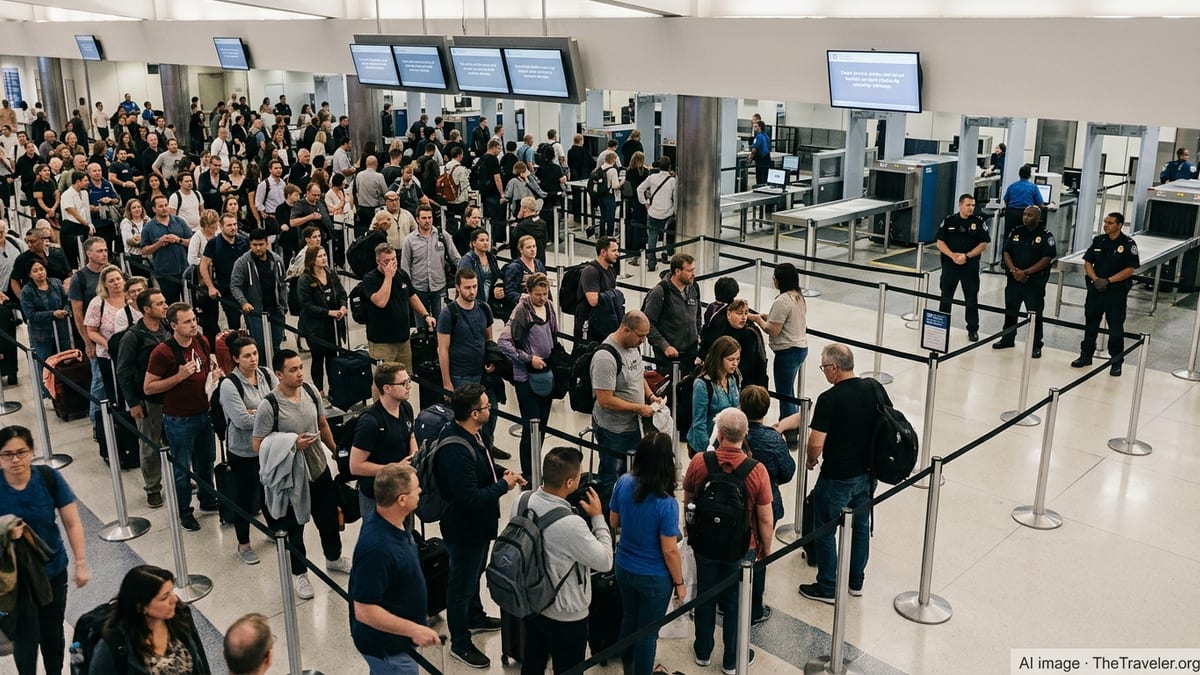
Ground stop at PHL ripples across the Northeast
Publicly available data from the Federal Aviation Administration and major flight-tracking services indicate that a telecommunications failure affecting air traffic control systems led to ground stops at several large airports on September 21, including Philadelphia International Airport, Newark Liberty, New York’s John F. Kennedy and LaGuardia, and Boston Logan. The disruption began late Monday morning and intensified through the early afternoon as additional airports were added to the restrictions.
Coverage from multiple outlets describes an “equipment outage” linked to air traffic control facilities serving the Philadelphia region. Affected airports temporarily halted most incoming flights, while departures experienced mounting delays as crews and aircraft fell out of position. By midafternoon Monday, hundreds of flights across the Northeast corridor were delayed or canceled, with Philadelphia among the hardest hit because of its role as both an origin and connecting hub.
At Philadelphia International Airport, operations did not begin to stabilize until late Monday. Reports from regional media and national aviation coverage indicate that the ground stop at PHL was lifted around 5 p.m. Eastern, but a ground delay program and schedule disruptions continued into the evening as airlines attempted to re-sequence flights and reposition aircraft.
Although the most severe restrictions had eased by Tuesday morning, schedule data from flight-tracking services showed elevated delay and cancellation rates persisting at PHL and other Northeast airports. Travelers departing from or connecting through Philadelphia continued to encounter extended waits, missed connections, and rebookings on September 22 as airlines worked through the backlog created by the outage.
Cause traced to severed fiber line and radio issues
According to published coverage citing Federal Aviation Administration statements and telecommunications industry information, the disruption was triggered when construction activity in New Jersey severed a key fiber-optic cable used by Verizon. The cut line affected communications that support air traffic control operations, including services linked to the Philadelphia Terminal Radar Approach Control facility, commonly referred to as TRACON.
Reporting from aviation and general news outlets indicates that the outage affected certain radar and radio frequencies needed by controllers to safely manage high-density airspace around major Northeast airports. As connections failed or became unreliable, the FAA implemented ground stops and traffic management initiatives as a safety measure, sharply limiting the number of flights allowed to depart for or arrive at the affected airports.
Local coverage in the Philadelphia region further notes that the fiber cut coincided with what officials described in public statements as a circuit failure and issues in backup systems. A secondary line intended to provide redundancy was reported to have been damaged at a construction site, reducing the system’s resilience and complicating recovery efforts.
The incident follows earlier, smaller-scale technical problems at the same FAA facility in recent years, which have been documented in industry and regional reporting. Analysts quoted in national aviation coverage have stressed that Monday’s event was unusual in scope, given the number of major airports simultaneously affected, and have highlighted the vulnerability of critical aviation infrastructure to single points of failure in telecommunications networks.
How the outage affected passengers at Philadelphia
At Philadelphia International Airport, the immediate impact was visible on departure and arrival boards as delays stretched beyond an hour for many flights. Regional news organizations reported that long lines formed at airline customer service counters as passengers sought rebooking options, hotel vouchers, or alternative routings through less affected hubs.
Based on airline status pages and independent tracking data, travelers experienced a mix of rolling delays and outright cancellations. Some outbound flights from Philadelphia operated hours behind schedule once traffic restrictions eased, while others were canceled when crews or aircraft could not reach the airport in time. Inbound flights destined for PHL were held at origin airports across the country until the ground stop and subsequent ground delay measures were relaxed.
Conditions on Tuesday remained challenging for passengers. Published coverage from local television and newspaper outlets indicates that airlines continued to adjust schedules, with some early-morning flights departing full as carriers attempted to clear backlogs. At the same time, weather systems affecting parts of the country added another layer of disruption, compounding delays for travelers whose itineraries already had been disrupted by the equipment outage.
For passengers with tight connections through Philadelphia, the cascading effect of Monday’s shutdown was particularly acute. Travel industry reporting notes that many travelers were rebooked onto flights later in the week, while others shifted to rail or car travel for regional trips between cities such as Philadelphia, New York and Washington, D.C., to avoid the uncertainty around remaining delays.
Airlines, FAA detail recovery and safeguards
Airlines operating at Philadelphia and other affected airports have described, in public-facing statements and operational updates, a multi-step recovery process focused on restoring regular schedules and minimizing knock-on effects. This includes prioritizing flights with large numbers of connecting passengers, adding larger aircraft on select routes where feasible, and authorizing overtime or additional reserve crews to cover disrupted rotations.
According to national aviation coverage summarizing FAA statements, the agency coordinated with telecommunications providers to restore the severed fiber line on Monday evening. Once connectivity and stability thresholds were met, ground stops were lifted and traffic management initiatives were gradually scaled back. The FAA also indicated that internal reviews were underway to determine how redundancy performed during the event and whether additional safeguards are needed.
Industry analysts quoted across several publications have pointed to the event as an example of the wider aviation system’s dependence on external infrastructure such as commercial telecom networks. They argue that while modern air traffic control systems are designed with backup paths and failover capabilities, disruptions in shared networks can still result in significant operational impacts when multiple layers of redundancy are compromised.
In the wake of the outage, some observers have renewed calls for accelerated modernization of air traffic control infrastructure and expanded testing of new technology, including predictive tools that can anticipate traffic imbalances. Publicly available information indicates that the FAA has been piloting such systems in select regions, although there is no indication that those tests contributed to the Philadelphia-area outage.
What travelers using PHL should do now
For travelers planning to fly into or out of Philadelphia International Airport in the days following the outage, published guidance from airlines and travel industry sources stresses the importance of close monitoring. Passengers are encouraged to check their flight status frequently through airline apps or airport information displays and to allow additional time at the airport in case of residual disruptions.
Airlines have generally allowed limited fee waivers or flexible rebooking options for passengers affected on the days of the outage, according to their publicly posted travel advisories. However, these policies can vary by carrier and itinerary, and travelers are advised to review the most current information directly from their airline before making changes.
Travel experts quoted across consumer travel coverage recommend that passengers with upcoming connections through Philadelphia consider building in longer layovers this week, particularly on routes that involve other busy Northeast airports. They also suggest that travelers with time-sensitive plans explore earlier departures or alternative routings when available, especially while airlines continue to rebalance aircraft and crews.
While the core telecommunications issue that triggered the ground stop has been resolved, schedule data and regional reporting suggest that the Northeast air travel system remains under strain as of September 23. For passengers using Philadelphia International Airport, staying informed and planning for potential delays remains essential as operations gradually return to normal.