


More news on this day
Emergency repatriation flights from Dubai to Tel Aviv have begun operating, offering a route home for hundreds of Israelis stranded in the United Arab Emirates after commercial services were halted in the wake of this week’s near-disaster aboard a FlyDubai flight.
Get the latest news straight to your inbox!
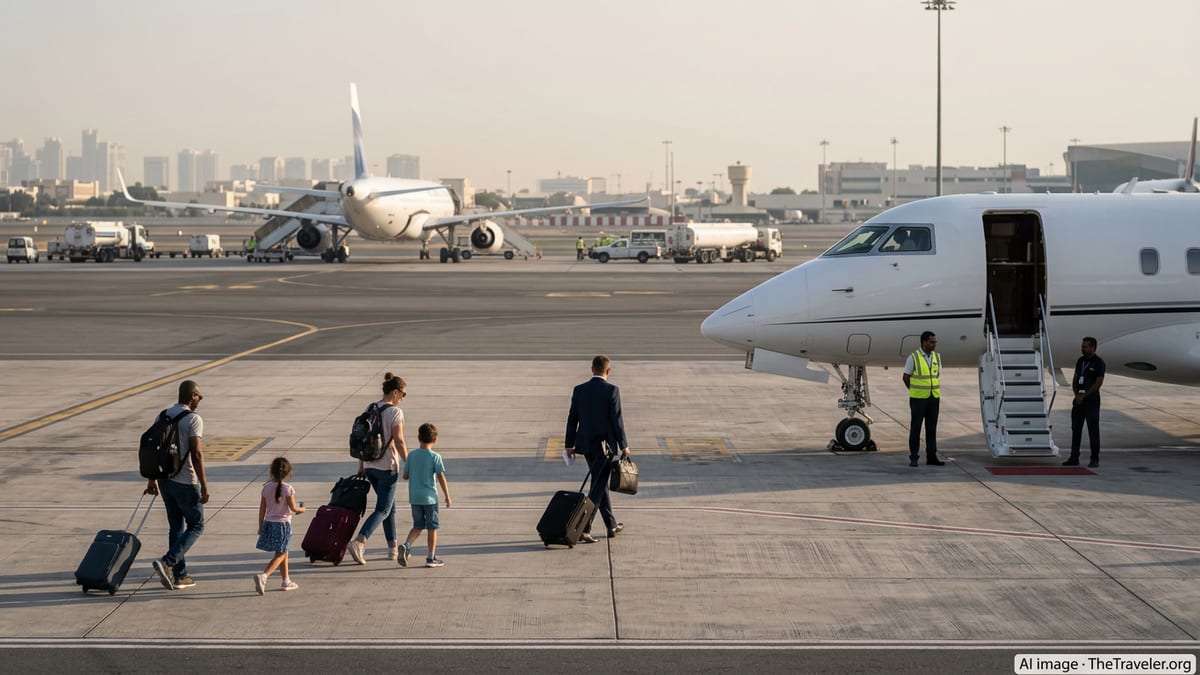
Rescue operations begin after FlyDubai cockpit attack
Repatriation efforts gathered pace over the weekend after an attempted hijacking on FlyDubai flight FZ1073 from Dubai to Tel Aviv led to the suspension of regular air links between the United Arab Emirates and Israel. The September 30 incident, in which a copilot allegedly attacked the captain mid-flight and forced an emergency landing in Saudi Arabia, prompted FlyDubai to halt its Israel services and left an estimated several hundred Israeli travelers unable to return home on their original tickets, according to various media reports.
Published coverage indicates that Israeli authorities and carriers moved quickly to organize one-way flights to bring those travelers back. Israel’s public broadcaster and multiple news outlets reported that the government approved a framework allowing domestic airlines to run special services from Dubai into Tel Aviv’s Ben Gurion Airport, focused solely on returning Israelis rather than carrying outbound passengers from Israel to the UAE.
The United Arab Emirates simultaneously opened investigations into the FlyDubai incident as a possible act of terrorism, while regulators in both countries worked through the security and diplomatic implications of restarting direct flights. Until those probes progress, commercial schedules on the Dubai–Tel Aviv corridor remain heavily disrupted, making the rescue flights the main option for many stranded tourists, business travelers and expatriate visitors.
Arkia completes first rescue flight as others face delays
The first concrete breakthrough came when Israeli carrier Arkia launched what was widely described as the initial rescue flight out of Dubai. Reports from Israeli and regional media on October 2 and 3 indicate that the Arkia service departed Dubai International Airport with a plane full of stranded Israelis and landed safely at Ben Gurion later that day. The flight marked the first time an Israeli airline had operated the Dubai–Tel Aviv route in months, after a prolonged pause in direct services earlier this year.
Publicly available information shows that the path to that first departure was not straightforward. El Al, Israel’s flag carrier, had announced plans to operate special evacuation services from Dubai but later confirmed that those flights were canceled when previously granted landing permissions were withdrawn by UAE authorities. Coverage in Israeli outlets suggests that complex behind-the-scenes negotiations over security protocols, insurance and diplomatic signaling contributed to the shifting approvals.
Israir, another Israeli airline, has also been involved in the repatriation effort. According to live updates carried by Israeli news sites, Israir worked to obtain final clearances from UAE regulators to run additional flights, while Arkia continued to position itself as the lead operator for the first wave of return services. Together, the carriers are expected to add extra rotations as permissions solidify and demand is better quantified in the coming days.
Hundreds stranded as tourism corridor suddenly closes
The abrupt halt of FlyDubai’s Israel operations and the temporary suspension of broader commercial traffic between the UAE and Israel left a significant number of leisure and business travelers in limbo. Travel-industry commentary cited by local media estimated that each day of suspended flights could leave well over a thousand Israelis stuck in Dubai and other emirates, as package holidays, conferences and independent trips overlapped with peak travel patterns between the two countries.
Dubai has become a favored short-break destination for Israelis since the 2020 normalization of relations under the Abraham Accords, with multiple daily flights and competitive fares encouraging weekend city stays and onward connections through Dubai International Airport. The sudden grounding of a key route therefore had an outsized impact on Israeli visitors, many of whom had planned brief stays and now face unanticipated hotel costs, rebooking fees or extended absences from work and family.
Reports indicate that some travelers have tried to route home via third countries in Europe or the wider Middle East when seats become available, while others are opting to wait in the UAE for a seat on one of the designated rescue flights. Travel agents quoted across several outlets describe a surge of calls from clients seeking clarity on which options remain viable and what documentation they need to board the special services back to Israel.
How the special flights work for affected travelers
According to published airline statements and media summaries, the current repatriation program centers on one-way flights operated by Israeli carriers from Dubai to Tel Aviv. Seats are generally reserved for Israeli passport holders and a smaller number of foreign residents or visitors with proven onward connections through Israel, although precise eligibility criteria can vary by flight and operator. Travelers are being advised through public coverage to check directly with their airline or travel agent for confirmation before heading to the airport.
Fares on the rescue flights are not yet fully standardized in publicly available information, and in many cases passengers whose original tickets were issued by FlyDubai are being asked to work with insurers, tour operators or credit card companies to seek refunds or coverage. Some Israeli media reports note that the government has signaled support for the operation, but the flights are being sold through regular commercial channels rather than as free airlifts.
Operationally, the services depart from Dubai International Airport’s existing terminals used for regional carriers, with enhanced screening and coordination between Israeli and Emirati aviation authorities. Check-in times are reported to be longer than usual, and travelers are being urged in open-source advisories to arrive early, carry printed confirmations and be prepared for additional security questions at both departure and arrival.
Security and diplomatic stakes for future UAE–Israel travel
The launch of the first rescue flights takes place against a broader backdrop of heightened security concerns for aviation in the Middle East. The FlyDubai incident, in which passengers and crew intervened after a violent struggle in the cockpit, has intensified debate over crew vetting, cockpit access and the deployment of air marshals on routes with perceived political or security sensitivities. Aviation commentators cited in international coverage suggest that regulators may revisit staffing policies for flights serving Israel, particularly regarding pilots’ backgrounds and prior security flags.
Diplomatically, the temporary interruption of regular UAE–Israel air links has tested one of the most visible pillars of the post-2020 normalization process: open tourism and business travel. The careful framing of the new services as repatriation or rescue flights reflects competing narratives in both countries about risk, responsibility and image, with some Emirati sources reportedly wary of portraying Dubai as a crisis zone and some Israeli voices emphasizing the need for national carriers to take a greater role on sensitive routes.
For travelers, the immediate focus is simply on getting home. Yet the experience of those now boarding the first special flights out of Dubai is likely to shape perceptions of the route for months to come. Travel analysts quoted in regional media suggest that once investigations are complete and regular schedules resume, passengers may show a stronger preference for Israeli-operated airlines on the corridor, even if fares are higher, viewing them as offering more familiar security practices after a week when a routine Dubai city break suddenly turned into an unexpected test of crisis management in the skies.