


More news on this day
Some passengers from a flydubai flight that made an emergency landing in the Saudi city of Tabuk reportedly refused at first to board a replacement aircraft sent by the same carrier, highlighting shaken confidence and the complex geopolitics surrounding Israel–Gulf air travel.
Get the latest news straight to your inbox!
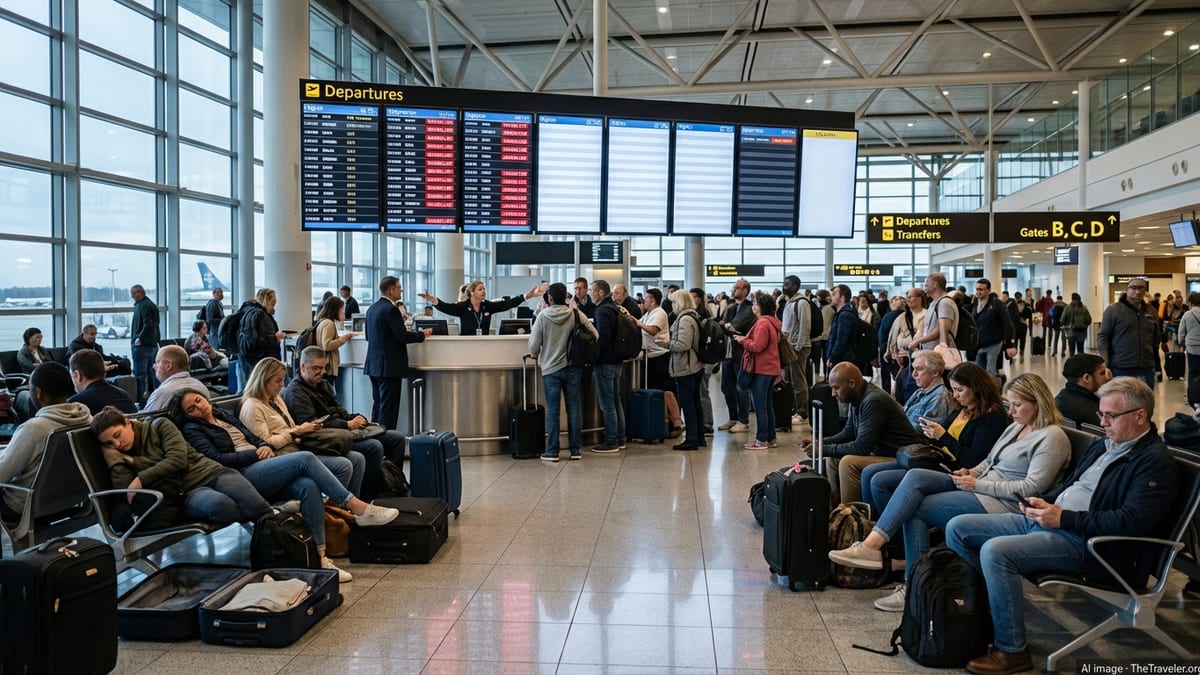
Emergency landing in Tabuk after midair cockpit struggle
The incident began on September 30, 2026, when flydubai flight FZ1073 from Dubai to Tel Aviv signaled an emergency and diverted to Prince Sultan bin Abdulaziz Airport in Tabuk, northern Saudi Arabia. Publicly available flight-tracking data shows the Boeing 737 descending sharply from cruising altitude before stabilizing and heading toward Tabuk, where it landed safely with around 170 to 180 passengers on board, most of them Israelis.
Published coverage from regional and international outlets indicates that a violent confrontation occurred inside the cockpit, leading to a rapid loss of altitude and a distress signal. According to these reports, the captain was injured, the co-pilot was restrained, and additional pilots traveling as passengers, together with crew and other travelers, helped bring the aircraft under control before the emergency landing.
Video and photographs later circulated in Hebrew media and on social channels showed visibly shaken passengers, including children, as well as at least one traveler with a bloodstained shirt inside the cabin. Airport officials in Tabuk later stated, in information carried by Gulf-based media, that all passengers had been accounted for and that the aircraft had landed without further injuries beyond those sustained during the cockpit struggle.
The unscheduled arrival of an Israel-bound commercial flight in Saudi Arabia, a country that does not maintain formal diplomatic relations with Israel, immediately drew attention across the region. The episode unfolded against the backdrop of longstanding sensitivities around overflight and emergency access arrangements for Israeli-linked traffic using Gulf carriers.
Reports of hesitation to board the flydubai rescue plane
Once the initial emergency was under control and passengers were moved into the terminal at Tabuk, attention turned to how and when they would continue their journey to Israel. According to Hebrew-language media reports summarized by The Times of Israel and other outlets, flydubai dispatched a second aircraft to Tabuk to collect the stranded travelers and operate a relatively short onward flight to Tel Aviv.
As news of the replacement aircraft’s arrival emerged, at least one passenger speaking to Israeli television channels from inside Saudi Arabia described an atmosphere of anxiety and debate among the group. Published accounts relay that some travelers expressed discomfort at the prospect of boarding another aircraft from the same airline so soon after a dramatic in-flight crisis, despite assurances that the new crew had been screened and that the jet had not been involved in the earlier incident.
Reports in Hebrew media noted that a portion of the group initially preferred to wait for an Israeli carrier to operate a special rescue flight, even though Saudi Arabia was not permitting Israeli-registered aircraft to land at Tabuk. Coverage cited passengers as saying they were weighing their fear of returning to the air with flydubai against a desire to leave Saudi territory as quickly as possible.
Euronews and other international outlets likewise referred to passengers who were reluctant at first to board the replacement flydubai plane. The hesitation, as described in those reports, centered on emotional reactions to the attempted attack, questions about security vetting, and uncertainty about future investigations into the cockpit confrontation rather than on any specific technical concerns about the replacement aircraft itself.
How stranded passengers ultimately left Saudi Arabia
Despite the initial unease, subsequent updates from Hebrew media and Gulf-based news organizations indicated that boarding of the flydubai rescue flight from Tabuk did go ahead. Liveblog reports from Israeli outlets described most passengers lining up to reboard under the supervision of local airport staff and airline representatives, before departing on a roughly 45-minute flight to Tel Aviv.
Airport management at Prince Sultan bin Abdulaziz Airport later stated, in comments carried by Saudi and Emirati media, that all passengers from the diverted flight had left the kingdom for their final destination. While some travelers reportedly considered alternative routings, such as returning to Dubai rather than continuing directly to Israel, publicly available information suggests that the majority ultimately chose to fly on the replacement flydubai services arranged that day.
Coverage in Israeli newspapers and television continued to focus on the passengers’ experience even after their arrival in Tel Aviv, highlighting both the fear they felt during the sudden midair dive and the hospitality they said they received while waiting in Tabuk. Images showed travelers resting on the floor of a waiting hall, receiving refreshments, and being examined by Saudi medical personnel, underscoring the unusual nature of Israelis spending several hours in an airport in northern Saudi Arabia.
The complex logistics of the return operation also drew attention to the limitations that still exist for direct Israeli involvement in such emergencies. According to several news reports, Israeli authorities were not able to dispatch their own aircraft to Tabuk and had to rely on coordination with Emirati and Saudi counterparts, as well as on the willingness of a foreign carrier to operate the rescue flights.
Passenger trust and airline crisis response under scrutiny
The reports of passengers initially refusing to board the flydubai rescue plane from Tabuk highlighted broader questions about airline crisis management, especially on routes serving politically sensitive destinations. Travel industry analysts quoted in open-source commentary noted that even when regulators and carriers emphasize that flying remains statistically one of the safest forms of transport, emotional responses after a serious incident can strongly influence traveler behavior.
According to publicly available aviation safety guidelines, airlines are expected to provide accurate information, visible security measures, and access to support services such as counseling after traumatic events. In this case, the rapid organization of a replacement aircraft and the decision to continue operating the route, at least in the immediate aftermath of the emergency landing, became part of a wider debate about how quickly normal operations should resume following a suspected deliberate attack involving crew members.
Some coverage in Israeli and international media pointed out that the presence of additional qualified pilots on board the original flight, and their role in helping land the aircraft in Tabuk, may have helped reassure at least part of the passenger group about the professionalism of flydubai’s wider pilot corps. At the same time, reports that the co-pilot involved in the incident had become the subject of a criminal and security investigation raised ongoing concerns about recruitment, vetting and monitoring procedures.
For travelers watching from afar, the episode has drawn renewed attention to the value of understanding airline safety records, the role of regulators in overseeing operator standards, and the practical realities of diversion airports on regional routes. Tabuk’s function as an emergency landing point and temporary safe haven for an Israel-bound flight underscored how airports that rarely feature in tourist planning can become central to global aviation stories within minutes.
Implications for Israel–Gulf aviation and traveler confidence
The standoff in Tabuk over whether to board the flydubai rescue plane reflected a confluence of personal trauma and geopolitics. Since the normalization agreements between Israel and several Gulf states, including the United Arab Emirates, air links between Tel Aviv and hubs such as Dubai have expanded, carrying both leisure and business travelers. The emergency in Saudi airspace, and the subsequent reliance on a UAE-based carrier to extract Israeli citizens from Saudi territory, illustrated both the progress and the limitations of this new connectivity.
Published analysis in regional outlets has noted that overflight permissions, emergency landing protocols and security coordination mechanisms are increasingly critical as more travelers rely on multi-country routings across politically sensitive skies. The Tabuk episode may prompt further technical and diplomatic discussions about how to manage diversions, rescue flights and crew screening for routes linking Israel with Gulf and Asian destinations.
For individual passengers, however, the immediate concern has been far more personal: whether they feel safe stepping back on board. Travel behavior research commonly shows that confidence can take time to rebuild after a widely reported incident, particularly when questions of intent and terrorism are being investigated. Booking patterns on Israel–Dubai services in the weeks ahead are likely to offer the first measurable indication of how deeply this event has affected traveler sentiment.
As inquiries by aviation authorities in the United Arab Emirates and other jurisdictions proceed, the story that began with a terrifying drop over Saudi Arabia and a tense wait in Tabuk is evolving into a broader case study in cross-border crisis response. For now, the image that lingers for many observers is that of hesitant passengers in a Saudi terminal, uncertain whether to board a waiting flydubai jet, caught at the intersection of fear, necessity and the realities of modern Middle East air travel.