


More news on this day
Oman Air and SalamAir are deepening their codeshare partnership around Muscat International Airport, positioning it as a key tool in Oman’s newly approved National Aviation Strategy 2040 to lift passenger traffic and make it easier for international visitors to reach more parts of the country through 2027.
Get the latest news straight to your inbox!
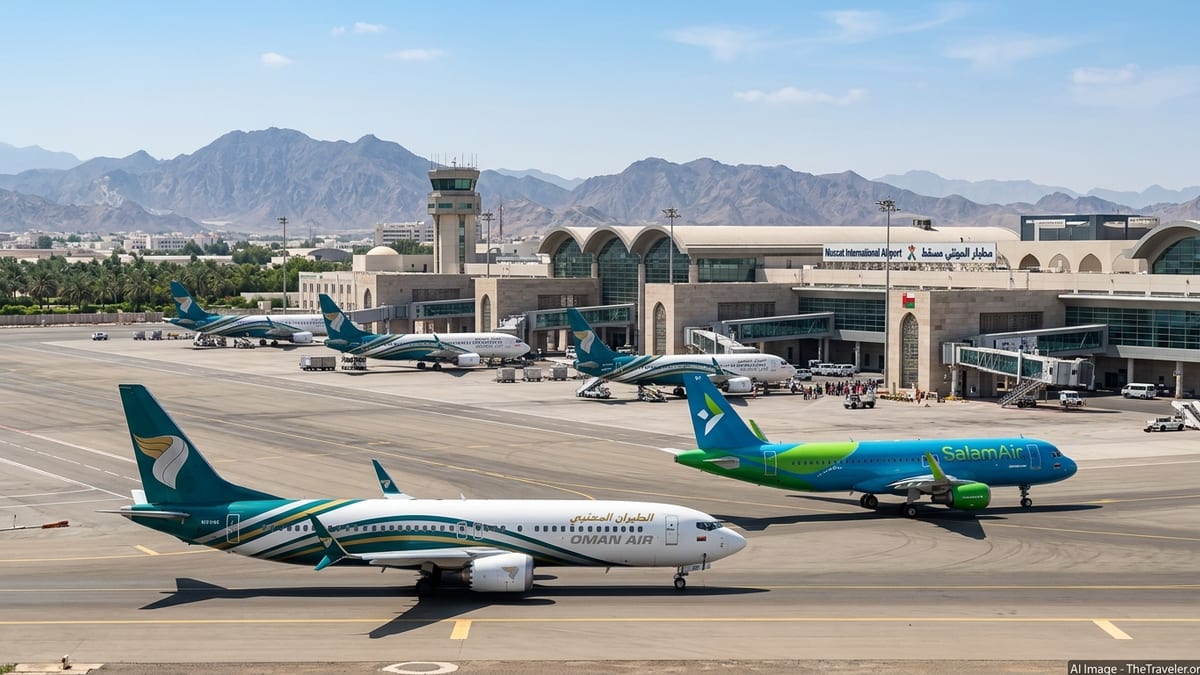
Expanded codeshare becomes a core pillar of Oman’s hub plans
Oman Air’s 9 June 2024 announcement of an “extended codeshare partnership” with SalamAir marked the starting point, with phase one bookable from 4 July 2024 on selected SalamAir routes that feed into Oman Air’s network. The flag carrier framed the move explicitly as a way to broaden schedule options while serving the country’s tourism ambitions under Oman Vision 2040.
SalamAir’s latest statement, issued in late 2026, confirms that the arrangement has evolved into a strengthened codeshare focused on optimising the two airlines’ complementary networks through Muscat. Each carrier can now sell eligible flights operated by the other under its own code, giving passengers more one-ticket options across Africa, Asia, the Middle East and Europe while routing through Oman’s main hub.
For travelers, the practical change is that more regional SalamAir services can now be combined with Oman Air’s longer-haul flights on a single itinerary, rather than requiring separate tickets. That in turn improves protection on missed connections, simplifies itinerary changes and makes Muscat a more realistic alternative gateway to the Gulf for itineraries that include secondary cities in and around Oman.
National Aviation Strategy 2040 moves from approval to implementation
The Civil Aviation Authority formally approved Oman’s National Aviation Strategy 2040 in December 2025, aligning it with Oman Vision 2040 and setting out a 15-year roadmap for the sector. The plan identifies aviation as a key enabler of economic diversification, with a specific focus on supporting tourism, logistics, trade and investment.
Official documents show that the first implementation phase, covering 2026 and 2027, prioritises boosting passenger air connectivity at Muscat and Salalah airports. Recent supervisory committee updates in 2026 highlight work by an Air Connectivity Development Committee, which is tasked with improving the efficiency of the national flight network and coordinating with tourism authorities to attract more services and raise passenger numbers into the first half of 2027.
Within that framework, closer commercial coordination between Oman Air and SalamAir is treated as one of several tools to channel more traffic via Omani airports rather than through rival regional hubs. The strengthened codeshare is explicitly referenced by both airlines as aligned with the National Aviation Strategy 2040, turning policy goals about connectivity and tourism growth into specific booking and network decisions.
State ownership of SalamAir, but no merger of the carriers
Oman’s government completed the acquisition of a 90 percent stake in SalamAir in March 2026, turning the low-cost carrier into a majority state-owned airline alongside full-service Oman Air. Official statements at the time describe the move as a way to build a more integrated national aviation sector and strengthen the country’s overall air-connectivity offering.
Despite the common ownership and closer codeshare, both airlines have been clear that they remain separate entities with independent brands, fleets and day-to-day operations. There is no merger or joint-venture arrangement in place; instead, the focus is on coordinated planning in areas such as route development, schedules and connections through Muscat, consistent with the governance structure laid out in the aviation strategy.
For passengers, that distinction matters mainly in terms of service style and fare structure. Oman Air continues to operate as a full-service carrier on long-haul and key regional routes, while SalamAir retains its low-cost model on shorter sectors, including many of the regional “spoke” routes that now feed more directly into Oman Air services via the expanded codeshare.
What changes for travelers now, and what to watch for in 2027
In practical terms, the most visible impact for travelers in late 2026 and into 2027 is the growing list of city pairs that can be booked on one ticket combining SalamAir and Oman Air. The strengthened codeshare opens up more through itineraries via Muscat, allowing, for example, a single booking that links a SalamAir regional flight with an Oman Air service to or from Europe or Asia, including through-checked baggage on eligible routes.
Muscat International Airport is central to this plan, serving as the main hub where schedules are being coordinated to reduce connection times and create more consistent banked waves of arrivals and departures. Some of the benefits are already visible in booking systems, where passengers will find additional WY-coded flights operated by SalamAir and OV-coded services on selected Oman Air routes, reflecting the reciprocal nature of the agreement.
Looking ahead, both airlines and the Civil Aviation Authority describe 2027 as part of an initial “ignition” phase for the National Aviation Strategy 2040, with plans to boost passenger traffic and enhance connectivity. Travelers should, however, treat any specific 2027 routes or frequencies as provisional until they appear in official timetables or global distribution systems. Those planning trips to or through Oman next year should watch for further announcements on new codeshare destinations, deeper integration of booking and through-check services, and how competitive schedules via Muscat compare with alternative Gulf hubs when finalizing their travel plans.