


Like many travelers, I first knew Fiumicino only as an airport code on my boarding pass. FCO meant queues, duty-free perfume and a train into Rome, nothing more. So when a delayed connection forced me to spend a night in the town of Fiumicino rather than the city, I braced for a sleepy suburb built around runways. What I found instead was a place that felt unexpectedly alive: a working fishing port, a promenade of crowded trattorias and wine bars, and a community that treats the Tiber waterfront as its living room.
Get the latest updates straight to your inbox!
Beyond the Runways: First Impressions of a Real Town
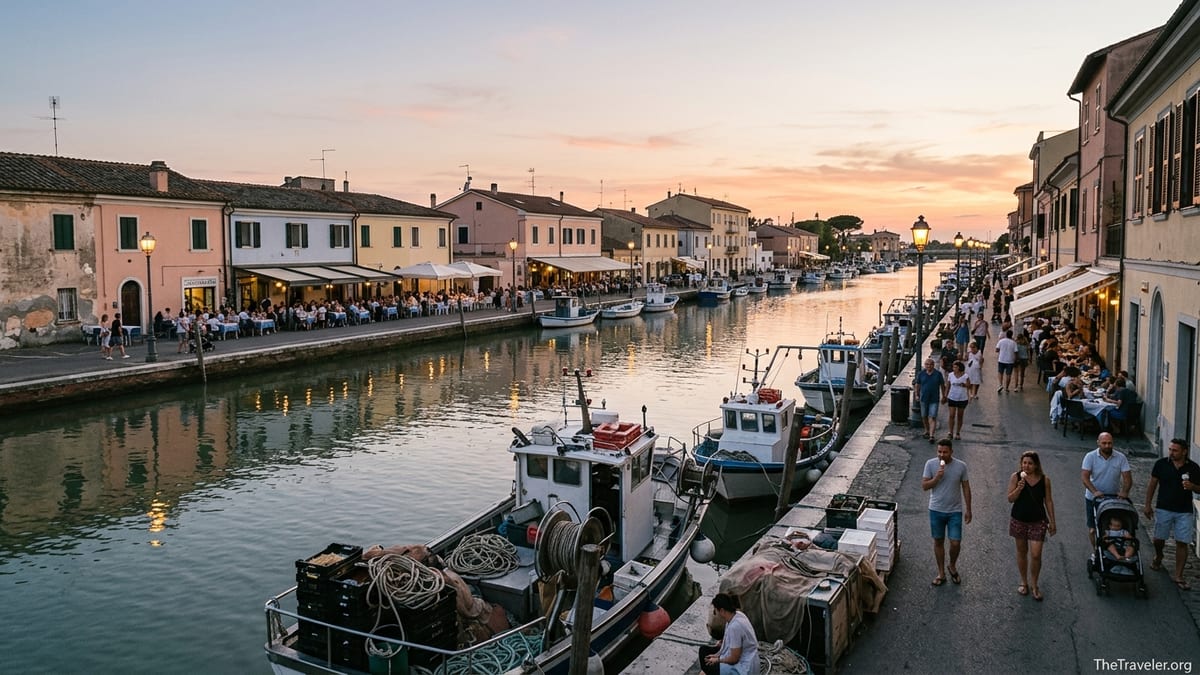
The surprise begins as soon as you leave the airport perimeter. A short taxi or rideshare ride of around 10 to 15 minutes drops you not into an anonymous business park but into a compact town spread along the banks of the Tiber and the Tyrrhenian Sea. On Via della Torre Clementina, the main waterfront street, boats are moored tightly along the quay and low pastel buildings crowd in behind them. It feels immediately like a small port town rather than an airport suburb, with the river at its heart and the traffic of locals on scooters, delivery vans and families on evening walks.
What struck me first was how quickly the mood changes from sterile terminal to casual seaside. Step out near the darsena, the inner harbor, in the late afternoon and you smell briny river air and grilling fish instead of jet fuel. Locals lean on the riverside railing to talk, dogs nose at fishing crates, and on a sunny day in spring or autumn you will see kids in school uniforms eating gelato before heading home. Even if you arrive slightly disoriented from a long-haul flight, the townscape tells you at once that this is a place where people actually live and work, not just pass through.
Part of that vibrancy comes from the scale. Fiumicino proper, especially around the Isola Sacra district and the riverfront, is compact enough that you can walk almost everywhere. In twenty minutes on foot you can go from a residential back street to the fish market, then down to the sea. That sense of human scale, with low-rise apartment blocks, corner bakeries and neighborhood bars, makes it easy to slip into local rhythms even if you are only there for a night between flights.
A Working Waterfront That Never Really Sleeps
The liveliest stretch of Fiumicino is the waterfront along Via della Torre Clementina. Here the Tiber is lined with trawlers and small fishing boats that leave before dawn and start returning by late morning. It is common to see crews unloading crates of squid, clams and gleaming silver fish directly onto the quay, where wholesalers, restaurant buyers and curious locals cluster around. It is a reminder that seafood in Fiumicino is not a theme but a daily economic engine, and that energy spills naturally into the streets.
Nearby, simple kiosks and cafes open early to catch both fishermen and commuters. A bar on Via Foce Micina might already be pulling espressos for regulars at 6:30 a.m., serving cornetti and cappuccinos to dockworkers and travelers from nearby guesthouses. Later in the morning, people stop in for a quick espresso at the counter before heading to the office or out to the airport. The chatter is constant, and there is a sense that everyone knows at least someone else in the room.
Walk the waterfront again at night and the same area has a different but equally busy energy. Restaurants like L'Osteria dell'Orologio and Tarumbò fill their outdoor tables with couples sharing fritto misto and plates of spaghetti alle vongole. A few doors down, other places specialize in thin-crust Roman-style pizza or fast casual seafood served in paper cones. On weekends, especially in warmer months, getting a table at peak time can require a reservation or a wait at the bar. For a town of modest size, the number of people on the street at 9:30 p.m. can be startling to someone who expected only airport hotel quiet.
Food Culture That Rivals Central Rome
Travelers often assume they need to go into central Rome for a memorable meal, but Fiumicino’s restaurant scene is one of the main reasons the town feels so alive. Locals from across the Roman coast drive here specifically to eat, particularly on Friday and Saturday nights. The focus is overwhelmingly on seafood, with everything from simple trattorias to refined dining rooms that have earned prestigious guidebook recognition.
Along Via della Torre Clementina and on the adjacent Isola Sacra peninsula, you find a dense cluster of places catering to different tastes. A typical mid-range dinner at a riverfront trattoria might include a sharing plate of sautéed clams, a seafood pasta and a glass of local white wine for around 25 to 35 euros per person, depending on how elaborate you go. House specialties often include tonnarelli allo scoglio loaded with mussels and shrimp, or grilled catch of the day sold by weight. Because many kitchens buy directly from nearby wholesalers, menus can change with the daily catch, which adds to the sense of immediacy and connection to the water.
What surprised me was not just the quality but the atmosphere inside these restaurants. Even on weekdays, families celebrate birthdays with dessert sparklers, groups of friends linger over digestifs, and waiters move at a practiced but unhurried pace. In a place like L'Osteria dell'Orologio on Via della Torre Clementina, locals discuss which fisherman supplied that day’s swordfish while staff recommend pairings of Lazio white wines. On the Isola Sacra side, contemporary spots within marina complexes serve tasting menus that draw food-focused travelers who deliberately choose to sleep near the airport just to eat here before flying out.
Outside formal restaurants, the food culture extends to bakeries, gelaterie and casual bars. In the late afternoon, teenagers crowd around gelato counters near the main square choosing from classic flavors like nocciola and stracciatella. In the morning, blue-shirted airport employees pick up takeaway panini from small panifici before catching shuttle buses to their shifts. Food is constant background noise in Fiumicino, another reason the town rarely feels still.
Strolling, Shopping and People-Watching Between Flights
Much of Fiumicino’s liveliness comes not from formal attractions but from simple street life. After dropping a bag at a hotel along the river or in the Isola Sacra neighborhood, the best introduction is an unhurried walk along the Tiber. Benches and low walls give you places to sit and watch boats, and between the restaurants are small shops selling everything from fishing gear to beach toys. You may find a greengrocer displaying crates of artichokes and oranges right next to a small fashion boutique that caters to both locals and cruise passengers.
On market days, streets around Via Foce Micina host stalls selling clothes, household goods and seasonal produce. The exact layout and days can change, so it is wise to ask your hotel which mornings the market is on. When it is in full swing, the area hums with residents bargaining over shoes or kitchen tools while older locals stand off to the side catching up on neighborhood news. For a traveler who expected only departure boards and luggage trolleys, this kind of everyday commerce makes Fiumicino feel like a self-sufficient town rather than a satellite of Rome.
Even away from the market, there are small commercial pockets to explore. Corner bars on Via Foce Micina and surrounding side streets double as social clubs, with regulars rotating from coffee to aperitivo as the day goes on. Supermarkets and small convenience stores stay open into the evening, handy for travelers who want to stock up on snacks or buy an affordable bottle of wine for the hotel room. Because so many visitors stay for only one night, the staff in these places are used to answering practical questions, from which bus goes to the airport to how early the bakeries open.
Sea, Sunsets and the Roman Coastline
Another surprise is how quickly you can swap the riverfront for a view of open water. Depending on where you are staying, the Tyrrhenian shoreline is often a short taxi ride or a long but manageable walk away. The beaches closest to Fiumicino feature a mix of private lidos with rows of umbrellas and stretches of free public sand. In late spring and summer, locals arrive with folding chairs and coolers, while a younger crowd fills beach bars that stay open with music and drinks until sunset.
Even if you do not have time for a full beach day, heading out to the seafront in the early evening gives another perspective on Fiumicino’s energy. Joggers use the promenade for their after-work run, couples push strollers, and groups of friends gather at kiosks for spritz and salty snacks. On a calm evening you might see fishing rods planted in the sand, their lines disappearing into the surf, while planes climb overhead toward transatlantic routes. It is one of the few places where you can watch takeoffs while your feet are still in the sand.
The coastal location also influences the town’s seasonal rhythm. In August, when much of Italy slows for summer holidays, the beaches and waterfront restaurants become even busier as Romans escape the heat of the city center. In shoulder seasons like May, June, September and early October, there is a pleasant balance: enough activity to keep streets animated, with milder temperatures that make walking and outdoor dining comfortable. Even in winter, when days are shorter and the sea air can be sharp, local bars and trattorias ensure that the main streets never feel completely deserted.
Connecting Travelers and Locals in a Shared Space
Because of its location, Fiumicino is constantly receiving people from elsewhere. Airline crews check into small hotels along the river, tourists overnight before early departures, and business travelers arrive for meetings in nearby industrial zones. What is surprising is how much these transient visitors blend into local life instead of existing in a separate airport bubble. In many bars you will see pilots at one table, families with strollers at another, and groups of friends in tracksuits catching a football match on TV.
Many hotels in town, from simple guesthouses on Isola Sacra to larger properties near the darsena, offer shuttle services to the airport. That makes it easy for guests without cars to spend the evening walking the waterfront rather than staying confined to a highway-side property. I met one Canadian couple at a riverfront wine bar who had originally planned to go straight into central Rome for two nights, but after a delayed flight they ended up rebooking one night in Fiumicino. By the time their burrata arrived, they were already talking about choosing an airport-area stay again next time specifically for the chance to dine along the river.
Local businesses lean into this mix. Menus are often in both Italian and English, but you still hear staff joking with long-time customers in Roman dialect. Some restaurants outside the absolutely central strip near Via della Torre Clementina tilt more toward locals, with daily fixed-price lunch menus that are popular with workers from logistics companies and airport offices. Others, especially along the most scenic waterfront stretches, are adept at helping first-time visitors navigate options like crudo platters, whole grilled fish or regional desserts. The result is a town where tourism supports but does not overwhelm everyday life.
Practical Tips for Experiencing Fiumicino’s Liveliness
If you have a night or even a long afternoon near Fiumicino Airport, it is remarkably easy to experience the town’s more vibrant side. Taxis from the terminal to the riverfront usually cost a moderate flat or metered rate that you can confirm at the official taxi stand. Some hotels located in the Isola Sacra district or near the harbor offer free or low-cost shuttles at set times, which can be more economical for solo travelers. Once you are in town, walking is the best way to get around, although local buses connect different neighborhoods and run back toward the airport during the day.
Timing matters if you want to see Fiumicino at its most alive. Arrive along Via della Torre Clementina between 6:30 and 8 p.m. and you will catch the aperitivo window, when bars serve spritz, wine and small plates and many locals stop for a drink before dinner. In Italian fashion, dinner service at most restaurants picks up around 8 p.m. and can stay busy until 10:30 or later on weekends. For travelers with very early flights, an early dinner at 7 or 7:30 can still offer a good atmosphere while leaving time for sleep.
For morning people, setting an alarm to walk the waterfront just after sunrise is equally rewarding. You might see fishing boats heading out or returning, delivery vans loading crates of seafood for restaurants, and bars opening their doors for the first coffees of the day. If you need to get back to the airport, ask your accommodation about the schedule for first shuttles or early local buses. Many properties that cater to airline crews and transit passengers are used to checkouts before dawn and can arrange simple breakfasts to go.
In terms of costs, coffee at a bar counter is typically just over a euro, a scoop of gelato around 2 to 3 euros, and a casual seafood dinner with wine from 20 to 35 euros per person depending on what you order. Card payments are widely accepted in restaurants and hotels, but it is useful to carry some cash for small purchases at markets or older bars. Most locals speak at least some English, especially younger people and those working in hospitality, but even a few basic Italian phrases make interactions warmer.
The Takeaway
What surprised me most about Fiumicino was that it felt like somewhere you might choose to visit, not just a place you are forced to endure between flights. The working waterfront, the density of good restaurants, and the simple everyday life along the Tiber all combine to create a sense of place that is rare so close to a major international airport. Rather than being overshadowed by Rome, Fiumicino has carved out its own identity as a lively port town where planes and fishing boats share the same skyline.
If you only ever see Fiumicino through terminal windows and shuttle buses, it will remain a blurry backdrop to your Roman holiday. Give it even a few hours, though, and you discover a community with its own rhythms: fishermen at dawn, office workers on lunch break, families in pushchairs after dinner, and travelers clinking glasses the night before an early departure. That combination of local life and global movement is what makes Fiumicino feel unexpectedly vivid. On my next trip through FCO, I will be scheduling a deliberate layover in town, not to kill time, but to spend it well.
FAQ
Q1. Is Fiumicino town worth visiting if I only have one night before my flight?
Yes. If you have a late afternoon or evening free, Fiumicino’s riverfront and seafood restaurants make for a relaxed, authentic experience without the stress of going into central Rome.
Q2. How far is Fiumicino town from the airport terminals?
The main waterfront streets and Isola Sacra neighborhood are typically about a 10 to 15 minute taxi ride from the terminals, depending on traffic and your exact destination.
Q3. Is it easy to get between Fiumicino town and the airport without a car?
Yes. Official taxis are available outside arrivals, and many hotels in town run shuttle buses at fixed times. Local buses also connect parts of Fiumicino with the airport during the day.
Q4. What is the best time of day to experience Fiumicino’s lively atmosphere?
Evenings along Via della Torre Clementina and the riverfront are particularly lively from around 7 to 10 p.m., with aperitivo crowds and busy seafood restaurants.
Q5. Are there good restaurants in Fiumicino, or should I eat in Rome instead?
Fiumicino is known among locals for its seafood, with plenty of quality trattorias and more refined restaurants along the river and in the Isola Sacra area.
Q6. Is it safe to walk around Fiumicino in the evening?
The central riverfront and nearby streets are generally well frequented, especially around restaurants and bars. As in any town, normal precautions such as watching your belongings apply.
Q7. Can I reach the beach easily from Fiumicino town?
Yes. The shoreline is a short taxi ride or longer walk from the riverfront, with a mix of public beaches and private lidos along the Tyrrhenian coast.
Q8. Is Fiumicino a good base instead of central Rome?
For a full city visit, staying in central Rome is more convenient for sightseeing. Fiumicino is best used as a stopover before or after flights, or for travelers who especially enjoy waterfront dining.
Q9. Do I need to book restaurants in Fiumicino in advance?
On weekends and in peak seasons it is wise to reserve, especially for popular waterfront seafood spots. On quieter weekdays you may find a table by walking in early.
Q10. What should I budget for a typical dinner in Fiumicino?
At a mid-range restaurant, a seafood pasta or main dish plus a drink usually comes to around 20 to 35 euros per person, depending on your choices.