


More news on this day
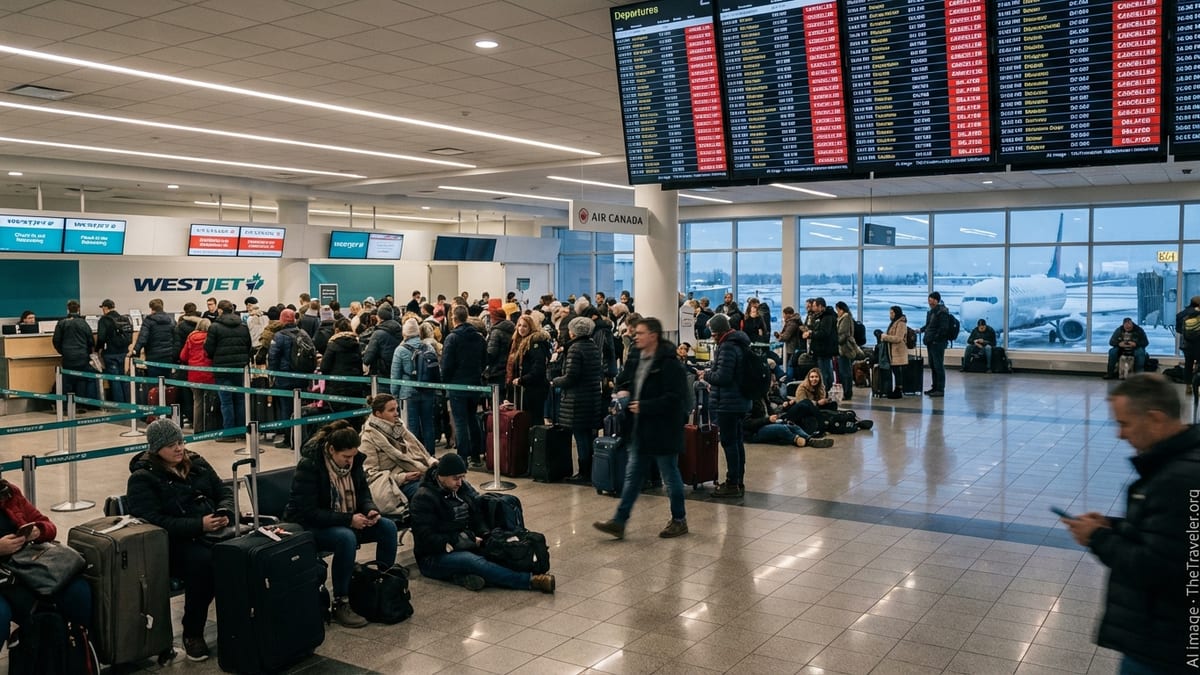
Dozens of delays and a cluster of cancellations affecting WestJet, Air Canada and Delta services left travelers stranded at Calgary International Airport on June 18, disrupting links to major hubs including Toronto, Vancouver, Seattle and Denver.
Get the latest news straight to your inbox!
Operational Turbulence Hits Key North American Routes
Flight tracking data and airport information screens on June 18 indicated around 66 delayed departures and arrivals and at least six outright cancellations involving services operated by WestJet, Air Canada and Delta, among other carriers, at Calgary International Airport. The disruption affected a mix of domestic and cross border flights, complicating travel plans on one of the busiest weeks of the early summer period.
Among the most heavily affected links were routes connecting Calgary with Toronto and Vancouver, which serve as vital domestic trunk lines, alongside transborder services that tie Calgary to Seattle and Denver. Even short delays on those high frequency corridors can cascade through carrier schedules, contributing to rolling knock on effects for flights later in the day.
Calgary International Airport functions as the primary global hub for WestJet and an important base for Air Canada, which means irregular operations have an outsized impact on network reliability for both airlines. Published airport and airline data show that when disruptions occur at Calgary, they can quickly touch passengers far beyond Alberta, including those connecting from Atlantic Canada, the United States and overseas.
Delta, which cooperates with WestJet on certain itineraries, also saw knock on impacts to its Calgary linked services. Delays on feeder routes into hubs such as Seattle and Denver can narrow connection windows and force rebookings, pushing the inconvenience beyond the initial departure point.
Weather, Congestion and Network Strain Combine
Publicly available weather information for Calgary on June 18 pointed to relatively benign surface conditions at the airport, suggesting that local storms or visibility issues were unlikely to be the sole driver of the disruptions. Aviation analysts often point instead to a combination of upstream weather, air traffic control flow restrictions and tight fleet utilization as factors that can lead to widespread delays even under clear local skies.
Industry reports in recent months have highlighted how Canadian carriers, including WestJet and Air Canada, are running dense summer schedules that leave limited room for operational slack. When a single aircraft is delayed early in the day or on a prior day, it can ripple through multiple rotations, particularly for long haul and transcontinental services that feed into Calgary from Toronto, Vancouver and US hubs.
Airlines also remain exposed to broader system pressures, such as staffing and airspace constraints elsewhere in North America. Travel forums and prior regulatory submissions describing operational challenges at Canadian airports and in surrounding airspace note that air traffic control initiatives or ground handling bottlenecks can trigger delays far from the originating problem, especially on complex connecting itineraries.
In this context, the pattern seen at Calgary on June 18, with dozens of flights arriving and departing behind schedule and several cancellations clustered in peak travel windows, aligns with the kind of network wide strain that has periodically affected carriers since the sharp rebound in demand after the pandemic years.
Stranded Passengers Face Missed Connections and Extra Costs
For passengers, the immediate impact of 66 delays and six cancellations is measured in missed connections, extended overnight stays and lost time. Calgary International Airport is a key connection point for travelers heading between smaller Western Canadian cities and major hubs like Toronto, Vancouver, Seattle and Denver, which means even moderate schedule disruptions can sever onward links.
Travelers attempting to reach international destinations via Toronto or Vancouver reported facing tight or missed connections when their inbound flights from Calgary were held at the gate or arrived significantly behind schedule. With summer load factors already high, rebooking onto later departures can be complicated, often forcing passengers to accept alternative routings or wait many hours for open seats.
Those affected by outright cancellations typically confront an even more difficult set of choices, including last minute hotel stays, rearranged ground transport and the possibility of additional out of pocket expenses for meals and incidentals. As airlines work through backlogs, rebooked itineraries can involve circuitous routings through US hubs such as Seattle or Denver, further increasing travel times.
Customer experiences shared on social platforms in earlier disruption events suggest that information flow during irregular operations can be uneven. Some passengers receive timely notifications through airline apps or text messages, while others only learn of significant delays when they arrive at the airport, by which point alternatives may be limited.
Airlines Lean on Rebooking Policies and Support Channels
According to publicly available guidance, both WestJet and Air Canada provide rebooking options when delays or cancellations significantly alter a passenger’s itinerary. Passengers whose flights are substantially delayed or cancelled are typically offered a seat on the next available departure on the same carrier, subject to space, with some given the option to shift their travel to another date.
Air Canada’s published disruption guide indicates that when delays exceed several hours or when connections are missed, the airline will work to rebook affected travelers and, in certain circumstances defined by Canadian passenger protection rules, offer meals, accommodation or other assistance. WestJet policy materials describe similar frameworks that hinge on the cause of the delay and whether an event is categorized as within or outside the carrier’s control.
Delta, operating under United States regulations, handles compensation and care obligations differently, but the basic principles are similar: rebook impacted passengers, prioritize same day travel where possible and rely on digital tools and call centers to process high volumes of change requests. During multi airline disruptions that involve codeshare or interline itineraries, coordination between carriers can be a critical factor in how quickly passengers are accommodated.
Travel advocates often encourage passengers caught in large scale disruptions like those seen at Calgary to document all expenses, monitor airline apps closely for rebooking options and familiarize themselves with both airline policies and applicable passenger rights rules. These steps can help travelers recover eligible costs and navigate complex itineraries that involve multiple hubs and partner airlines.
Summer Demand Puts Calgary Hub Under the Microscope
The timing of the June 18 disruptions is noteworthy because it coincides with what airport and industry projections describe as another record setting summer for Calgary International Airport. Passenger forecasts published in recent days point to millions of travelers passing through the terminal over the peak season, underscoring the importance of resilient operations at the WestJet hub and Air Canada focus city.
As carriers pursue ambitious growth strategies, adding new international destinations and ramping up domestic capacity, their networks become more sensitive to operational shocks. A weather system over one region, a staffing challenge at a distant airport or a technical issue affecting a single aircraft type can all send ripples through schedules, a dynamic seen across global aviation in recent years.
For Calgary, the confluence of strong demand and complex multi airline disruptions raises questions about how infrastructure, staffing and scheduling practices can adapt to sustained high volumes. Industry observers note that investments in technology, airfield efficiency and passenger communications tools can help mitigate the worst effects of irregular operations, even if they cannot prevent every delay or cancellation.
In the short term, travelers with upcoming itineraries through Calgary are likely to watch operations closely, particularly on trunk routes to Toronto, Vancouver, Seattle and Denver. With the summer peak only just beginning, how airlines manage days like June 18 may shape passenger perceptions of reliability for the rest of the season.