


More news on this day
Fresh cancellations by Oman Air, Air Arabia, Flydubai and other regional carriers on routes linking Muscat, Salalah and key UAE hubs are leaving passengers stranded in Oman and compounding a wider web of travel disruption across the Middle East.
Get the latest news straight to your inbox!
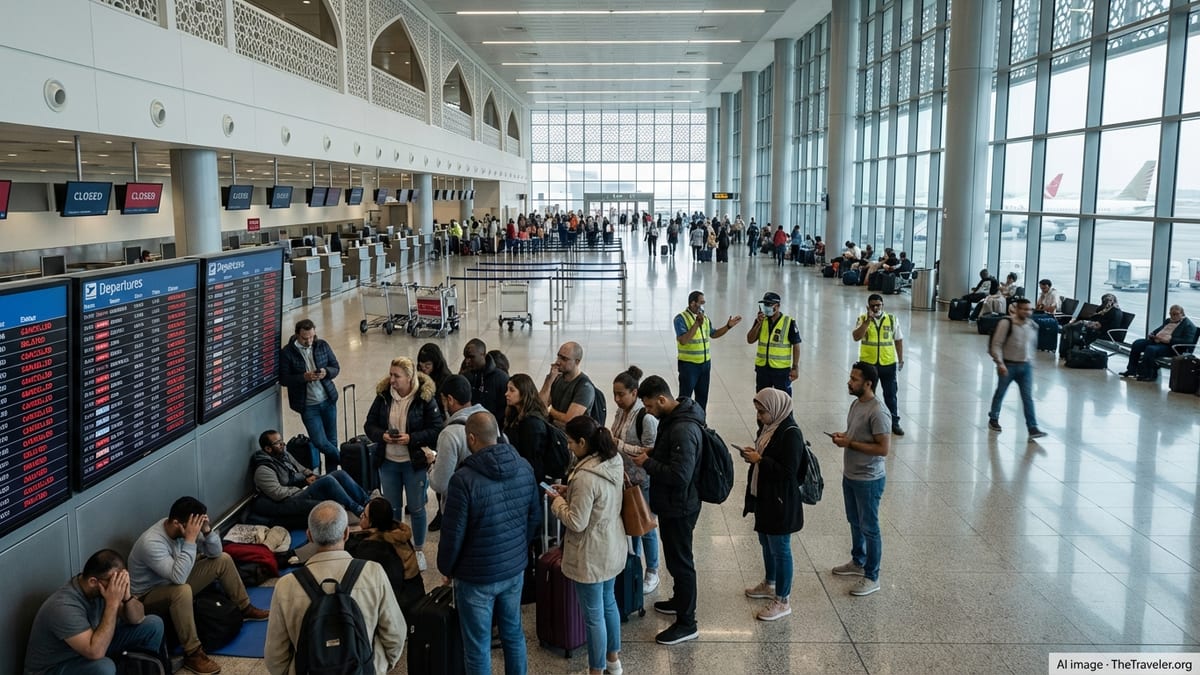
New Wave of Cancellations Hits Muscat–Salalah Corridor
Recent schedule changes show at least five newly cancelled services between Muscat and Salalah, cutting into one of Oman’s busiest domestic corridors just as regional travelers have been relying on the country as an alternative gateway. Publicly available airport data for early May indicates thinner frequencies on some Muscat–Salalah rotations, with several previously filed flights removed from sale or re-timed at short notice.
The cancellations are particularly disruptive because Muscat–Salalah links feed a range of onward connections to the United Arab Emirates. Muscat has been handling increased through-traffic to and from Asia, Africa and Europe as other Gulf hubs manage intermittent airspace and schedule constraints. Any reduction in domestic capacity therefore has an outsized impact on connecting journeys that depend on tight Muscat or Salalah transfers.
Travel disruption-monitoring services and regional travel advisories describe Salalah Airport as operational but vulnerable to knock-on effects from broader Middle East capacity cuts and reroutings. As airlines consolidate operations and prioritize higher-yield international sectors, some shorter domestic legs are being trimmed, leaving Omani residents and visitors with fewer same-day options between the capital and the southern city.
Reports shared by affected travelers in recent days describe last-minute notifications that Muscat–Salalah flights have been cancelled or shifted, forcing passengers to accept later departures, rebook via other Gulf points, or seek refunds and vouchers. For many, the issue is not only getting between the two Omani cities but also safeguarding onward itineraries that rely on those flights to connect to UAE and beyond.
Ripple Effects on UAE Gateways Including Dubai and Sharjah
The Muscat–Salalah cancellations are unfolding against a backdrop of wider disruption across key Gulf hubs such as Dubai, Sharjah and other UAE gateway cities. Earlier in April, published disruption tallies showed Flydubai and Air Arabia canceling more than 30 flights in a single day at UAE airports, with knock-on effects that continued into subsequent days as aircraft and crew rosters were repositioned.
With parts of the region’s airspace periodically restricted or restructured following this year’s security crisis involving Iran and several Arab states, carriers have been forced to reroute or suspend services to certain destinations. Oman Air, for example, has already extended suspensions on multiple regional routes, including Dubai and other Gulf capitals, while maintaining a largely intact long-haul network via Muscat. Those earlier cuts are now intersecting with the latest schedule changes on domestic Omani routes, tightening the squeeze on connectivity.
For passengers who previously relied on a simple Salalah–Muscat–Dubai or Salalah–Muscat–Sharjah itinerary, the layering of cancellations creates complex workarounds. Some are being rebooked onto indirect routings via alternative Gulf hubs or later flights with long layovers, while others report being offered refunds instead of same-day alternatives when inventory is exhausted. The result is a patchwork of ad hoc solutions rather than the predictable shuttle-style links that business and leisure travelers have come to expect.
Industry tracking suggests that UAE hubs are still operating far below normal schedule resilience, with airlines maintaining contingency timetables that can be adjusted quickly as airspace conditions evolve. In this environment, feeder routes from secondary cities such as Salalah are particularly exposed, since any operational squeeze typically forces airlines to protect trunk routes first.
Stranded Passengers Face Limited Options and Complex Rights
For travelers left stranded in Muscat or Salalah after short-notice cancellations, options vary widely depending on ticket type, point of sale and the jurisdictions involved. Publicly available guidance from Gulf regulators and consumer-focused travel sites notes that UAE rules generally require airlines to provide meals and hotel accommodation for significant delays or overnight disruptions departing from UAE airports, while separate regimes may apply when tickets originate in Oman or involve European carriers and EU-bound itineraries.
Advisories aimed at corporate travel managers and individual passengers alike recommend documenting all communications with airlines, retaining boarding passes and receipts, and checking eligibility for refunds or future-travel credits. Many carriers in the region have published special policies for itineraries affected by Middle East airspace disruptions, allowing one-time free changes or waivers of certain fees, but these often carry deadlines or apply only to travel within specific date ranges.
Travel forums and social media posts from early May highlight inconsistent experiences. Some passengers report being swiftly rebooked by Oman Air or low-cost carriers on the next available Muscat–Salalah flight or on alternate Gulf routings. Others describe long waits at airport service desks, partial itinerary cancellations that leave one segment intact and another voided, and refund timelines stretching several weeks, especially with budget airlines that rely heavily on online channels.
Consumer advocates stress that travelers should not assume that a missed or cancelled domestic leg will automatically unlock full compensation on an entire multi-sector ticket. In many cases, passengers must proactively request rebooking or reimbursement, and may need to escalate claims if an airline treats a cancellation as a voluntary change rather than a carrier-initiated disruption.
Oman’s Role as a Secondary Hub Under Strain
Since the onset of the latest Middle East security crisis, Oman has been positioned in many travel advisories as a relatively stable alternative routing point, with Muscat International Airport remaining operational and even absorbing overflow traffic from other disrupted corridors. Regional risk assessments describe Muscat as handling increased volumes, particularly for itineraries linking South and Southeast Asia with Europe and North America.
This role as a secondary hub, however, depends heavily on the reliability of short-haul links, both within Oman and to neighboring Gulf states. Oman Air’s domestic services between Muscat and Salalah, along with low-cost capacity offered by competitors, function as vital connectors that channel travelers into long-haul banks of departures. When even a handful of these feeder flights are cancelled or thinned out, the practical capacity of Muscat as an alternative gateway is effectively reduced.
Moreover, Oman’s own transport infrastructure has been under pressure from the broader regional conflict environment and recent severe weather episodes. While ports and airports across the country remain open, periodic advisories have pointed to temporary airline-specific cancellations linked to risk assessments, route-planning constraints and fleet deployment decisions. The combination of security-driven airspace complexity and localized operational challenges creates an unstable planning horizon for carriers trying to maintain consistent schedules.
Analysts following the Gulf aviation market suggest that secondary hubs such as Muscat and Salalah will continue to play an important role during periods when traditional mega-hubs are constrained. At the same time, they note that without predictable feeder capacity, these airports cannot fully capitalize on their geographic advantage, particularly for time-sensitive business travel and high-value connecting traffic.
What Travelers Can Do as Disruptions Persist
Travel experts and advisory services recommend that passengers with upcoming itineraries touching Muscat, Salalah or UAE gateways such as Dubai and Sharjah take a more hands-on approach to trip management over the coming weeks. Monitoring flight status via airline apps and third-party tracking tools in the 24 to 48 hours before departure is widely seen as essential, as is ensuring that carriers have up-to-date contact details to issue schedule-change notifications.
Where possible, travelers are being encouraged to allow longer minimum connection times, especially when relying on domestic feeders within Oman or cross-border shuttles into UAE hubs. Booking slightly earlier Muscat–Salalah segments or overnighting in a hub city can add cost and inconvenience but may significantly reduce the risk of missing long-haul flights when short-haul legs are cancelled at short notice.
Advisories aimed at corporate travel programs also suggest building alternative routings into planning templates, including options that bypass the most volatile corridors or use other Gulf airports if connections via Muscat or UAE hubs become untenable on specific days. Flexible fare classes, while more expensive upfront, may provide greater protection if itineraries need to be reshaped quickly in response to dynamic airspace restrictions.
For now, the combination of newly cancelled Muscat–Salalah flights and ongoing disruptions at Dubai, Sharjah and other Middle Eastern hubs serves as a reminder that the region’s aviation system remains in a fragile equilibrium. Travelers can still move through Oman and the UAE, but doing so increasingly requires flexibility, contingency planning and close attention to rapidly changing schedules.