


More news on this day
Persistent airspace instability around Bahrain is leading to renewed flight cancellations and schedule changes for Flydubai and Air Arabia, disrupting key routes linking Bahrain International Airport with Dubai and Sharjah and prompting fresh uncertainty for Gulf travelers.
Get the latest news straight to your inbox!
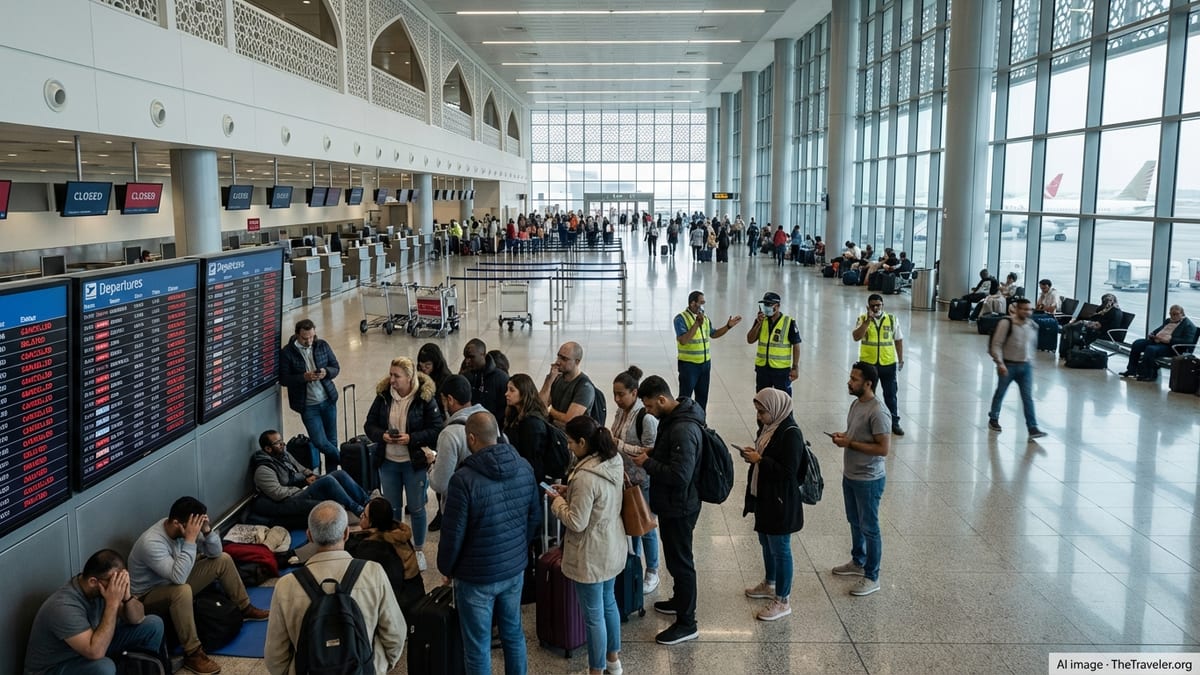
Regional Airspace Turbulence Reaches Bahrain–UAE Corridors
Recent regional tensions and airspace restrictions across parts of the Middle East have continued to ripple through commercial aviation, with Bahrain International Airport among the hubs experiencing prolonged operational instability. Publicly available industry bulletins and advisory notes describe a pattern of intermittent closures and capacity constraints in Bahrain’s airspace, resulting in repeated suspensions, restarts and reductions in flights serving the island kingdom.
These conditions have affected not only Bahrain’s flag carrier but also important point-to-point and connecting traffic between Bahrain and the United Arab Emirates. Flydubai services between Dubai International Airport and Bahrain, along with Air Arabia operations that typically feed traffic through Sharjah International Airport, are reported to be among those facing cancellations or timetable changes whenever Bahrain airspace restrictions tighten.
While Bahrain International Airport has gradually reopened to civilian traffic after earlier full suspensions, aviation tracking platforms and specialist travel reports indicate that schedules remain fluid. Airlines operating into and out of Bahrain continue to adjust their frequencies, routings and aircraft allocations in response to evolving airspace access, with knock-on effects for passengers using Bahrain as a link between the wider region and the UAE hubs of Dubai and Sharjah.
Flydubai Adjusts Bahrain Schedule Amid Wider Network Pressures
Flydubai, which connects Dubai International Airport with Bahrain on a high-frequency short-haul schedule, has been recalibrating its operations as regional airspace patterns change. Operational updates published on the carrier’s website in recent weeks describe network-wide disruptions and selected route suspensions tied to airspace closures and rerouting requirements, including longer flight times on some corridors and temporary cancellations on others.
Although detailed day-by-day Bahrain schedules are not presented in a single public advisory, flight-status tools and timetable snapshots for the first week of May 2026 show a reduced and irregular pattern of Flydubai departures and arrivals involving Bahrain compared with typical historical levels. Some services that would normally operate multiple times per day appear as cancelled on specific dates, while others are retimed or consolidated with partner flights operating under codeshare arrangements.
Industry analysis notes that increased route lengths and congestion in alternative corridors are placing pressure on aircraft utilization across several Gulf-based airlines, including Flydubai. As aircraft hours and crew rosters are reshuffled to accommodate rerouted long-haul and regional services, shorter flights such as Dubai–Bahrain are among those that can see short-notice cancellations or swaps, especially when Bahrain’s own airspace status shifts at short notice.
Air Arabia Passengers Report Ongoing Cancellations and Policy Friction
Air Arabia, headquartered at Sharjah International Airport, has also been navigating the consequences of the evolving airspace picture. While the airline’s official network map continues to show Bahrain within its broader Gulf footprint, regional operations updates and airport-focused briefings have flagged possible disruptions and occasional suspensions on select Middle East routes, including Bahrain, during periods of tighter airspace control.
Recent passenger accounts on travel forums and social channels describe cancellations affecting a range of Air Arabia services in the wider region, often attributed to security-related airspace constraints or last-minute schedule reshuffles. Some travelers report short-notice messages advising that flights are cancelled or moved to alternative dates, prompting unplanned overnight stays, rebookings on other carriers, or the need to route via different Gulf hubs.
Separate posts and commentary also highlight tension around Air Arabia’s handling of credits and refunds on cancelled flights. Travelers have shared experiences of policy changes and disagreements over the validity window for travel credits, illustrating how operational disruption can be compounded by uncertainty over after-sales support. While these accounts do not all relate directly to Bahrain, they underscore how unpredictable regional flying conditions are intersecting with customer service policies in ways that affect confidence on routes such as Bahrain–Sharjah.
Knock-on Impact for Bahrain–Dubai and Bahrain–Sharjah Connectivity
The cumulative effect of flight cancellations and altered timetables is particularly acute for travelers who rely on Bahrain as a link between the wider Gulf, South Asia, and onward long-haul destinations via Dubai and Sharjah. Bahrain International Airport serves as a key regional node, and Flydubai and Air Arabia flights provide important short-haul connectivity into the UAE’s larger hub systems.
When Bahrain’s airspace is restricted or temporarily closed, carriers may choose to cancel Dubai–Bahrain and Sharjah–Bahrain rotations rather than hold aircraft and crew on the ground without a firm reopening time. As a result, passengers who had planned same-day connections through Dubai International Airport or Sharjah International Airport can find that a single cancelled Bahrain sector causes them to miss onward long-haul departures, sometimes with limited rebooking options during peak travel periods.
Travel analysis from regional aviation specialists indicates that during earlier phases of the current disruption, some airlines temporarily shifted parts of their Bahrain-linked operations to nearby Saudi airports to maintain a minimum level of connectivity. Although Bahrain International Airport has since moved back toward more regular operations, the practice of rerouting via alternative Gulf gateways remains part of contingency planning, reinforcing the volatile nature of schedules for passengers seeking a predictable Bahrain–Dubai or Bahrain–Sharjah itinerary.
What Travelers Between Bahrain, Dubai and Sharjah Should Expect Now
For the coming weeks, most publicly available expert commentary suggests that travelers planning to fly between Bahrain International Airport and the UAE’s main hubs should continue to expect a heightened risk of last-minute changes. Airline booking engines may display what appears to be a normal schedule, but actual day-of-operation outcomes can depend on evolving airspace permissions, regional security assessments and the knock-on effect of delays elsewhere in the network.
Prospective passengers on Flydubai services between Dubai and Bahrain, and on Air Arabia routes touching Bahrain and Sharjah, are therefore advised by travel industry guidance to monitor their bookings closely in the days and hours before departure. Aviation trackers and airport departure boards show that flights can move from “scheduled” to “cancelled” or “delayed” within relatively short windows, particularly around periods of renewed airspace constraint.
Analysts also note that even when flights operate, routings may be adjusted to avoid sensitive areas, extending flight times and potentially disrupting tight connection windows at Dubai International Airport or Sharjah International Airport. Travelers connecting onward to Europe, Asia or Africa through these hubs may need to plan longer layovers and remain flexible about alternative routings or dates if Bahrain-related sectors are disrupted again.
Overall, published coverage from aviation outlets and industry advisories paints a picture of a still-fragile recovery in Bahrain’s air connectivity with the UAE. While Flydubai and Air Arabia continue to link Bahrain with Dubai and Sharjah where conditions allow, the pattern of cancellations and operational changes suggests that stability on these key Gulf routes remains some way off.