


More news on this day
Travel across Türkiye and the North Caucasus is facing renewed disruption as fresh cancellations by UTA and Pegasus Airlines cut key links between Istanbul, Ankara, Grozny and Istanbul Sabiha Gokcen, leaving many travellers effectively isolated and scrambling for alternative routes.
Get the latest news straight to your inbox!
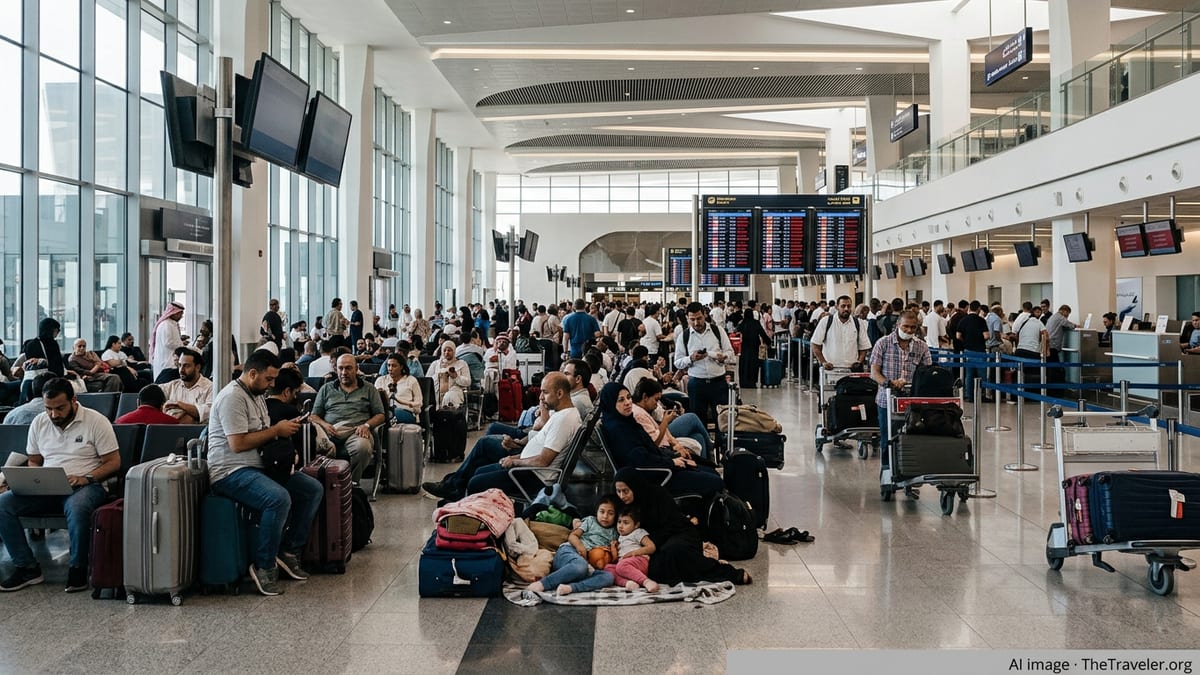
New Wave of Cancellations Hits Istanbul and Ankara Operations
According to publicly available flight-tracking data and local media coverage, a new round of cancellations has affected services operated by UTA and Pegasus Airlines on routes linking Istanbul and Ankara with Grozny and other regional destinations. Two additional services were reported grounded in the latest update, intensifying a pattern of disruption that has unfolded over recent weeks.
The affected flights are understood to include services routed through Istanbul Sabiha Gokcen, the city’s secondary international hub that plays a critical role for low-cost and regional carriers. Reduced operations there are having a knock-on effect for connections across Türkiye, as well as for passengers using Istanbul as a transit point to and from Russia’s North Caucasus.
In Ankara, schedule changes and cancellations are contributing to uncertainty for domestic and international travellers who rely on the capital as an alternative gateway when Istanbul traffic becomes constrained. With both major Turkish cities experiencing irregular operations on overlapping days, options for rebooking have narrowed and travel plans have become harder to salvage at short notice.
While Pegasus has previously acknowledged disruption linked to airspace restrictions and adverse weather during the winter and early spring travel periods, recent reports indicate that operational decisions and regional security considerations are now combining to produce a fresh wave of cancellations on specific city pairs.
Travellers Left Isolated Between Türkiye and Grozny
Connections between Türkiye and Grozny are particularly exposed to the latest changes. Grozny’s links to Istanbul and onward Turkish destinations are typically limited to a small number of weekly flights operated by a handful of carriers, which means that the cancellation of even one or two rotations can leave passengers without a practical alternative for several days.
Published coverage of recent disruptions describes travellers stranded at Turkish airports when services to or from Grozny are withdrawn at short notice, often after they have already completed an initial domestic leg to Istanbul or Ankara. In some cases, passengers holding through-tickets report being advised to seek refunds or rebookings rather than being placed automatically on the next available flight.
This isolation is felt most acutely by travellers who depend on Türkiye as a transit corridor linking the North Caucasus with the Middle East and Europe. When services between Grozny and Istanbul Sabiha Gokcen are cancelled, onward itineraries can unravel, resulting in extended airport stays, last-minute hotel costs, and the need to purchase replacement tickets on alternative carriers where capacity is available.
For those with time-sensitive commitments, such as medical appointments, family events or work deadlines, the impact of a grounded flight can go beyond inconvenience, narrowing the realistic options for getting out of or into Grozny until operations are restored.
Sabiha Gokcen Disruptions Ripple Through Regional Networks
Istanbul Sabiha Gokcen International Airport serves as a primary base for Pegasus and as a key hub for connecting traffic throughout Türkiye and neighboring regions. When flights are cancelled here, the disruption does not stop at the point-to-point route; it spreads across a web of onward connections that rely on tight scheduling.
Recent Turkish press reporting has highlighted how weather-related and operational cancellations at Sabiha Gokcen earlier in the year led to widespread knock-on effects, including missed domestic connections and lengthy delays for international passengers who were forced to overnight in Istanbul. The latest cancellations involving UTA and Pegasus appear to be following a similar pattern on a smaller but still significant scale.
Passengers routing through Sabiha Gokcen to reach cities across Anatolia, as well as international destinations such as Grozny, are finding that a single grounded leg can trigger a complete reconfiguration of their trip. In some instances, travellers have resorted to transferring across the city to Istanbul Airport in the hope of finding last-minute seats on other airlines, adding cost and complexity to journeys that were originally planned as straightforward connections.
Travel forums and social media posts continue to reflect frustration among passengers who describe limited communication regarding the reasons for cancellations and the timeline for restoring affected services. In this environment, the role of Sabiha Gokcen as a reliable low-cost hub has come under renewed scrutiny from regular flyers.
What Today’s Cancellations Mean for Current and Future Bookings
For travellers holding upcoming tickets on UTA and Pegasus routes touching Istanbul, Ankara, Grozny or Istanbul Sabiha Gokcen, the latest cancellations serve as a reminder of the importance of monitoring schedules closely in the days and hours before departure. Publicly available information from airline timetables and airport departure boards shows that schedules can change with limited warning when operational or geopolitical conditions shift.
Passenger rights frameworks vary by jurisdiction, but in Türkiye, the SHY-PASSENGER regulation sets out compensation and assistance rules for certain cancellations and long delays affecting flights operated by Turkish carriers or departing from Turkish airports. Travel discussion platforms indicate that some Pegasus passengers have successfully pursued claims under these rules, while others report lengthy processing times and disputes over eligibility.
Travel specialists generally advise that, where permitted, travellers consider booking slightly longer connection windows on itineraries that involve transfers at Sabiha Gokcen or major regional hubs, in order to reduce the risk of a missed onward flight. Flexible tickets or fare classes that allow changes without high penalties can also provide a useful buffer when route suspensions or schedule cuts are announced.
Those planning trips between Türkiye and the North Caucasus may wish to review whether alternative gateways or routings are available during periods of heightened disruption. However, options can be limited on niche routes, and the combination of visa requirements, cost, and additional travel time may make rerouting challenging for many passengers.
How Travellers Can Navigate Ongoing Uncertainty
In the face of continued uncertainty around UTA and Pegasus operations on select routes, travellers are increasingly turning to real-time tools and independent information sources to track the status of their flights. Flight-tracking platforms, airport information screens and airline mobile apps can provide early indications of delays, aircraft changes or cancellations before formal notifications are issued by carriers.
Consumer advocates often recommend that passengers document any disruption carefully, including keeping boarding passes, booking confirmations and receipts for incidental expenses, in case a claim for reimbursement or compensation becomes possible later. Written records of communications with airlines and travel agents can also help clarify what assistance was offered at the time.
For now, the picture for flights linking Istanbul, Ankara, Grozny and Sabiha Gokcen remains fluid, with reports of new cancellations emerging even as some previously affected services are restored. Travellers heading to or through Türkiye in the coming days are advised, based on current public information, to allow extra time, check their itineraries frequently and be prepared to adjust plans if additional flights are grounded.
As airlines continue to balance operational constraints, regional developments and passenger demand, further adjustments to schedules cannot be ruled out. For those already on the move, staying informed and maintaining as much flexibility as possible remain the most practical strategies for reducing the impact of sudden cancellations across this busy corridor between Türkiye and the North Caucasus.