


More news on this day
Travelers across the United States faced mounting disruption today as more than 200 flights were delayed or canceled at six major hub airports, with ripple effects spreading throughout the national air network and into the weekend.
Get the latest news straight to your inbox!
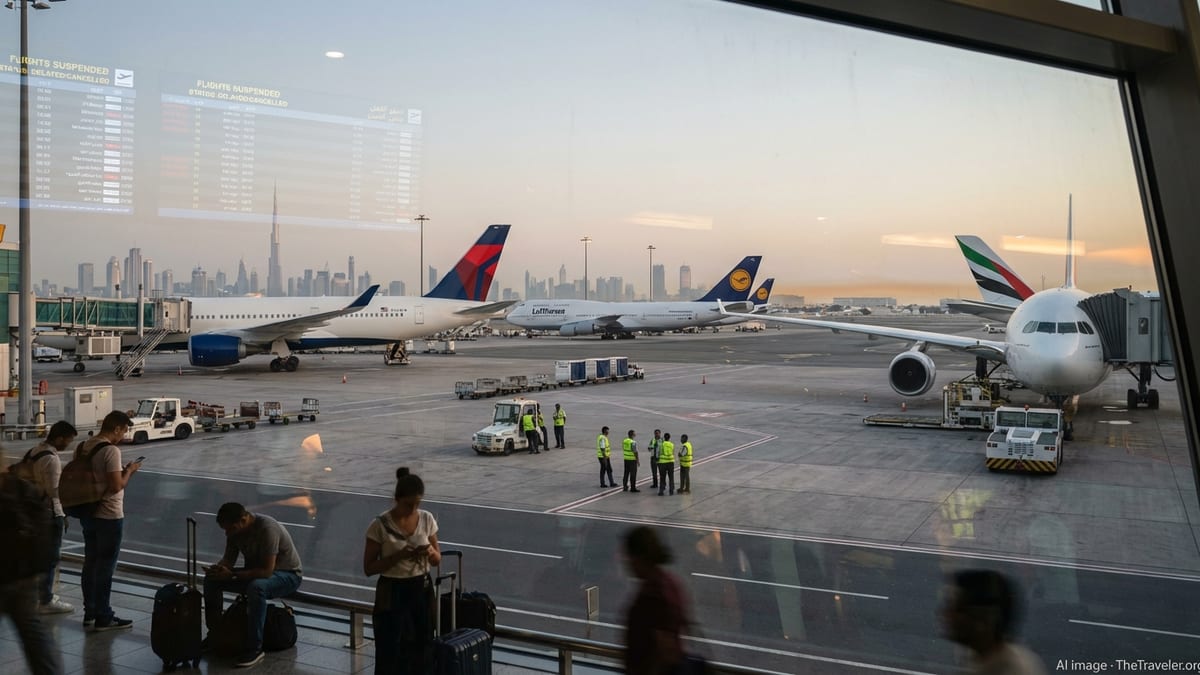
Six Hubs Under Strain as Delays Stack Up
Publicly available tracking data and airline status boards indicate that the day’s disruption is concentrated at six of the country’s largest connecting hubs, where traffic levels and tight scheduling leave little room to absorb shocks. While tallies continued to shift through the afternoon, cumulative reports from airport dashboards and aviation data services pointed to more than 200 combined delays and cancellations across the affected airports.
The most heavily impacted hubs include major connection points in the Northeast, Midwest and South, corridors that routinely carry some of the densest traffic in the US system. Delays at those facilities are spilling down the line to smaller regional airports as aircraft and crews fall out of position, amplifying the number of passengers affected far beyond the six cities directly hit.
Airline operations teams appear to be working to consolidate lightly booked flights, substitute larger aircraft on remaining departures and reroute some services through less congested hubs. However, the concentration of disruption at primary connection points means that even travelers with on-time departures are facing missed connections and extended layovers.
Data from prior disruption days show that once delays accumulate past a certain threshold at multiple hubs simultaneously, network recovery can stretch into the following day. Aviation analysts warn that passengers scheduled to travel tomorrow may still see residual impacts, particularly on early morning departures relying on aircraft that were due to arrive late tonight.
Weather and Network Bottlenecks Combine
Weather remains a central driver in today’s problems. Forecasts for parts of the Northeast and Mid-Atlantic call for periods of low clouds, gusty winds and scattered rain, conditions that can reduce airport arrival rates well below normal. When that happens at hub airports that already handle high volumes, the system rapidly backs up as air traffic managers meter arrivals and impose ground delay programs.
Industry analyses of flight performance show that weather is consistently among the leading reported causes of delays in the United States, both directly, through hazardous conditions, and indirectly, by forcing changes to traffic flows and runway configurations. Even relatively routine systems can trigger major slowdowns when they pass over airports that already rank among the country’s most delay prone, particularly during busy travel periods.
Today’s disruption also appears to reflect underlying bottlenecks in the national network. Recent reports on air traffic control capacity highlight chronic staffing shortfalls at key approach control facilities that manage traffic into several of the affected hubs, along with aging communications and radar technology that can be vulnerable to outages. When those constraints intersect with challenging weather, the result can be lengthy airborne holding, diversions and long lines of aircraft waiting on the ground for departure slots.
Travel data from recent seasons underscore how sensitive the system has become to even modest disturbances. A fast-moving winter storm earlier this year, for example, generated several thousand delays and hundreds of cancellations across multiple hubs in a single day, demonstrating how quickly conditions can deteriorate once arrival rates fall and crews start to time out of their legal work limits.
Passengers Confront Long Lines and Limited Options
For travelers on the ground, the operational complexities translate into crowded departure halls, stretched customer service lines and last-minute itinerary changes. Social media posts and traveler reports describe long queues at rebooking counters in several of the six affected hubs, with some passengers being offered next-day departures or reroutes through secondary airports.
Travel industry guidance generally recommends that passengers whose flights are still showing on time remain in close contact with their airline’s mobile app or text alert system, since gate changes and small schedule adjustments can happen rapidly on days with widespread disruption. Those whose flights have already been flagged as significantly delayed or canceled are often advised to explore same-day alternatives, including nearby airports, before seats fill up.
Consumer advocates note that passenger rights and compensation options vary depending on whether a disruption is classified as caused by weather, broader national airspace constraints, or an airline-controlled issue such as crew scheduling or maintenance. In many cases, carriers provide meal vouchers or hotel accommodations only when the underlying cause is under their control, leaving travelers affected by weather or air traffic restrictions with fewer formal entitlements.
With more than 200 flights disrupted across key hubs, travel planners caution that even those not flying through the six primary airports may feel the knock-on effects. Regional routes that depend heavily on aircraft cycling through major hubs are particularly vulnerable to rolling delays as the day progresses.
Broader Stress on the US Aviation System
Today’s wave of disruptions comes against a wider backdrop of strain in the US aviation sector. In recent years, a combination of strong demand, tight airline schedules and infrastructure limits at major airports has pushed the system closer to its capacity ceiling. When severe weather, technology glitches or airspace restrictions occur, the margin to absorb problems has narrowed significantly.
Analyses from transportation researchers point to several structural challenges. These include congested airspace around legacy hubs, limited runway capacity at some of the country’s busiest airports, and the slow pace of modernizing air traffic control technology. Reports reviewing recent disruption episodes have also highlighted the role of operational decisions, such as aggressive scheduling of aircraft and crews, in leaving airlines with fewer buffers when conditions deteriorate.
Government and industry plans for new technology, including more advanced weather forecasting tools and upgraded navigation systems, are aimed at allowing aircraft to fly more efficient routes and maintain safer spacing in a wider range of conditions. However, many of those initiatives are multi-year efforts, and travelers are likely to continue feeling the impact of bottlenecks and storms in the near term.
In the meantime, travel data for recent years show that disruptions have become increasingly concentrated at a small number of large hubs, which handle a disproportionate share of connecting traffic. When those nodes experience problems on the scale seen today, the national system can struggle to recover quickly, underscoring the importance for travelers of planning extra time and backup options during peak seasons.
What Today’s Disruptions Mean for Upcoming Travel
With more than 200 delays and cancellations already recorded and operations continuing into the evening, attention is turning to how quickly airlines and airports can reset their schedules. Past patterns suggest that late-night and early-morning flights are often the first to feel the lingering effects of a disrupted day, as crews run up against duty limits and repositioning flights arrive behind schedule.
Travel planners are advising passengers with imminent trips to build in additional time for connections at hub airports, monitor the status of both outbound and return legs, and consider flexible arrangements for ground transportation and lodging. For those who have not yet booked, some analysts suggest that routing through less congested hubs, when possible, can reduce exposure to cascading delays.
Today’s events also add to a growing body of evidence indicating that extreme weather patterns, tight staffing across the aviation workforce and the complexity of hub-and-spoke scheduling are combining to make large-scale disruptions more common. Industry observers note that unless capacity and resilience increase in step with passenger demand, similar episodes of widespread delay at major hubs are likely to remain a recurring feature of US air travel.
For now, travelers passing through the six affected hub airports are being urged by airlines and travel advisers to stay informed, keep documentation of disruptions and remain prepared for last-minute changes as operations work toward gradual stabilization.