


More news on this day
Passengers using Oman’s busiest internal air corridor between Muscat and Salalah are reporting disruptive waves of flight cancellations and last minute schedule changes, leaving some travelers stranded at airports or scrambling for scarce alternative seats across the country’s key north–south route.
Get the latest news straight to your inbox!
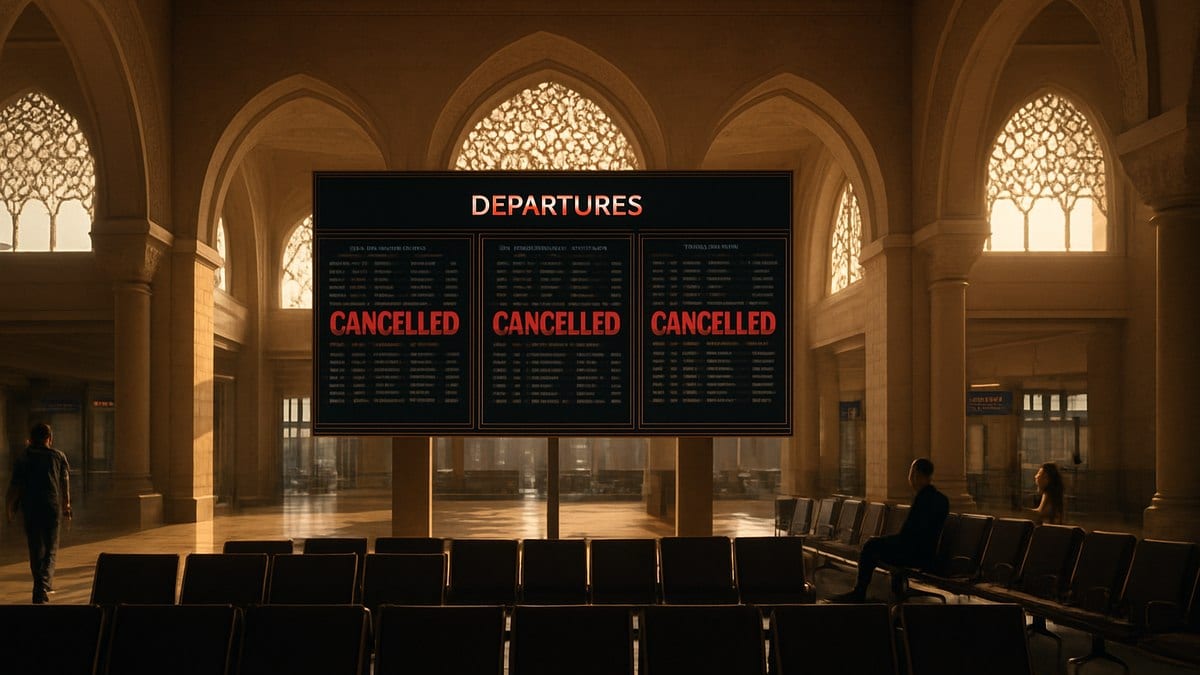
Core Domestic Link Under Strain
The Muscat–Salalah corridor functions as Oman’s primary domestic air bridge, connecting the political and commercial hub in Muscat with the southern city that anchors Dhofar’s tourism and logistics economy. Published schedules for May 2026 show multiple daily rotations on the route, largely operated by Oman Air, supported by low cost carrier SalamAir and a handful of connections via regional hubs.
Despite the robust published timetable, traveler reports and recent disruption coverage indicate that actual operations have been more fragile than the schedules suggest. Industry tracking sites show patchy on time performance on key Salalah to Muscat services in recent days, while complaints circulating on consumer forums describe cancellations, downgrades, and abrupt rerouting that have left some passengers overnighting in transit with limited assistance.
The strain on this corridor is amplified by the broader regional aviation context. The Middle East has been dealing with periodic airspace closures and reroutings linked to geopolitical tensions, and Muscat has increasingly served as an alternate gateway for travelers trying to avoid more heavily disrupted hubs. That extra pressure is now converging on Oman’s domestic backbone just as local demand builds into the busy late spring and early summer period.
At the same time, Oman’s aviation system is in transition. The government’s recent acquisition of SalamAir is intended to create a more integrated network with Oman Air, but industry commentary suggests that schedules and fleet deployment are still being adjusted, contributing to a sense of volatility for passengers relying on the Muscat–Salalah shuttle.
Stranded Passengers and Patchwork Rebooking
Accounts shared on travel forums and social media in early May describe travelers facing abrupt cancellations on itineraries that rely on Muscat as a domestic and international connection point. Some passengers booked on through journeys that include the Salalah–Muscat leg have described being held in hotels or airport waiting areas overnight while airlines work through backlogs of displaced customers.
These experiences echo earlier patterns seen during regional disruption spikes, when limited staff capacity at airline desks and call centers struggled to keep pace with rolling schedule changes. Publicly available posts describe long queues at Muscat International Airport and uncertainty over rebooking options, particularly for travelers on reward or codeshare tickets where responsibility between partner airlines can become blurred.
Within Oman, anecdotal reports highlight the difficulty of securing near term replacement seats on the Muscat–Salalah route once a flight is cancelled. Aggregator sites still list multiple daily options, but passengers report that many of those services are heavily booked, leaving families and business travelers facing delays of 24 hours or more if they need to remain on the air corridor rather than switching to overland transport.
For some, that has meant missed onward international connections or lost hotel nights at coastal resorts in Dhofar. Others have reported being rebooked onto itineraries that route via third country hubs, extending what should be a short domestic hop into a multi leg journey across already congested regional airspace.
Infrastructure and Regional Pressures Converge
Oman’s aviation infrastructure has generally remained operational through recent Middle East disruptions, and Muscat International Airport continues to be described in public advisories as one of the region’s more reliable hubs. Flight information for early May shows a full slate of departures and arrivals, including several Oman Air services to and from Salalah, suggesting that the airspace and airport systems themselves are open.
Even so, earlier suspensions at smaller Omani airports, notably Khasab in the Musandam Governorate, have already demonstrated how quickly localized changes can reshape internal connectivity. With commercial flights to Khasab still reported as suspended, domestic demand that might otherwise disperse across additional routes is being funneled more heavily through Muscat and Salalah, magnifying the impact of any disruption on the core corridor.
Regional security concerns and shifting traffic flows are also feeding into the equation. Port and aviation advisories issued in April highlighted elevated security postures around Gulf energy and logistics facilities, while separate international reporting on airspace closures linked to the Iran conflict described knock on effects spreading across multiple carriers. As airlines continue to reroute long haul services and adjust frequencies through the Gulf, Oman’s internal flights are being drawn into a complex web of schedule realignments.
Capacity constraints further complicate recovery. Oman Air and SalamAir operate relatively small fleets compared with some of their Gulf neighbors, leaving less slack to absorb aircraft out of rotation due to maintenance, security driven reroutes, or weather related disruption. When cancellations occur on the Muscat–Salalah axis, there are fewer spare airframes or crew to mount rescue flights, extending the time that stranded passengers spend waiting for a workable alternative.
Knock On Effects for Tourism and Trade
The timing of the latest wave of cancellations is particularly sensitive for Oman’s domestic tourism sector. Salalah and the Dhofar region are preparing for the khareef season, when cooler monsoon weather draws visitors from across the Gulf. Travel planners and online agencies are actively promoting Muscat–Salalah packages for late May onward, yet recent passenger experiences suggest that reliability on the core air corridor remains uneven.
For resort operators along Oman’s southern coast, delays and missed connections can translate quickly into vacant rooms and shortened stays, especially for travelers on tight holiday schedules. Industry watchers note that some Gulf visitors are already weighing alternate routes through neighboring countries as they track reports of cancellations and crowded departure halls in Muscat.
Domestic business and government travel is also exposed. The Muscat–Salalah corridor underpins administrative links between the capital and Dhofar’s regional authorities, while the port of Salalah and nearby industrial zones rely on predictable air connections for personnel movements. Flight disruptions risk complicating project timelines, technical rotations, and high level meetings that depend on same day or next day travel between the two cities.
Logistics specialists point out that while most cargo moves by sea or road, passenger flights still play a role in urgent shipments and courier traffic along the corridor. When seats are taken up by rebooked passengers and extra baggage from disrupted long haul flights, there is less room for time sensitive consignments that might normally travel in belly hold capacity between Muscat and Salalah.
What Travelers Can Expect in the Coming Weeks
With geopolitical tensions still unsettled and airlines across the region recalibrating networks, analysts expect sporadic disruption on Oman’s key corridor to persist at least through late May. Schedule data for the second half of the month continues to show frequent Muscat–Salalah services on both full service and low cost carriers, but recent patterns suggest that travelers should plan for possible late changes.
Consumer advocates recommend that passengers build longer connection buffers in Muscat, particularly if an international leg depends on the punctual arrival of a domestic flight from Salalah. Flexible tickets and travel insurance that explicitly covers schedule changes and missed connections may offer additional protection for those who must travel during this unsettled period.
For Omani residents and regional visitors alike, the message from recent disruption coverage is that the Muscat–Salalah corridor remains operational but not entirely predictable. Travelers who monitor airline notifications closely, reconfirm their flights, and remain prepared to adjust dates or routes at short notice are likely to navigate the current wave of cancellations and rebookings with fewer shocks than those relying on published schedules alone.