


More news on this day
Passengers traveling between Muscat and Salalah are facing fresh disruption as Oman Air, Air Arabia, Flydubai and other regional carriers cancel a series of services, compounding a wider air travel crisis across the Middle East and key UAE gateway cities.
Get the latest news straight to your inbox!
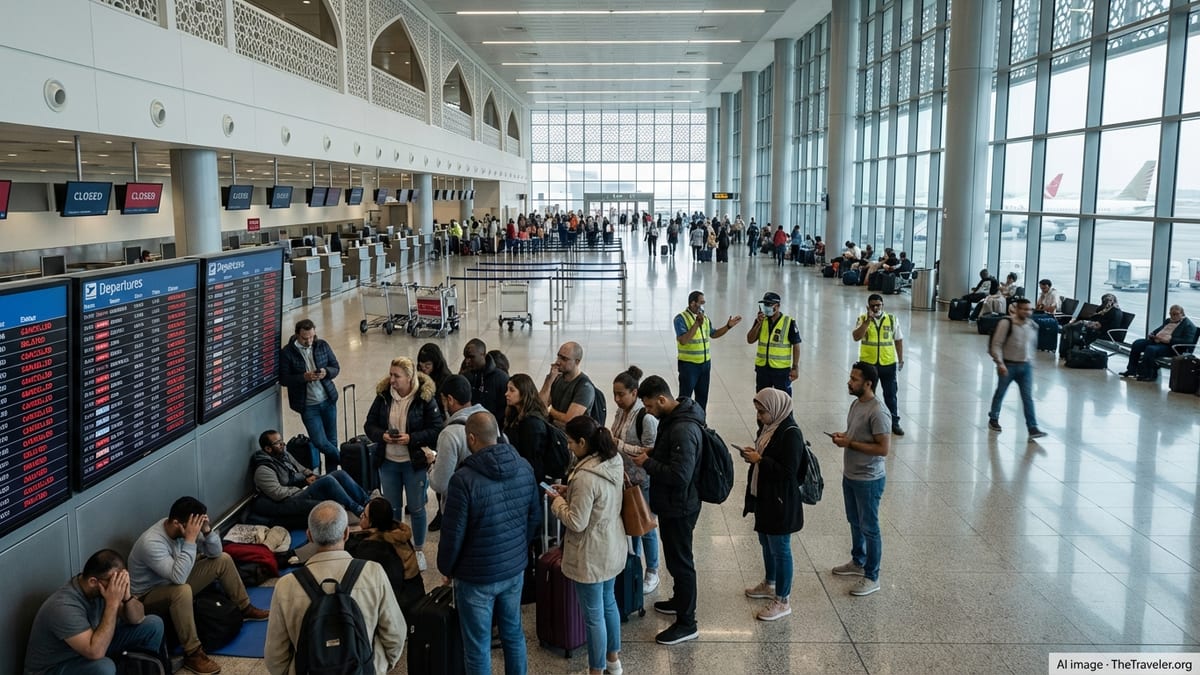
New Wave of Cancellations on Muscat–Salalah Route
Recent schedule changes show at least five newly cancelled flights on the heavily used Muscat–Salalah corridor, affecting departures in both directions and limiting options for travelers trying to reach or transit Oman. Publicly available airport and flight-tracking data for early May indicate that several Oman Air rotations that normally connect Muscat with Salalah have been withdrawn or marked as cancelled, even as other services remain scheduled.
The Muscat–Salalah route is a critical domestic link inside Oman and a key feeder for international itineraries, especially for travelers bound to or from the United Arab Emirates. Muscat functions as a diversion and relief hub, and industry advisories describe the airport as an important alternative for passengers displaced from closed or constrained hubs elsewhere in the Gulf. When flights between Muscat and Salalah are cut, it reduces the ability of travelers to reposition to long-haul connections.
Reports from regular users of the route describe short-notice cancellations and rebookings, with some Oman Air passengers noting that connecting segments via Muscat have been removed from their itineraries while other legs remain intact. Travel forums and advisory bulletins highlight the resulting uncertainty, with passengers unsure whether to proceed to airports or border crossings while schedules are in flux.
Other carriers that typically help distribute traffic in and out of Oman, including low-cost operators linked to UAE markets, have also scaled back or temporarily halted operations on overlapping regional routes, further thinning capacity at short notice.
Regional Airspace Constraints Ripple Across the Gulf
The cancellations on the Muscat–Salalah sector are unfolding against a backdrop of ongoing airspace closures and restrictions linked to the broader regional conflict involving Iran, Israel and the United States. Specialist travel risk briefings and customer advisories describe large portions of airspace over Iran, Israel, Iraq, Qatar, Bahrain and Kuwait as closed or partially closed to commercial traffic, forcing airlines to reroute or cancel services.
According to published coverage of the situation, Saudi Arabia has emerged as one of the few viable east–west corridors, creating bottlenecks as traffic is funneled along narrower lanes. This congestion has knock-on effects for neighboring states, including Oman and the United Arab Emirates, where airports are coping with diverted flights, rescheduled operations and aircraft positioning challenges.
Earlier in March, Oman Air publicly announced waves of cancellations to multiple regional destinations as a result of airspace issues, temporarily suspending services to cities such as Dubai, Doha, Manama and Kuwait City. Subsequent airline statements and schedule updates signaled a gradual resumption of some routes, including to Dubai, but industry reports indicate that operations remain fragile, with carriers ready to adjust if airspace conditions deteriorate again.
For passengers, the result is an unstable network in which domestic links like Muscat–Salalah are not insulated from geopolitical shocks. Aircraft and crews redeployed to manage long-haul and regional constraints can leave fewer resources available for internal Omani services, increasing the risk of cancellations on short sectors that still play an essential role in the country’s connectivity.
Impact on UAE Gateway Cities and Connecting Traffic
Travel advisories and aviation risk assessments portray the United Arab Emirates as one of the hardest-hit markets in the current phase of disruption. Dubai, Sharjah and other UAE gateways have experienced intermittent shutdowns, limited resumptions and persistent congestion as airlines suspend and then tentatively restart flights, only to modify plans again as conditions evolve.
Publicly available corporate and consultancy briefings describe Dubai and Abu Dhabi as hosting large concentrations of stranded travelers, with hotel capacity strained and airport terminals crowded during peak disruption days. Flydubai and Air Arabia, both central to point-to-point and connecting traffic across the Gulf, have adjusted operations in response, cancelling or reducing frequencies on routes that normally feed passengers into UAE hubs from Oman and beyond.
Because many itineraries between Salalah, Muscat and global destinations route through Dubai or Sharjah, any reduction in services by Oman Air, Air Arabia, Flydubai or partner carriers can sever onward connections. Passengers booked on multi-sector journeys that rely on tight domestic links to reach UAE departures face the prospect of missing long-haul flights, with limited same-day alternatives.
Travel management firms warn that the cascading effect of cancelled domestic legs, crowded rebooking channels and uncertain departure windows from UAE airports is creating extended delays for travelers. Some are being advised to route via alternative hubs or postpone journeys altogether, particularly when travel is discretionary rather than essential.
Stranded Passengers in Muscat and Salalah
Firsthand accounts shared on travel forums and community platforms point to growing numbers of passengers stranded in Oman’s main cities as they attempt to navigate the shifting schedules. Some travelers describe extended stays in airport hotels in Muscat after missed or cancelled onward flights, while others report difficulty securing seats on alternative services out of Salalah.
Posts referencing Oman Air operations in early May note that while the airline continues to run many flights, specific Muscat connections have been withdrawn from individual bookings without corresponding automatic re-routing, leaving travelers to negotiate new itineraries or pursue refunds. Similar experiences are being reported by customers of Air Arabia and Flydubai on routes across the wider region, particularly involving connections through Sharjah and Dubai.
Local discussion threads suggest that Muscat continues to function as a comparatively reliable hub compared with some neighboring airports, but even there, high demand, constrained capacity and last-minute changes are leading to long waits at counters and uncertainty about departure times. Advice circulating among frequent travelers includes arriving significantly earlier than usual, especially for those crossing by land from the UAE to catch flights from Muscat.
In Salalah, where tourism and domestic travel are both highly seasonal, sudden reductions in frequency on the Muscat route are especially disruptive. Visitors seeking to reach Oman’s southern coast, as well as residents returning home, can find themselves unable to secure timely connections, with limited rail or road alternatives for long-distance travel.
What Travelers Can Expect in the Coming Days
Travel analysis from aviation data firms and risk consultancies suggests that volatility across Middle East airspace is likely to persist in the near term, even as some corridors reopen intermittently. Airlines are expected to continue making rolling adjustments to schedules, balancing safety constraints with commercial demands and resource limitations.
For passengers planning to travel between Muscat, Salalah and UAE cities such as Dubai and Sharjah, this means that itineraries may change with little notice. Industry guidance encourages travelers to monitor their bookings frequently through airline channels, consider flexible tickets where possible and build generous connection times into multi-sector journeys.
Publicly available advisories also highlight the importance of understanding fare rules and conditions for refunds or rebooking, especially with low-cost carriers that may provide credit rather than cash reimbursement for disrupted flights. Given the scale of regional disruption and the volume of affected travelers, processing times for refunds and schedule changes can be lengthy.
While carriers including Oman Air have signaled intentions to restore and even expand service to high-demand destinations such as Salalah over the summer season, analysts caution that any renewed escalation in regional tensions or further airspace closures could quickly reverse progress. Until stability returns to Middle Eastern skies, passengers using the Muscat–Salalah corridor and connecting via UAE hubs should be prepared for a travel environment in which cancellations, delays and last-minute reroutes remain a persistent risk.