


More news on this day
Travelers at Montréal–Trudeau International Airport faced fresh disruption today as at least 16 flights were cancelled and dozens more delayed, affecting services operated by Jazz, PAL Airlines, Air Canada, Republic, Qatar Airways and other carriers on major routes to Toronto, Fredericton, Chicago, Austin, Quebec City and several regional destinations.
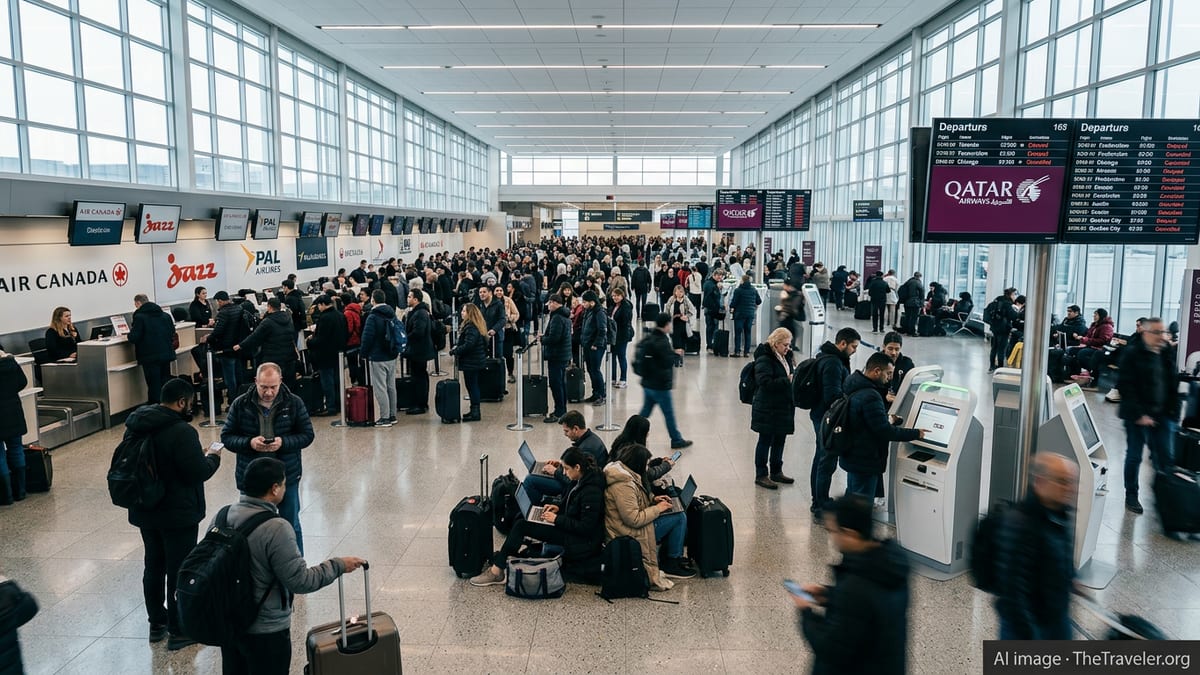
Network Disruptions Ripple Across Key Domestic and U.S. Routes
The wave of cancellations at Montréal–Trudeau concentrated heavily on short-haul and regional services, with multiple Toronto shuttles, Fredericton and Quebec City links, and feeder flights into major hubs such as Chicago and Austin affected. Several of the cancelled services were marketed by Air Canada but operated by regional partners Jazz and PAL Airlines, amplifying the impact across the airline’s domestic network as passengers missed onward connections.
Flights to Toronto Pearson, typically running at high frequency and relied upon by business travelers and connecting passengers, saw a mix of outright cancellations and extended delays, forcing airlines to consolidate loads onto remaining departures. Similar issues were reported on eastbound services into New Brunswick and on Quebec City hops, where smaller aircraft and tight turnaround schedules left little room to recover from operational hiccups during the morning peak.
Transborder traffic was also hit, with Republic-operated services on behalf of major U.S. carriers and Qatar Airways codeshares into Chicago experiencing schedule disruptions. Travelers bound for Austin via Canadian and U.S. hubs reported extended layovers and missed connections as delayed departures from Montreal cascaded into missed banks of onward flights in the United States.
Airport operations teams worked through the day to resequence departures, but the knock-on effect of a packed early-morning schedule meant delays continued to show across departure boards well into the afternoon, keeping gate areas and customer service counters crowded.
Weather, Congested Airspace and Operational Strain Blamed
While no single cause was officially cited for all 16 cancellations, a combination of adverse weather along key corridors, congestion in North American and transatlantic airspace, and ongoing operational strain at carriers were all identified as contributing factors. Early-morning low cloud and gusty winds around Montreal and Toronto affected approach and departure rates, while residual disruptions from wider international airspace closures forced some airlines to rejig aircraft and crew rotations.
Regional operators such as Jazz and PAL Airlines, which run many of the thinner routes out of Montréal–Trudeau on behalf of larger network carriers, are particularly vulnerable when aircraft or crews are out of position. A single delayed inbound flight can lead to multiple subsequent sectors being pushed back or scrubbed entirely, especially on high-frequency shuttle services where tight turnaround times leave little buffer.
Long-haul partners were not immune. Qatar Airways, already adjusting schedules in response to shifting airspace conditions on its global network, saw its codeshare services and connecting flows through Montreal come under pressure. Even when individual Qatar-marketed flights operated on time, delays on regional feeders into Montreal left travelers with missed or at-risk connections.
Airline analysts note that the Canadian system has been running close to capacity at peak times, meaning any weather or routing constraint quickly translates into widespread delays. With carriers still managing crew availability and maintenance backlogs after an intense winter season, this latest disruption at Montréal–Trudeau reflects a network stretched thin.
Passengers Confront Long Queues, Rebooking Challenges and Unexpected Costs
The operational snags translated into a difficult day for travelers in the terminal. Lines at airline customer service counters quickly lengthened as passengers sought rebooking options, meal vouchers and hotel accommodation. Those on cancelled Jazz and PAL Airlines flights reported being offered rerouting via alternative hubs, including Ottawa, Toronto and U.S. gateways, though many of the later flights were themselves heavily booked.
Families and business travelers heading to Toronto and Fredericton described scrambling to adjust plans, from missed meetings and connecting international flights to last-minute changes in ground transportation and hotel reservations. Some travelers opted to abandon air travel altogether on the short-haul Montreal–Toronto corridor, turning instead to rail or car rentals once it became clear that delays would stretch into the evening.
For those bound for Chicago, Austin and other U.S. destinations, the situation was often more complex, with missed connections at downline hubs leading to overnight stays and unexpected expenses. Travel insurance providers and credit card hotlines reported increased call volumes as passengers sought guidance on coverage for hotel stays, meals and rebooked flights.
Despite efforts by airlines to issue meal and accommodation vouchers, some passengers reported difficulty securing timely assistance, particularly during the busiest midday period. Airport staff urged travelers to remain in close contact with their airlines via mobile apps and text alerts, noting that digital tools often reflected rebooking options faster than over-the-counter channels during peak disruption.
Advice for Travelers Navigating Ongoing Irregular Operations
With residual delays expected to linger into the evening and possibly into the next operating day, Montréal–Trudeau officials and airline representatives advised passengers to treat schedules as subject to change and to build in extra time where possible. Travelers booked on regional services to Fredericton, Quebec City and other smaller markets were urged to monitor their flight status frequently and to consider earlier departures if they had critical same-day connections.
Frequent fliers and travel advisors recommended that passengers keep boarding passes, receipts and records of communication with airlines, in case they become eligible for compensation or reimbursement under Canadian air passenger protection rules or international conventions. While eligibility varies by cause of disruption and operating carrier, detailed documentation can make claims easier to process later.
Experts also suggested that travelers look beyond their original routing when irregular operations strike. On busy corridors like Montreal–Toronto, alternatives such as rail or intercity bus services can sometimes provide more predictable arrival times once airline cancellations begin to stack up. For transborder trips, rebooking through alternative hubs or flying into secondary airports near the original destination may offer faster solutions than waiting for a single congested route to clear.
As carriers including Air Canada, Jazz, PAL Airlines, Republic and Qatar Airways work through the backlog, aviation observers say the disruptions at Montréal–Trudeau underline how quickly localized weather and network stress can ripple across a continent-spanning route map, leaving passengers from Quebec City to Austin caught in a travel puzzle that may take days to fully resolve.