


More news on this day
Thousands of air travellers across Canada are facing major disruption as 77 flights were cancelled and nearly 600 delayed on Friday, with knock-on impacts reported at Toronto, Montreal, Quebec City, Halifax, Edmonton and other key hubs serving Air Canada, United, Jazz Aviation, Republic, Pacific Coastal and additional carriers.
Get the latest news straight to your inbox!
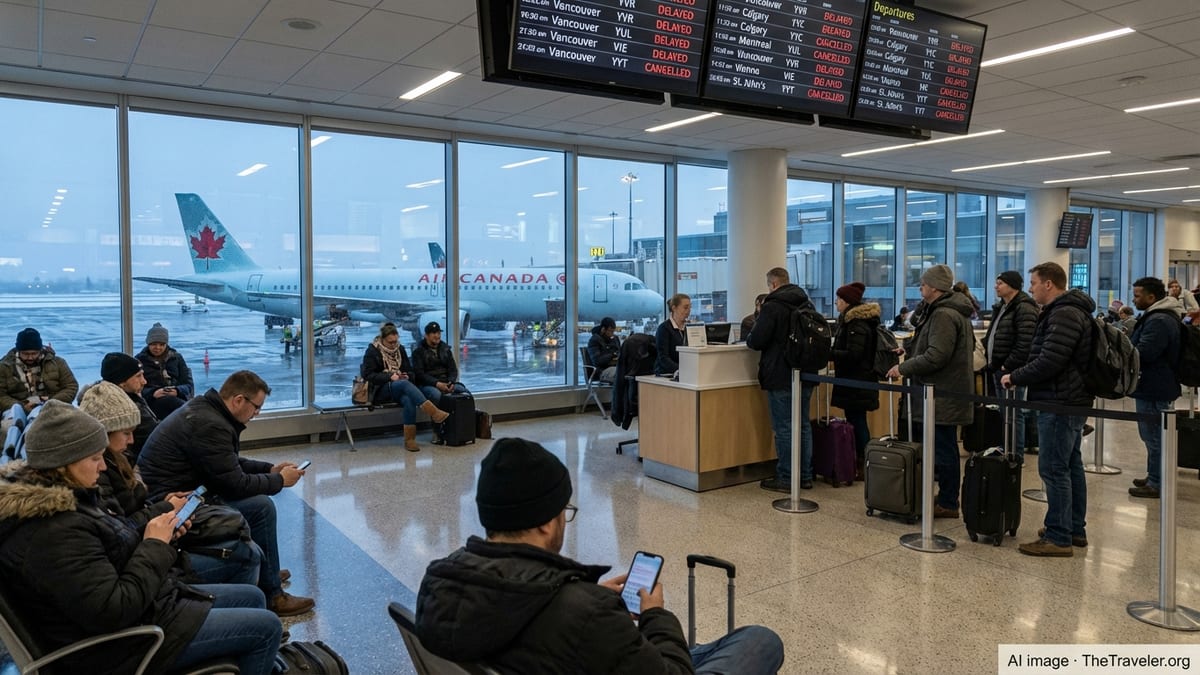
Widespread Disruptions at Major Canadian Hubs
Publicly available flight-tracking data for Friday shows an uneven but significant pattern of cancellations and delays at several of Canada’s busiest airports, including Toronto Pearson, Montreal Trudeau, Quebec City Jean Lesage, Halifax Stanfield and Edmonton International. These airports act as key domestic and transborder connectors, meaning disruption in one location can quickly ripple through the national network.
The tallies indicate 77 flights cancelled and around 594 delayed across Canadian airports over the course of the day. While the numbers represent a fraction of overall daily traffic, the concentration of problems during peak morning and late afternoon waves has left departure halls crowded, rebooking counters backed up and many passengers facing missed connections.
Toronto and Montreal appear to be among the hardest hit, reflecting their roles as primary hubs for Air Canada and important gateways for United and other partners operating cross-border routes. Smaller but strategically important airports such as Halifax and Quebec City have also recorded clusters of delayed regional flights, particularly on short-haul routes operated by regional affiliates.
In several cases, aircraft assigned to early-morning departures arrived late from previous segments, creating a cascade of knock-on delays. The pattern is consistent with the way schedule disruptions typically spread through hub-and-spoke networks when there is limited slack built into daily rotations.
Air Canada and Partners Under Pressure
Air Canada and its regional and codeshare partners, including Jazz Aviation, United and Republic, are bearing much of the visible impact, according to operational data and published coverage of airport conditions. As the country’s largest carrier with an extensive domestic and international schedule, Air Canada’s operations are especially vulnerable when a series of small issues accumulate on the same day.
Regional affiliates such as Jazz Aviation and Republic play a central role in feeding passengers from smaller cities into hubs like Toronto, Montreal and Halifax. When these regional links are delayed or cancelled, travellers not only lose their initial segment but may also miss onward domestic or transborder connections, compounding the total number of stranded or heavily delayed passengers.
United, which relies on Canadian partners and its own metal for key routes linking Toronto, Montreal and Western Canada to U.S. hubs, is also experiencing knock-on issues. Some U.S.-bound passengers have reported lengthy waits at departure gates and rebooking desks as schedules are adjusted and aircraft reassigned.
Smaller carriers such as Pacific Coastal, which focus on regional and remote communities, are not immune either. Disruption on these networks can have outsized effects, as many routes serve areas with limited alternative transport options, making same-day rebooking more challenging.
Weather, Congestion and Operational Constraints
Published operational updates and aviation analytics suggest the causes of Friday’s disruptions are multifactorial, reflecting the complex interplay of weather, airspace congestion and airline resource constraints. Even modest bouts of low visibility, strong winds or thunderstorms can force temporary reductions in airport arrival and departure rates, quickly backing up tightly timed schedules.
In Canada’s busiest corridors, any slowdown in traffic management can also prompt ground delays as aircraft wait for departure slots or circle in holding patterns. This adds pressure to airline crews’ duty-time limits and can force schedule adjustments when staff reach regulated maximum working hours before completing all planned segments.
Industry data and historical patterns show that late-arriving aircraft are a significant contributor to daylong disruption cycles. When an aircraft is delayed on an early leg, the delay can propagate through three or four subsequent flights, especially if spare aircraft are limited. The cumulative effect is often felt most acutely in the late afternoon and evening, exactly when many passengers hope to reach their final destinations.
Airlines also continue to navigate broader resource and maintenance pressures, with some fleets operating close to capacity during busy travel periods. When an aircraft requires unscheduled maintenance or a crew becomes unavailable at short notice, there is less flexibility to recover the schedule quickly.
Impact on Travellers Across the Country
For travellers, the most immediate consequences of Friday’s disruption are long waits, missed connections and in some cases overnight stays away from home. Terminals in Toronto, Montreal and other affected cities have seen crowds building around departure boards as passengers monitor status screens for updates on delayed departures.
According to publicly available traveller reports and airport advisories, rebooking queues have stretched as airlines work through backlogs, prioritising passengers with tight international connections and those whose journeys involve multiple segments on regional partners. Some passengers have been rebooked onto later flights the same day, while others have been offered travel on subsequent days when limited same-day options exist.
The disruption has also affected inbound travellers planning to begin holidays or business trips in Canada. Delayed arrivals into major hubs can compress connection windows for domestic links onward to destinations such as Halifax, Quebec City or smaller Western Canadian cities, forcing last-minute itinerary changes and rearranged hotel and ground transport bookings.
While the overall number of flights affected remains relatively small compared to peak storm events or large-scale technical outages, the geographical spread from Eastern to Western Canada and the involvement of multiple airlines have amplified the sense of uncertainty for many travellers heading into the weekend.
What Passengers Can Do as Disruptions Continue
Travel experts and consumer guidance materials consistently recommend that passengers facing widespread disruptions take a proactive approach, using airline mobile applications and airport displays to monitor real-time flight status. In many cases, digital tools allow travellers to accept rebooking options, change connections or request credits without waiting for in-person assistance at crowded counters.
Passengers booked on itineraries involving multiple carriers, such as regional affiliates or international partners, are encouraged to pay close attention to minimum connection times and to consider earlier departures where possible on days when system-wide delays are evident. This can provide more buffer to absorb unexpected schedule changes.
Consumer advice published by government transportation agencies and advocacy groups notes that passengers affected by cancellations or significant delays should also review airline conditions of carriage and relevant compensation frameworks. While Canadian rules differ from those in other regions, written policies typically outline available remedies such as rebooking, refunds in certain circumstances, meal vouchers or accommodation in the event of overnight disruption.
With peak summer travel approaching and airline schedules already running near capacity on many corridors, observers suggest that travellers build extra time into their plans, especially when itineraries rely on tight connections through major Canadian hubs that can be vulnerable to cascading delays.