


More news on this day
New rolling stock contracts, signalling upgrades and long-term service agreements across Europe, Africa and North America are underscoring steady momentum in the global railway supply industry this summer.
Get the latest news straight to your inbox!
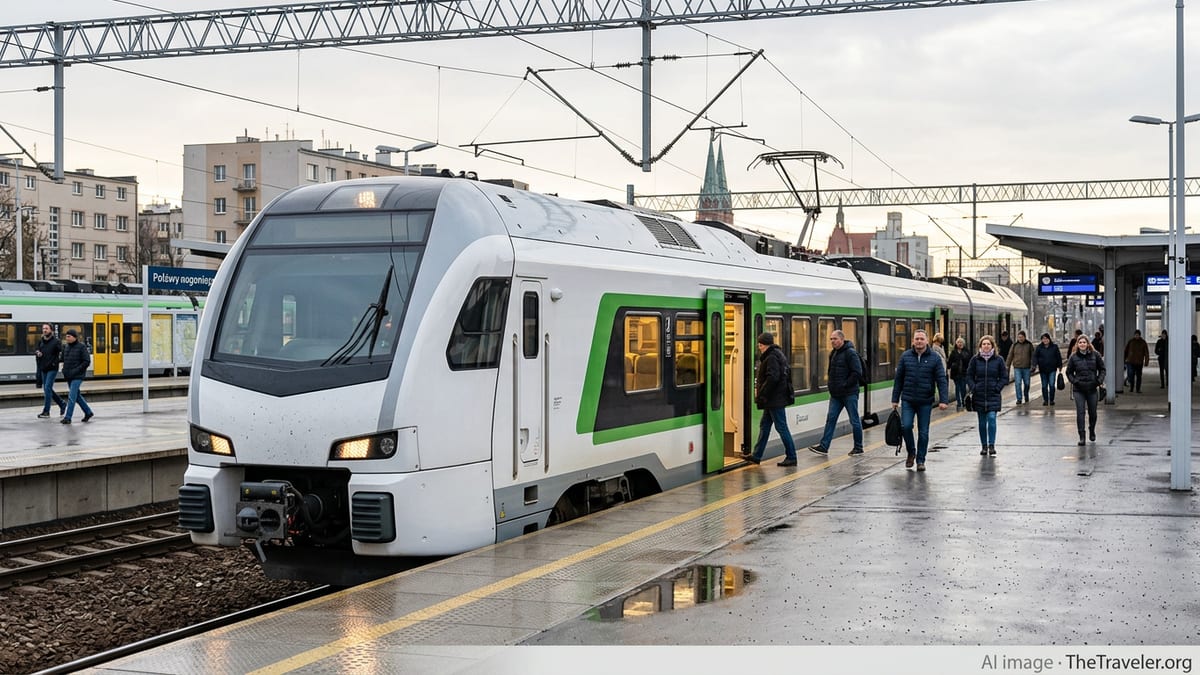
Siemens and Stadler secure landmark Berlin S-Bahn renewal
In Germany, one of Europe’s largest urban rail tenders has moved forward with the award of a major contract for the renewal and operation of Berlin’s S-Bahn network. Publicly available information indicates that Siemens Mobility and Stadler Deutschland, working with S-Bahn Berlin, have secured the contract to supply a new generation of trains, maintain the fleet and support operations on key city corridors.
The programme covers hundreds of four car sets and a long running maintenance commitment, positioning the agreement as a multibillion euro reference for both manufacturers. The deal also confirms Stadler’s role as a core supplier in Germany’s capital, while reinforcing Siemens Mobility’s presence in its domestic urban rail market.
Industry analysis points out that the Berlin award is significant not only for train builders but also for component and subsystem suppliers, given the long duration of the contract and the scale of fleet renewal involved. Orders of this size typically translate into a stable pipeline for braking systems, doors, HVAC, onboard electronics and digital services over several decades.
The timing of the decision is being closely watched by other metropolitan rail authorities planning large scale renewals. Observers note that the Berlin model, with a strong emphasis on lifecycle services alongside rolling stock supply, is increasingly shaping procurement strategies in major European urban markets.
High speed competition intensifies in Italy and Spain
The high speed segment continues to generate substantial business for the railway supply chain, with new train orders and tender developments in southern Europe. In Italy, publicly available company information shows that private operator Italo has signed an agreement with Siemens Mobility for 26 eight car Velaro Multi System high speed trains, coupled with an option for 14 additional units and a multi decade full service package.
The Velaro Multi System fleet is designed to operate under four different power supply systems, enabling cross border services and flexible deployment across parts of the Italian and wider European network. Manufacturing will be centered at Siemens Mobility’s facility in Krefeld, Germany, supporting production activity and a broad supplier base across the region.
In Spain, industry coverage of Renfe’s major high speed train tender indicates that the competition has narrowed to Siemens Mobility and Hitachi Rail. Reports suggest that Talgo’s bid was excluded on procedural grounds after missing a submission deadline, leaving two large multinational suppliers in contention for a contract that includes both new rolling stock and associated services.
Analysts view these developments as further evidence that large, multi country platforms remain central to high speed strategies. For the supply chain, the combination of new trainsets, long term maintenance and potential options offers meaningful volume for traction equipment, bogies, braking technology and digital maintenance tools over the life of the fleets.
Alstom leads major corridor modernisation in Egypt
Beyond rolling stock, signalling and digital control systems continue to represent a key growth area for global suppliers. In Egypt, an Alstom led consortium has signed four contracts with Egyptian National Railways to modernise strategic rail corridors, with a reported combined value of around 690 million euros.
The programme covers the 6th of October to Alexandria route as well as the Belbes to 10th of Ramadan line. According to publicly available contract information, Alstom will take responsibility for end to end engineering, design, supply, testing and commissioning of new digital railway systems, working alongside regional civil works partners.
For the wider supply industry, the Egyptian projects highlight the growing role of signalling, communications and control technologies in emerging markets, where capacity and safety upgrades are often prioritised ahead of new rolling stock. The contracts are expected to draw on a broad ecosystem of suppliers providing interlockings, train control, telecoms, power supply and security systems.
Market observers note that such corridor modernisation schemes typically serve as reference projects when governments pursue further network upgrades. Success in Egypt could therefore help Alstom and its partners position for additional work in Africa, the Middle East and Central Asia, where investment in rail infrastructure is being used to support trade corridors and urbanisation.
North American locomotive orders and guidance boosts
In North America, recent announcements point to continuing demand in both freight and passenger markets, along with stronger financial guidance from key suppliers. Reports on Wabtec’s latest quarterly results indicate that the company has raised its 2026 outlook after posting double digit sales growth, with revenue in the second quarter reaching more than 3 billion dollars and improvements recorded across freight and transit activities.
Analysts interpret the stronger guidance as a sign that freight rail customers are renewing locomotive and component orders, while transit agencies continue to invest in modernisation and fleet replacement. The performance underscores the importance of aftermarket services, digital solutions and efficiency upgrades within the wider railway supply ecosystem.
At the same time, Canada’s long distance passenger market is drawing new manufacturing investment. Public discussion and industry coverage highlight that Stadler has been selected to supply a new generation of diesel battery hybrid locomotives for VIA Rail, with plans for final assembly in Canada. Commentators point out that the project would mark the first time in decades that passenger locomotives for VIA Rail are assembled domestically, supported by Stadler’s global supply chain.
The move is viewed as a significant step for the regional supply base, combining imported high technology components with local assembly, testing and support. It also introduces another major European supplier into the North American passenger locomotive segment, a space that has previously been dominated by a smaller group of manufacturers.
Systems, components and long term service contracts gain prominence
While headline grabbing contracts often focus on complete train orders, recent weeks have also brought sizeable agreements for subsystems and long term support. In Europe, Kontron Transportation has announced a framework extension for railway communications services valued at nearly 100 million euros, covering maintenance, cyber security and lifecycle support for an unnamed operator through the mid 2030s, with an option to extend to 2040.
Component specialists are similarly reporting new business linked to large rolling stock platforms. Knorr Bremse, a leading supplier of braking and onboard systems, has highlighted contracts to equip additional Coradia Max multiple units from Alstom, along with long term service arrangements on fleets supplied by Stadler and other builders across Europe.
These developments illustrate how digitalisation and lifecycle management are reshaping revenue streams in the railway supply industry. Instead of relying solely on one off equipment sales, manufacturers and subsystem providers are increasingly securing predictable income through multi year maintenance, remote monitoring and upgrade contracts tied to the operational life of fleets and infrastructure.
Taken together, the latest announcements indicate that demand across urban, high speed, freight and emerging market corridors remains resilient heading into the second half of 2026. For suppliers, the focus is shifting toward platforms that combine cross border operability, energy efficient technologies and bundled service offerings, creating long pipeline visibility for companies positioned across rolling stock, signalling, components and digital solutions.