


More news on this day
The United Kingdom has lifted its travel warning for Dubai following a ceasefire agreement involving Iran, a move that signals renewed confidence in the Gulf hub but still leaves broader regional risks in focus for holidaymakers and business travelers.
Get the latest news straight to your inbox!
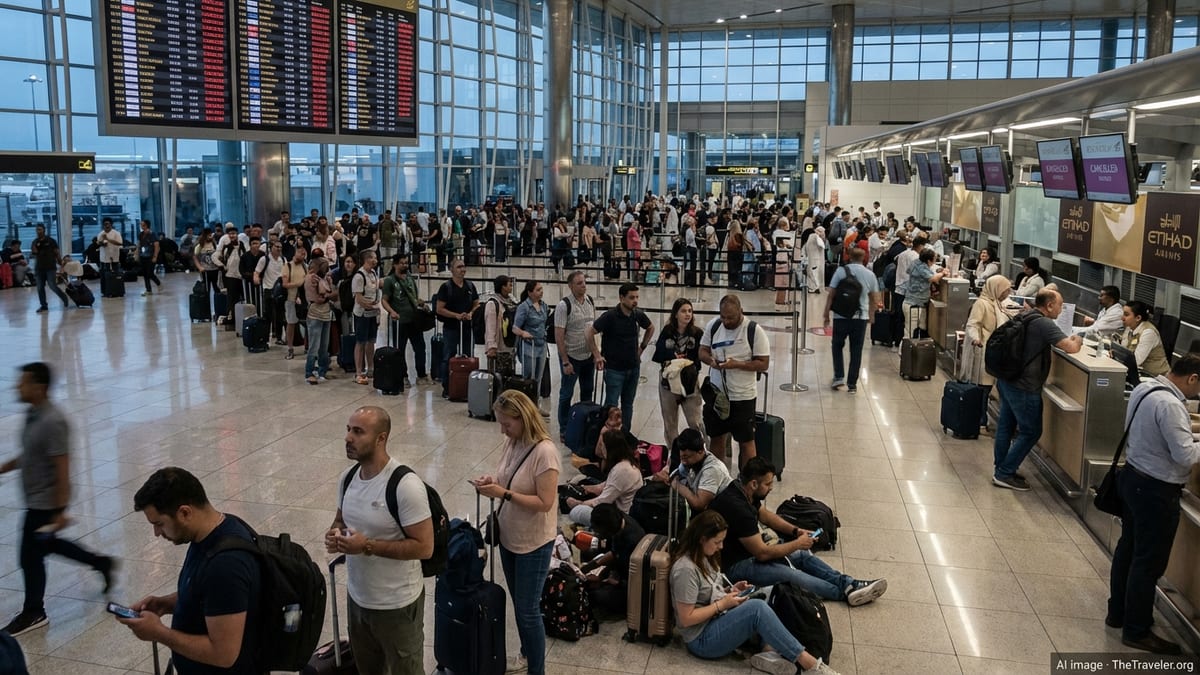
Shift in UK Advice Marks a Turning Point for Gulf Travel
Publicly available information indicates that the updated UK guidance follows an internationally brokered ceasefire aimed at halting months of hostilities linked to Iran and its confrontation with the United States and Israel. The conflict had included missile and drone strikes on targets in the Gulf, sharply increasing perceived risks for travelers transiting through or staying in Dubai.
Earlier in the year, the United Kingdom tightened its advice on the United Arab Emirates after Iran-linked attacks reached the country and briefly disrupted operations at Dubai International Airport. Airspace restrictions, diversions, and security alerts contributed to widespread uncertainty among airlines and passengers, with some carriers rerouting flights away from the region.
The easing of the warning for Dubai now reflects an assessment that the ceasefire is largely holding and that the immediate threat of further large-scale strikes on the emirate has diminished. However, the shift does not mean a blanket return to pre-crisis normality; instead, it represents a calibrated response to changing conditions on the ground and in the air.
Travel industry observers note that government advisories often lag behind on-the-ground commercial decisions, but they can be decisive in restoring traveler confidence, particularly for package holidays and corporate travel policies that rely on official guidance.
What the Change Means for UK Tourists and Business Travelers
For UK travelers, the lifting of the Dubai-specific warning is expected to unlock a wave of postponed trips and new bookings, especially as the summer and autumn travel seasons approach. Many tour operators and insurers use official UK travel advice as a key benchmark, and the more favorable assessment of Dubai is likely to translate into wider insurance coverage and fewer contractual restrictions for trip providers.
Travelers who had previously faced higher premiums, exclusions related to conflict, or outright refusals of cover for Gulf itineraries are likely to find more competitive policies returning to the market. Insurance specialists point out that while Dubai is again viewed as a viable destination, cover can still include special clauses on disruption caused by renewed regional tensions.
The change is also significant for the substantial community of British expatriates and regular business travelers who depend on Dubai as a regional base. Many had continued to travel despite the heightened risk environment, but the updated advice offers formal recognition that the security picture has improved since the ceasefire took hold.
Industry analysts caution, however, that the new advisory status should not be interpreted as an all-clear for the wider Middle East. Neighboring countries directly involved in or adjacent to the Iran conflict still face stricter UK travel advice, reflecting a more fragile security situation beyond the United Arab Emirates.
Dubai Tourism and Airlines Move to Rebuild Confidence
Dubai’s tourism sector, one of the most prominent in the region, has spent recent months working to rebuild its reputation as a stable, reliable hub after the shock of missile and drone alerts earlier in the year. Public information from aviation authorities shows that Dubai International Airport, one of the world’s busiest, experienced temporary closures and diversions when strikes linked to Iran targeted parts of the United Arab Emirates.
Gulf-based carriers with major operations in Dubai progressively restored their networks as the ceasefire took effect and regional skies began to reopen. Airlines have emphasized operational resilience, route flexibility, and enhanced contingency planning, aiming to reassure passengers who were unsettled by images of grounded aircraft and emergency procedures during the height of the crisis.
Travel coverage from aviation and tourism outlets highlights a parallel response in the insurance market, where new products are being tailored for travel to and through Dubai. Comprehensive policies that explicitly address conflict-related disruption, medical needs, and emergency repatriation are being marketed as a way to overcome lingering hesitation among international visitors.
Hotel groups and destination marketers in Dubai are expected to seize on the UK decision as a valuable signal to other source markets. Campaigns promoting city breaks, family holidays, and stopover packages are likely to focus on both the restored accessibility of the emirate and its distance from the front lines of the Iran conflict.
Regional Security Still Shapes Risk Calculus
Despite the new tone of the UK’s advice on Dubai, regional security experts emphasize that the ceasefire involving Iran remains relatively young and vulnerable to setbacks. Publicly available analyses describe an environment in which proxy groups, contested borders, and rival security interests continue to pose risks that can flare up rapidly.
Information compiled by travel and security consultancies shows that the wider Middle East has seen repeated cycles of escalation and de-escalation, often triggered by localized incidents that quickly take on broader significance. This pattern leads many advisers to recommend that travelers remain cautious, monitor official government updates closely, and maintain flexible itineraries where possible.
Dubai’s geographic and economic position means it is closely intertwined with regional trade routes, energy infrastructure, and military deployments. During the height of the Iran-related confrontation, this connectivity translated into exposure when drones and missiles threatened key hubs. The same connectivity now supports recovery, as airlines, logistics firms, and tourism operators restart the flow of people and goods through the city.
Observers also point out that the UK decision could be revised if the ceasefire breaks down or if new incidents occur that directly affect Dubai’s security. The advisory system is designed to be updated as circumstances change, which underscores the importance for travelers of checking the latest information shortly before departure.
Practical Advice for Travelers Considering Dubai Now
For travelers weighing a trip to Dubai in the wake of the updated UK guidance, specialist recommendations focus on preparation and situational awareness. Prospective visitors are encouraged to review their government’s latest travel advice, confirm what their insurance policies do and do not cover, and register contact details with consular services where such options are available.
Travel planners also suggest building flexibility into itineraries, including choosing tickets that allow for date changes and ensuring that connections through other regional hubs align with current advisory levels. While Dubai itself is now viewed more positively, onward travel to destinations still affected by stricter warnings may carry distinctly higher levels of risk.
On the ground, travelers can expect security procedures at airports and key sites to remain visible and sometimes more prominent than before the Iran confrontation. Public guidance from local authorities stresses routine measures such as following official instructions during any alert, allowing extra time for screening, and keeping identification and travel documents readily available.
For the global travel industry, the UK decision is an important barometer of confidence in both the ceasefire and Dubai’s ability to manage risk as a frontline aviation hub. For individual travelers, it offers an opportunity to return to one of the world’s most connected cities, provided that journeys are planned with an eye on a region where conditions can still change quickly.