


More news on this day
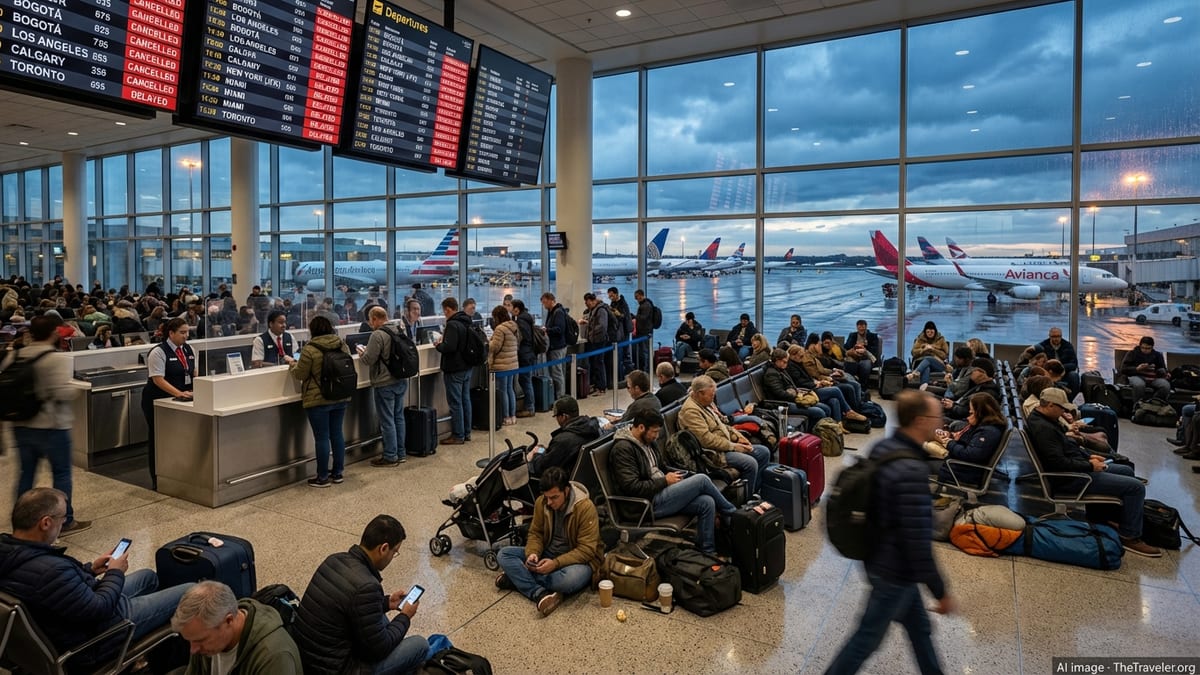
Travelers across the eastern United States faced cascading disruption after widespread cancellations and delays at Charlotte Douglas International Airport left more than 100 American Airlines and American Eagle flights grounded, severing connections across North Carolina, Florida, Texas, New York and Georgia.
Get the latest news straight to your inbox!
Hub Turbulence at One of America’s Busiest Airports
Charlotte Douglas International Airport functions as one of American Airlines’ largest hubs, funnelling thousands of passengers each day through a complex web of mainline and regional flights. Publicly available airport and airline data show that American and its American Eagle affiliates operate the clear majority of daily departures at the airport, with PSA Airlines and Piedmont Airlines handling much of the short haul traffic across the Southeast and Mid Atlantic.
On the day of the disruption, those regional operations became a critical pressure point. Operational data and third party flight tracking boards indicated that 108 American branded flights at Charlotte were marked as cancelled or grounded over the course of the day, with a further two dozen showing significant delays. The bulk of those affected services were operated by PSA and Piedmont, both flying under the American Eagle banner and using Charlotte as a principal connecting node.
The cancellations rippled far beyond North Carolina. As flights into and out of Charlotte were pulled from the schedule or left waiting for aircraft and crew, passengers in Florida, Texas, New York and Georgia reported missed connections and unplanned overnight stays. With Charlotte acting as the hinge between smaller regional airports and major long haul destinations, even a localized disruption quickly became a national problem for those traveling on American and its affiliates.
American, PSA and Piedmont Bear the Operational Brunt
Available schedule and traffic records for Charlotte Douglas indicate that American Airlines and its regional partners account for well over three quarters of passenger movements at the airport in a typical year. PSA and Piedmont, both wholly owned regional subsidiaries, operate dense schedules into Charlotte from smaller cities across North Carolina and neighboring states, providing feed for American’s mainline services to larger domestic and international destinations.
When irregular operations hit, that structure can amplify strain. A cancellation of a single regional leg not only strands passengers at outstations but can also rob the hub of an arriving aircraft needed for a later departure. Reports from flight status services showed waves of PSA and Piedmont flights tagged first with rolling delays and then as cancelled, particularly on shorter routes that are often the first to be cut when capacity must be reduced.
Mainline American services were not spared. Several medium haul flights to and from Florida and Texas, including services to major markets such as Miami, Dallas Fort Worth and Houston, appeared on public trackers with extended departure holds and late night arrivals. The resulting knock on effects contributed to crowding at gates in Charlotte and forced some passengers to be reaccommodated on flights departing the following day.
Passenger Impact Across the Southeast and Beyond
The practical effect for travelers was a patchwork of missed connections, extended tarmac waits and unexpected airport overnights. Social media posts and online forums dedicated to air travel filled with accounts of passengers who arrived in Charlotte only to find their onward American Eagle flights scrubbed, with limited alternative options to reach smaller destinations in North Carolina and neighboring states.
Florida bound travel in particular appeared heavily disrupted as feeder flights from Charlotte to cities such as Fort Lauderdale, Tampa and smaller coastal airports were cancelled. In Texas, travelers connecting through Charlotte from East Coast origins reported losing same day options into major hubs, while in New York and Georgia, late evening services suffered cascading delays as aircraft and crews fell out of position.
The timing of the disruption compounded the difficulties. With many of the affected services operating in peak afternoon and evening windows, rebooking options narrowed quickly as remaining flights filled. Publicly available consumer guidance from transportation authorities notes that during large scale irregular operations, passengers on regional affiliates can face fewer rebooking choices than those on mainline routes, simply because there are fewer alternate flights serving smaller cities.
Underlying Vulnerabilities in Hub and Spoke Networks
The Charlotte episode underscored how concentrated hub operations can translate into systemic vulnerability when one carrier dominates an airport. Historical airport financial reports and traffic summaries highlight American and its American Eagle partners as the principal users of Charlotte’s concourses, particularly on regional piers where PSA and Piedmont flights are clustered.
That dominance delivers frequent service in normal times but can magnify disruption when schedules unravel. With multiple flights to the same regional destination stacked across the day, airlines can cancel entire blocks of departures to reset operations, leaving travelers in some smaller markets with no remaining same day options. Publicly available federal air travel consumer data shows that such patterns of clustered cancellations are common at large hubs during weather and operational events.
Industry discussions also point to the particular sensitivity of regional operations to crew and maintenance challenges. Smaller aircraft often operate tighter turnaround schedules and rely on crews based in the hub itself. When delays build, duty time limits can sideline entire crews, requiring cancellations even after the initial cause of disruption has passed. Observers following American’s operations around Charlotte frequently note that PSA and Piedmont flights are among the first to show extended delays when the hub comes under strain.
What Travelers Can Do When a Hub Grinds to a Halt
For travelers, the events in Charlotte provide a case study in how to navigate sudden large scale disruption at a hub dominated by a single carrier. Consumer advocates generally advise checking flight status early and often on both airline channels and independent trackers, paying close attention not only to departure times but also to whether an inbound aircraft has left its previous station.
Passengers whose trips depend on a regional connection through a hub such as Charlotte are often encouraged to build longer layovers where schedules allow, particularly during peak travel seasons or in periods of active weather. Published travel guidance notes that earlier departures typically face fewer knock on delays, as they push off before operational bottlenecks fully develop.
When cancellations occur on the scale seen in Charlotte, rebooking quickly becomes critical. Industry guidance suggests that travelers use all available tools simultaneously, including mobile apps, websites and airport service desks, rather than waiting in a single line. In severe disruptions affecting one airline disproportionately at a hub, some passengers may also evaluate same day alternatives on other carriers or routings through different connecting cities, especially when they need to reach larger destinations served by multiple airlines.