


More news on this day
Widespread flight cancellations and rolling delays across Melbourne Tullamarine Airport and regional gateways have disrupted Australia’s aviation network, leaving passengers stranded, missing connections and scrambling for scarce alternative services.
Get the latest news straight to your inbox!
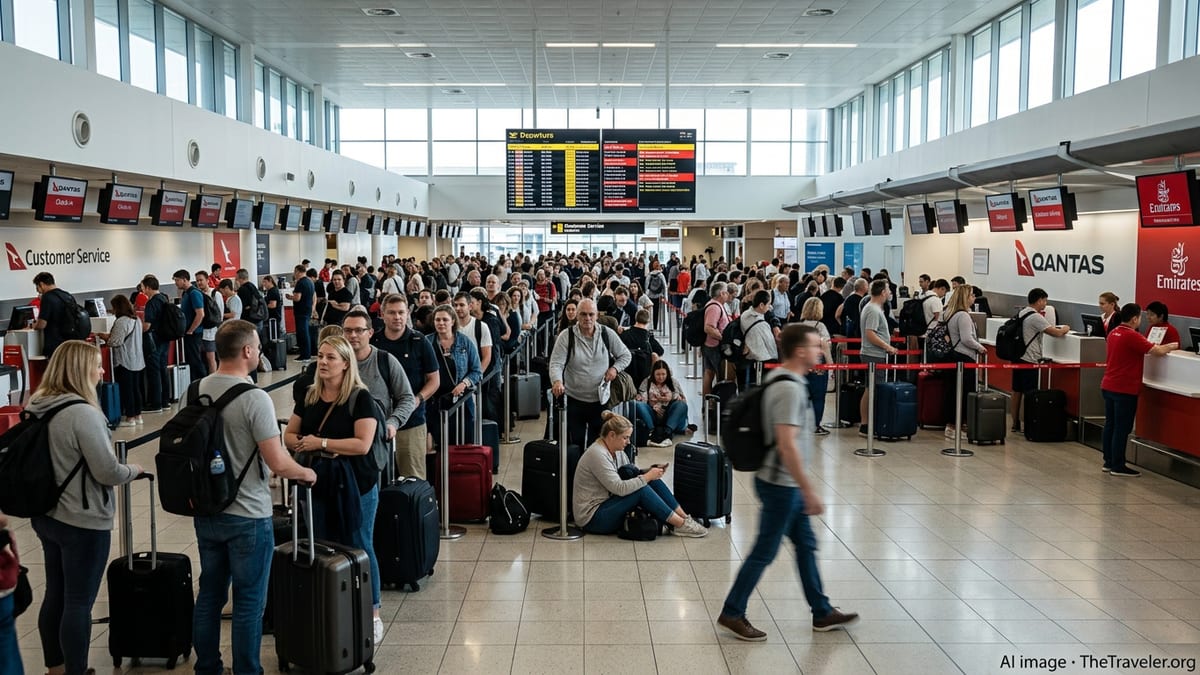
Melbourne Tullamarine Hit Hard by Network Disruptions
Melbourne Tullamarine, Australia’s second busiest airport and a major hub for Qantas, Virgin Australia and Jetstar, has emerged as one of the hardest hit airports in the latest wave of operational disruption affecting the national network. Publicly available flight-tracking dashboards show clusters of delayed departures and arrivals, along with a spike in same-day cancellations, particularly on trunk routes linking Melbourne with Sydney, Brisbane and Perth.
Recent figures compiled by independent aviation analysts and travel industry outlets indicate that Melbourne has repeatedly recorded some of the country’s highest tallies of delayed services on peak disruption days. In one recent 24 hour period, data reviewed by travel media showed more than 100 delayed movements and multiple cancellations at Tullamarine, significantly above typical daily averages for the airport.
While national statistics from Airservices Australia suggest that overall cancellation rates across the domestic network in 2026 remain broadly comparable with pre-pandemic norms, Melbourne’s role as a central connecting hub means that localised delays ripple outward quickly. When flights departing Tullamarine push back late or fail to operate, knock on impacts are felt on interline connections and on smaller regional sectors that depend on timely aircraft and crew rotations.
Congestion at security and check in has compounded frustrations for travelers, as any disruption involving airline systems or third party technology can quickly create bottlenecks in terminal processing. Even when flights ultimately depart, passengers report spending extended periods in queues at departure screening and service desks, heightening the sense of instability across the airport.
Regional Routes and Smaller Hubs Bear the Brunt
The latest disruption has not been confined to Melbourne’s main terminals. Regional airports that feed traffic into Tullamarine and other capital city gateways have also experienced cancellations and extended delays, leaving passengers in smaller communities with few immediate alternatives. According to recent route announcements and schedule adjustments published by major carriers, several thinner domestic services have already been suspended in recent months, reducing redundancy across the regional network.
Industry data from the Bureau of Infrastructure and Transport Research Economics shows that regional and secondary routes tend to record higher cancellation percentages than heavily trafficked capital city links. When staffing constraints, adverse weather or network control decisions require schedule trimming, lightly loaded regional sectors are often the first to be removed. That pattern leaves travelers in regional centres particularly vulnerable when knock on delays from Melbourne or Sydney cascade through the system.
Travel commentary and recent consumer experiences shared publicly highlight problems for passengers attempting to connect from regional flights into long haul services via Melbourne. Missed connections can leave travelers stranded overnight in Tullamarine or forced to wait many hours for the next available departure, especially on international routes that operate only once per day. With some domestic sectors already reduced or suspended, rebooking options for disrupted regional passengers are increasingly limited.
Smaller carriers and charter operators that serve remote communities are likewise exposed when network disruptions at major hubs restrict their access to shared airport infrastructure or delay the arrival of connecting passengers and freight. The cumulative effect is a perception of fragility across Australia’s regional aviation system, with events in Melbourne often reverberating quickly through distant outstations.
Weather, Capacity Constraints and System Weaknesses
Multiple factors lie behind the current spike in delays and cancellations. Network performance over recent months, assessed in monthly overviews published by Airservices Australia, points to a combination of adverse weather, constrained airport capacity and airline operational challenges. Periods of low cloud, strong winds and reduced runway usability in Melbourne and Sydney have significantly increased the use of air traffic flow management measures, which slow arrivals and departures and can force airlines to trim schedules on short notice.
Runway and airfield capacity at Melbourne has been a longstanding concern, with planning documents for a third runway noting that, without additional infrastructure, delays and cancellations were expected to become more frequent as traffic demand grew. While overall on time performance across the national network has improved compared to the sharp deterioration seen in the immediate post pandemic years, the system remains susceptible to sudden spikes in disruption when weather or technical issues arise at a major hub.
Published operational statistics also show that a significant proportion of delays and cancellations are attributed to factors outside the direct control of air traffic management, including aircraft maintenance, airline crew availability and ground handling constraints. Tight scheduling, high aircraft utilisation and lean staffing levels mean that a relatively small disruption early in the day can quickly magnify into widespread knock on delays by afternoon, especially at busy banks of departures from Melbourne.
Technology incidents across other sectors of Australia’s transport and telecommunications networks have further highlighted systemic vulnerabilities. Recent nationwide outages affecting critical digital systems, while focused primarily on rail and emergency services, have drawn renewed attention to the dependence of aviation operations on resilient IT infrastructure. For passengers at Melbourne Tullamarine, the result can appear the same: departure boards filling with delayed and cancelled flights and limited real time information on when normal operations will resume.
Passengers Confront Long Queues, Missed Plans and Limited Recourse
For travelers, the operational complexities behind the disruptions translate into hours spent in terminals and significant uncertainty about when journeys will be completed. Reports from recent peak disruption days at Melbourne Tullamarine describe long queues snaking through departure halls as passengers vie for assistance at check in counters and service desks after cancellations are announced.
Missed holidays, business meetings and family events are a recurring theme in public accounts. Travelers connecting in Melbourne from regional centres or international gateways report being unable to secure seats on later flights the same day, particularly on popular leisure routes during school holiday periods. In some cases, passengers arriving late at night after significant delays find that on site hotel rooms are fully booked and nearby accommodation is scarce or expensive.
While Australian consumer law and airline policies provide for refunds or rebooking in many disruption scenarios, navigating those entitlements can be challenging during large scale events. Public guidance from consumer advocacy groups notes that compensation for consequential losses, such as missed hotel nights or tours, is limited in Australia compared with some overseas jurisdictions. Passengers are often advised to rely on travel insurance for additional coverage, but not all travellers hold comprehensive policies.
Social media and online forums show ongoing frustration about communication gaps during major disruption events. Some passengers at Melbourne Tullamarine report learning of cancellations only after arriving at the airport, while others describe receiving schedule change notifications too late to adjust ground transport or accommodation. Calls for clearer, more proactive updates from airlines and airport operators have grown louder as travellers recount repeated experiences of last minute disruption.
Industry and Government Scrutiny of Network Resilience
The latest wave of cancellations and delays is focusing renewed scrutiny on the resilience of Australia’s aviation network and the adequacy of consumer protections. Regular performance reporting by Airservices Australia and government transport agencies has already highlighted the need for continued investment in infrastructure, more robust contingency planning and improved coordination between airlines, airports and air traffic management.
Debate in policy circles and the wider public has increasingly centred on whether current industry settings strike an appropriate balance between efficiency and resilience. High aircraft utilisation and tight turnaround times support lower fares and greater choice but leave less margin to absorb unexpected shocks such as severe weather, technical outages or staffing shortfalls. Melbourne Tullamarine’s repeated appearance as a focal point for disruption has sharpened questions about when promised capacity upgrades will translate into more reliable day to day operations.
Consumer advocacy organisations are also drawing attention to the experience of passengers during large disruption events, calling for clearer minimum standards on communication, care and redress when flights are cancelled or heavily delayed. While some carriers have voluntarily improved their rebooking and accommodation policies, recent incidents show that outcomes remain inconsistent and often depend on the specific cause of the delay, fare type and route.
As peak travel periods continue through the southern winter and into the year’s second half, travelers using Melbourne Tullamarine and regional hubs are being urged by travel advisers to build additional buffer time into itineraries, particularly for tight domestic to international connections. The latest disruption underscores that, despite improvements in headline statistics, Australia’s aviation network remains vulnerable to cascading problems when pressure points converge on a single hub.