


After a decade of flying in and out of Seoul’s Incheon International Airport, I thought I knew this famously efficient hub inside out. But one miscalculated departure turned into a stressful sprint, an almost-missed flight, and the one thing I will never do again at Incheon: treating it like a small, easy airport where two hours is enough. Incheon can be brilliant, but it is vast, complex, and currently struggling with growing queues. Here is what went wrong, and how you can avoid repeating my mistake.
Get the latest updates straight to your inbox!
The One Thing I’d Never Do Again at Incheon
I will never again arrive at Incheon International Airport with only two hours to spare before an international flight and assume “it will be fine.” That casual approach might work at a small regional airport. At Incheon, especially since late 2024, it is a gamble that far too many travelers are losing.
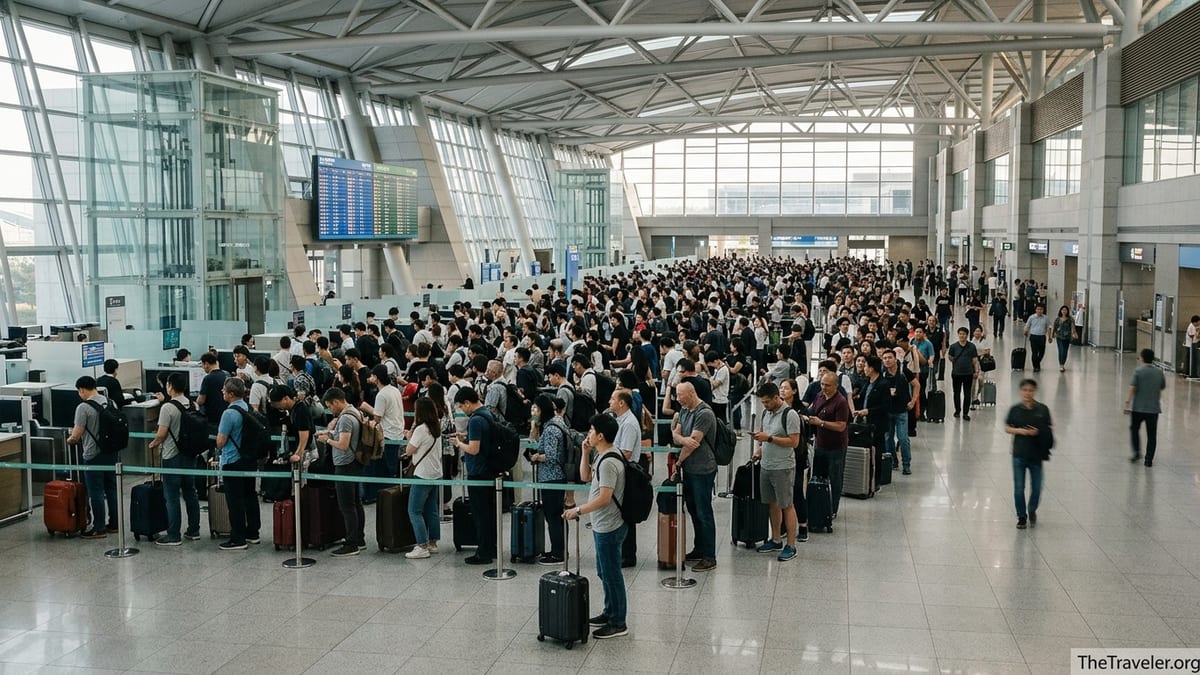
On my last misjudged departure, I rolled into Terminal 1 just under two and a half hours before my evening flight to Europe. Check in looked manageable at first, but the real bottleneck was ahead. Security and outbound immigration had merged into a single, snaking wall of people. Even with most counters open, it took close to 90 minutes from the end of the line to the point where my passport was stamped.
By the time I cleared the final scan, boarding was already underway. The walk from the main duty-free hall to a far-flung gate added another 15 minutes, including a short shuttle ride. I boarded sweating and breathless, swearing that I would never again treat Incheon as a quick in-and-out airport. For most international departures, three to three and a half hours is now my non-negotiable minimum.
That experience reframed how I think about Incheon. It is not a boutique gateway; it is a huge, high-traffic hub with multiple terminals, mixed security standards, and an ever-changing set of queues. If you plan with that in mind, it can still be one of the smoothest airports in Asia. If you assume it will always be fast because of its awards and glossy marketing, you risk repeating my mistake.
Why Incheon Is No Longer a “Two-Hour Airport”
Incheon still wins global awards for cleanliness and overall service, and in off-peak windows it can feel efficient. But rising passenger numbers, patchy staffing and equipment issues have created a very different reality at busy times. Local media and traveler reports since late 2024 have described hour-long security queues, occasional scanner malfunctions, and some passengers reaching their gates only minutes before departure even after arriving three hours early.
These delays are not constant, which makes them dangerous. On a quiet Tuesday afternoon, you might glide from check in to gate in under 45 minutes and wonder what all the fuss is about. On a winter or summer holiday weekend, or during late-night and early-morning flight banks, the same path can take well over two hours. One traveler departing Terminal 1 around New Year’s reported spending more than two hours shuffling through security alone, after a lengthy airline bag-drop line.
Complicating matters further, Incheon’s layout is sprawling. Terminal 1 and Terminal 2 each have multiple concourses that can require a shuttle train or long moving-walkway hike. A gate in the 250s in Terminal 2 can be a 10 to 15 minute walk from the main security exit, even for a fast walker. When you only budget two hours, every extra step eats into your margin.
The airport is trying to respond, from adding more smart security lanes to adjusting staffing, but large hubs cannot be reconfigured overnight. For now, the practical reality for travelers is simple: treat Incheon as a big, sometimes congested international hub, not as the frictionless icon it was a decade ago. Build in extra time and assume that security and immigration might absorb an hour or more on a busy day.
Arriving at Incheon: Timing and Transport Pitfalls
The mistake of arriving too late often begins in central Seoul. Many visitors underestimate how long it takes to get from areas like Myeongdong, Hongdae, or Gangnam to Incheon, particularly during rush hour or bad weather. On paper, the Airport Railroad Express (AREX) is straightforward. The nonstop express train covers Seoul Station to Terminal 1 in about 43 minutes and to Terminal 2 in roughly 51 minutes. The slightly slower all-stop commuter version takes around 58 minutes from Seoul Station, but costs less and is included in standard transit cards.
In practice, you must add the time it takes to reach Seoul Station or a connecting station, buy or load tickets, navigate platforms, and then walk from the train platform to check in. If you are staying in Hongdae, the all-stop AREX from Hongik University Station is convenient and cheap, but during peak commuter times it can be crowded and slow to board with heavy luggage. From southern districts like Gangnam or Jamsil, a taxi or airport limousine bus might be more direct but can be at the mercy of traffic, especially on rainy Friday evenings.
Prices add another layer of decision-making. As of 2025, the AREX express typically costs roughly twice as much as the all-stop train, while limousine buses sit in between, at a similar or slightly higher price than the express depending on the route. Many budget travelers choose the all-stop train to save a few thousand won, then miscalculate how long it will take or how tiring it will be with large suitcases and multiple line changes. If you are leaving in the early morning, remember that Seoul’s subway does not run all night; the first trains can be too late to safely reach a 7:00 a.m. flight if you count back only two hours.
My rule now is blunt. For an international departure, I aim to step onto transport from central Seoul no later than three and a half to four hours before my flight time. If I am in Hongdae for a 2:00 p.m. departure, that means catching an AREX train before about 11:00 a.m. For an 8:00 a.m. morning departure, I avoid gambling on the very first subway and instead book an airport limousine bus or private transfer with a clear pick-up window, accepting that I will have a quiet hour in the terminal rather than a panic at the gate.
The Layover Trap: When Staying in the Terminal Is a Mistake
Incheon has long marketed itself as a layover-friendly airport, with attractions like the Korean Cultural Street, on-site spas, and even short transit tours into Seoul or nearby coastal towns for passengers with enough time. That reputation tempts many travelers to stay inside the terminal during long layovers, assuming it will be more relaxing or time-efficient than leaving. After a string of overnights here, I would reverse that thinking: the mistake is automatically deciding to tough it out in the terminal for any layover longer than about eight hours, especially overnight.
While Incheon does provide designated “rest zones” with reclining chairs and quieter lighting, they are not comparable to a real bed. During peak travel seasons, finding an empty recliner can feel like musical chairs. It is not unusual to see exhausted passengers stretched out on carpeted floor areas, using backpacks as pillows and eye masks to block the bright lighting that never completely dims. For a mid-day layover of four to six hours, this might be acceptable. For an overnight, it can leave you stiff, sleepless, and badly jet-lagged.
The airport does have better options, but they require planning. Airside transit hotels in both terminals offer small but proper rooms with a bed, shower, and desk, bookable in blocks of hours. Landside, the Darakhyu capsule hotels in both Terminal 1 and Terminal 2, run by a major Korean hotel group, provide private cabins with full-size beds and charging ports at hourly rates. The problem is that these options often sell out days in advance during holidays or busy conference seasons.
On my worst layover, I made the mistake of assuming I could just walk up to the capsule hotel at Terminal 2 around midnight and book a pod. The receptionist politely told me they had been fully booked since early evening. A quick check showed the nearby off-airport hotels were also sold out or charging peak rates. I ended up spending the night drifting between plastic benches and a crowded rest area, envying anyone who had reserved a room weeks earlier. Now, if my layover is longer than eight hours and falls overnight, I either pre-book a capsule or transit hotel, or deliberately clear immigration and stay at a nearby airport hotel rather than trying to “make do” in the terminal.
Free Transit Tours and the Risk of Cutting It Too Fine
Another temptation at Incheon is the free or low-cost transit tour program that allows connecting passengers with long layovers to visit Seoul or nearby attractions without arranging everything themselves. Recent schedules have included half-day options that visit central Seoul landmarks, traditional markets, or coastal temples, typically aimed at travelers with layovers of around six to twelve hours.
The tours sound ideal on paper: transport, a guide, and a pre-set itinerary. The catch is timing. Even when everything runs smoothly, a five-hour city tour can easily expand when traffic into or out of Seoul thickens, or when one participant returns late to the bus. If your inbound flight is even slightly delayed, passport control is slower than expected, or your outbound gate changes to a far concourse, your comfortable layover margin can compress dangerously.
Over the past two years, travelers have shared stories of sprinting through the terminal after a transit tour returned later than expected, especially in winter when early darkness and bad weather slow the highways. A common pattern: a passenger with a ten-hour layover books a five-hour tour starting a couple of hours after landing. Immigration takes longer than planned, the tour bus departs slightly late, an accident on the expressway adds 40 minutes to the return, and suddenly they are re-entering the terminal with about an hour and a half left before departure, facing full security lines.
The lesson is not to avoid transit tours entirely, but to be conservative. If I would be nervous about doing the same itinerary independently with the same layover, I will not sign up for the group version. I also treat the tour’s scheduled duration as optimistic. A “five-hour” program gets a mental budget of six hours, plus at least two hours back in the airport before boarding. If my total layover is under ten hours, I am now inclined to stay airside, enjoy a meal, a short shower, and perhaps a nap in a booked capsule hotel instead.
Smarter Ways to Beat the Queues and Stress
If the one thing I will never do again is cut my timing too fine, the flip side is this: I now use every available tool to make Incheon smoother. One of the most underrated is the City Airport Terminal at Seoul Station, available to certain airlines and classes of service. Eligible passengers taking the AREX express train can check in their bags, clear outbound immigration downtown, and then ride the train to Incheon with only security screening left on arrival.
This in-town check-in option is particularly valuable for heavy packers or families. Instead of shepherding children and large suitcases through packed airport check-in lines, you can complete formalities in a relatively calm environment several hours earlier. Then you board the express AREX, arrive in the airport station under Terminal 1 or Terminal 2, and head straight toward security. It does not eliminate queues entirely, but it can turn a stressful three-step process into something closer to a single line.
Another practical step is to enroll in any available fast-track or smart-gate program you qualify for. South Korean citizens and some foreign residents can use automated immigration gates. Certain airlines offer dedicated security lanes for premium cabin passengers or elite frequent flyers. More recently, the airport has been rolling out improved smart security lanes that process trays more efficiently. None of these guarantees a short wait, but they tilt the odds in your favor.
Finally, treat Incheon’s size with respect when planning your internal movements. After security, check the departure boards and note whether your gate is in a satellite concourse that requires a shuttle train. A gate near 268 in Terminal 2, or in the mid-100s in Terminal 1, can involve a surprising amount of walking. I aim to be at or near my gate area 40 to 50 minutes before boarding starts, not just before the printed boarding time. That buffer has saved me more than once when last-minute security checks or boarding document inspections created smaller secondary queues right at the gate.
The Takeaway
Seoul’s Incheon International Airport remains one of Asia’s most impressive hubs, with gleaming architecture, strong public transport links, and a better-than-average mix of dining and shopping. Yet nostalgia for its early years of near-effortless flows can be misleading. In recent seasons, longer queues at security and immigration, fully booked capsule hotels, and tighter connection windows have exposed its limits.
The one thing I will never do again is treat Incheon as a “two-hour airport.” I no longer gamble on late departures from Seoul, unbooked overnight layovers in the terminal, or ambitious transit tours that leave me racing the clock. Instead, I give myself generous time, pre-book sleep options when I can, and use tools like AREX express and city check-in to control what is controllable.
If you plan your journey through Incheon with this more realistic mindset, you can still enjoy its strengths: reliable rail links, thoughtful rest areas, and glimpses of Korean culture right in the terminal. But you will also avoid the white-knuckle sprint that turned my last rushed departure into a hard-earned lesson.
FAQ
Q1. How early should I arrive at Incheon Airport for an international flight?
For most international flights, plan to arrive at least three hours before departure, and three and a half hours during peak seasons or early-morning and late-night flight banks.
Q2. Is two hours enough time for a layover at Incheon?
Two hours is usually too tight for an international-to-international connection if you need to change terminals or pass through additional security checks. Aim for at least three hours when possible.
Q3. Should I take the AREX express train or the all-stop train to Incheon?
The AREX express is faster and more comfortable but costs more. The all-stop train is cheaper and fine if you have light luggage and plenty of time. If you are cutting it close, the express is worth the extra cost.
Q4. Are the capsule hotels at Incheon worth booking in advance?
Yes. The Darakhyu capsule hotels in both terminals and the airside transit hotels often sell out during busy periods. Pre-book if you have an overnight or long layover and know your times.
Q5. Is it better to stay in the terminal or go to an airport hotel for a long layover?
For layovers longer than about eight hours, especially overnight, an airport hotel or pre-booked capsule is usually far more comfortable than trying to sleep in public rest zones.
Q6. Are Incheon’s free transit tours safe to book with a short layover?
They are best for longer layovers of ten hours or more. Build in extra time for traffic and delays, and avoid booking tours if your onward connection is tight.
Q7. How long does it take to get from central Seoul to Incheon Airport?
From Seoul Station, the AREX express takes about 45 to 50 minutes to reach the airport, while the all-stop train takes roughly an hour. From other neighborhoods, add transit or taxi time and allow at least 90 minutes door to door.
Q8. What is the biggest mistake travelers make at Incheon Airport?
The biggest mistake is underestimating queue times and arriving too close to departure, assuming the airport will always be fast. This can turn minor delays into a near-missed flight.
Q9. Can I check in and clear immigration in Seoul before going to Incheon?
Some airlines allow eligible passengers to use the City Airport Terminal at Seoul Station to check in, drop bags, and clear immigration before taking the AREX express to the airport.
Q10. Are there quiet places to rest inside Incheon without booking a hotel?
Yes, each terminal has rest zones with reclining chairs and softer lighting, plus pay-per-use lounges with showers. They are popular, so seats can be limited during peak travel times.