


More news on this day
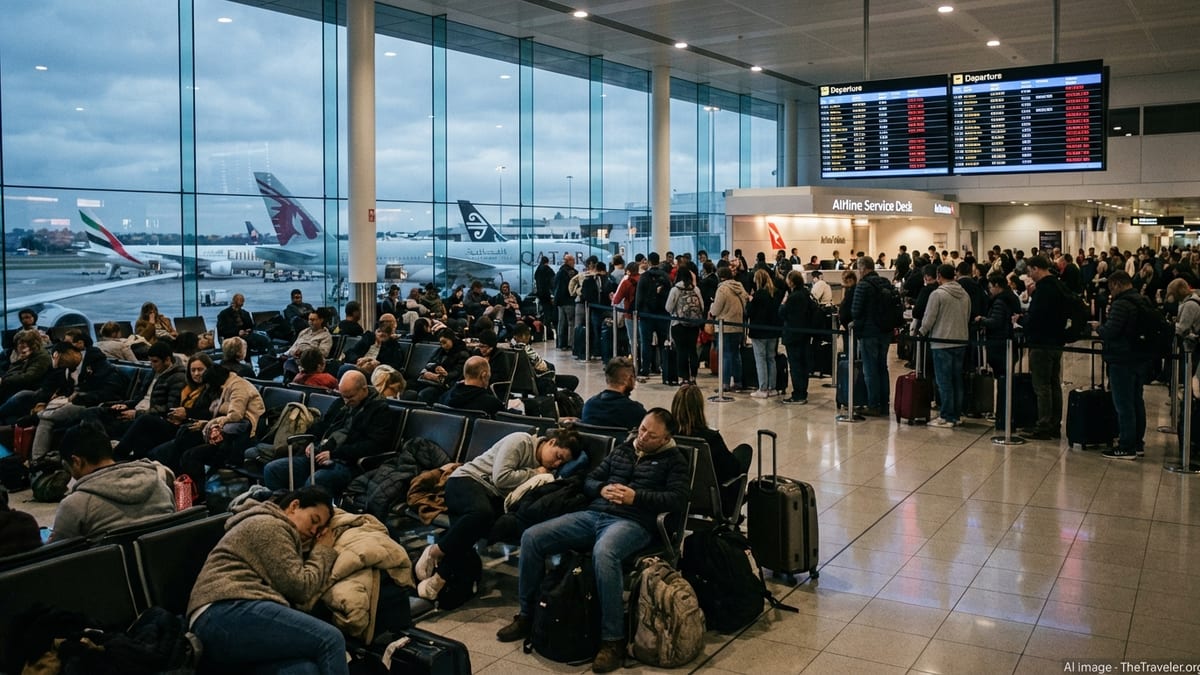
Major airports across Australia and New Zealand experienced a fresh wave of disruption on Wednesday, with reports indicating hundreds of delays and dozens of cancellations affecting key hubs in Sydney, Brisbane, Auckland and Wellington, and impacting services from Qantas, Virgin Australia, Air New Zealand, Alliance Airlines and several smaller carriers.
Get the latest news straight to your inbox!
Wide Ripple Effects Across the Trans Tasman Network
Published operational data and airport boards show that services on some of the busiest routes between Australia and New Zealand have been hit hardest, particularly links connecting Sydney, Brisbane, Auckland and Wellington. These corridors form the backbone of trans Tasman travel, serving both business and leisure passengers, as well as connecting long haul traffic to North America, Asia and Europe.
Industry statistics highlight just how critical these connections are, with Brisbane and Auckland, for example, ranking each other among their busiest international city pairs in the year to June 2025. When flights on these routes are delayed or cancelled, the knock on effect quickly spreads to domestic links, onward international connections and regional services operated by partners and subsidiaries.
On the ground, passengers have reported extended queues at check in and security, rebooking backlogs at service desks and crowded terminal areas as revised departure times continue to shift. Travel advisories from major carriers have been encouraging customers to check flight status frequently and consider longer connection windows where possible.
Multiple Carriers, Shared Disruption
The current disruption is not limited to a single airline. Recent coverage of Australian aviation operations indicates that Qantas, Virgin Australia, Air New Zealand, Alliance Airlines and low cost brands have all experienced operational strain in recent weeks, from staff availability pressures to aircraft rotations affected by late running services.
Earlier in June, separate reporting on flight operations at Sydney and Perth documented more than 20 cancellations in a single day across Qantas, Virgin Australia, Jetstar and regional operators, underlining how fragile on time performance can become once delays begin to cascade. While today’s issues span a broader geographic area, they follow a similar pattern of multiple carriers being caught in the same system wide bottlenecks.
Domestic and regional operators are particularly exposed when larger trunk services between capital cities and trans Tasman gateways run late or are removed from the schedule. Aircraft and crew that would normally cycle through several shorter sectors over the course of a day are left out of position, forcing airlines to trim frequencies or consolidate services at short notice.
Pressure on Key Airports in Australia and New Zealand
Sydney and Brisbane remain two of Australia’s most important aviation hubs, and both cities are heavily reliant on smooth coordination with New Zealand gateways such as Auckland and Wellington. Publicly available airport statistics show Auckland among Brisbane’s busiest international routes, underscoring how dependent the network is on stable operations between the two countries.
In New Zealand, government transport data tracking on time performance across domestic and trans Tasman services has previously noted variability on routes linking Auckland and Wellington with Australian capitals. Delays on these sectors do not just inconvenience point to point travellers; they also disrupt connecting passengers feeding in from smaller centres such as Queenstown, Dunedin or regional Queensland cities.
As disruption builds, airport operations teams face compounding challenges including stand allocation, baggage handling and air traffic flow management. Even when weather is not a primary factor, minor technical issues or crew scheduling constraints can trigger a chain reaction in such a tightly timed environment, particularly during morning and evening peaks.
Trans Tasman Capacity and Codeshares Add Complexity
The Australia New Zealand market is also complicated by an intricate web of alliances and codeshare agreements. Qantas and Air New Zealand, for instance, link a wide range of Australian capitals with Auckland, Wellington and Christchurch, while Virgin Australia and Air New Zealand maintain their own partnership covering selected trans Tasman and domestic New Zealand routes.
These cooperative arrangements mean that a single cancelled sector can affect passengers booked under multiple airline codes, even if only one carrier physically operates the flight. When irregular operations occur, rebooking options may exist across alliance partners, but limited spare capacity on busy routes often constrains how quickly stranded travellers can be accommodated.
Recent filings from airlines and regulators also point to significant planned growth in services between Australia and New Zealand through the northern winter of 2025 and into 2026, including additional frequencies from Sydney, Brisbane and Melbourne to Auckland and other New Zealand cities. While this offers travellers more choice, it also raises the stakes when operational disruption takes hold across a dense and interdependent schedule.
What Impacted Passengers Can Do
Airlines across the region continue to advise customers to monitor flight status through official channels such as carrier apps and airport information boards, and to ensure contact details are up to date for any automated notifications. Many carriers provide options to move to later flights or alternative dates when services are cancelled, subject to seat availability and fare conditions.
Travelers connecting onward from the major hubs in Sydney, Brisbane, Auckland and Wellington may be most at risk of missed connections. Industry guidance generally recommends allowing generous buffer times when flying through these cities during periods of heightened disruption, especially where itineraries involve separate tickets on different airlines or alliances.
Passengers with time sensitive plans, such as cruises, tours or major events, are increasingly encouraged by travel advisers to consider flexible booking options and travel insurance that specifically covers delays and cancellations. With airlines and airports across Australia and New Zealand now operating close to pre pandemic volumes, recent events highlight that even routine operational strains can quickly escalate into network wide challenges for carriers and travelers alike.