


More news on this day
Air travel across Australia and New Zealand faced fresh turmoil today as major carriers including Qantas, Virgin Australia, Jetstar and Air New Zealand struggled with 839 flight delays and 61 cancellations concentrated at the key hubs of Melbourne, Sydney, Auckland, Christchurch and Wellington.
Get the latest news straight to your inbox!
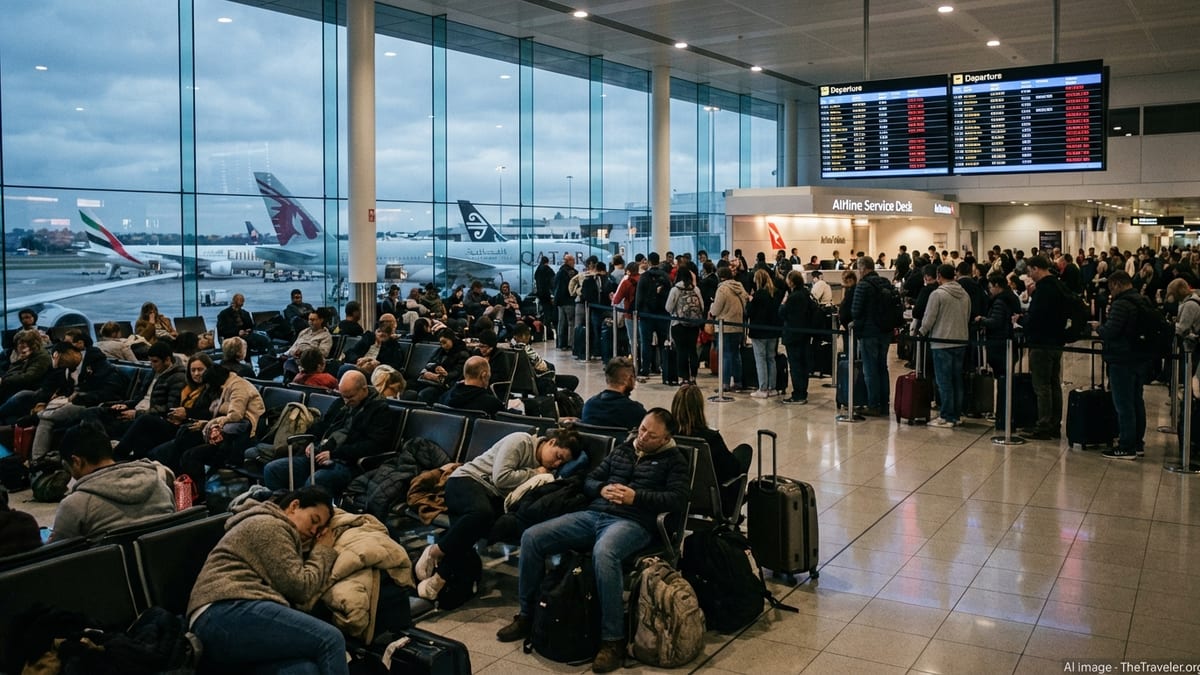
Wave of Disruptions Across Major Trans-Tasman Hubs
Operational data compiled from airport departure boards and flight-tracking platforms indicates that the latest wave of disruption has hit some of the busiest corridors in the region, affecting both domestic and international services. The tally of 839 delayed flights and 61 cancellations reflects widespread schedule strain across the Australian and New Zealand aviation networks.
Melbourne Tullamarine and Sydney Kingsford Smith again emerged as the most affected Australian hubs, with large clusters of delayed departures building from early morning and persisting throughout the day. On the New Zealand side, Auckland, Christchurch and Wellington recorded mounting knock-on delays as aircraft and crews failed to arrive on time from Australian ports.
The disruptions spanned flagship national carriers and low-cost brands alike. Publicly available information shows Qantas, Virgin Australia and Jetstar bearing a significant share of the delayed and cancelled services, alongside Air New Zealand and several regional operators. Routes linking Melbourne and Sydney with Auckland, Christchurch and Wellington were among those most heavily affected, highlighting the vulnerability of the trans-Tasman network to pressure at a few major hubs.
Although delays far outnumbered outright cancellations, the combination created rolling congestion that left many aircraft out of position and forced last-minute timetable changes, complicating connections for domestic and international travellers.
Where the Impact Was Felt Most Severely
Melbourne recorded one of the largest clusters of disrupted services, with delays rippling across departures to Sydney, Brisbane and Adelaide, as well as onward connections to Auckland and Christchurch. Flight data suggests that even minor early-morning schedule slips cascaded through the day as airlines struggled to recover lost time.
Sydney also experienced a high volume of late-running flights, particularly on popular shuttle sectors to Melbourne and Brisbane that feed into longer-haul international departures. When aircraft arrived late into Sydney from other cities, onward flights to New Zealand were frequently pushed back, narrowing or erasing connection windows for transiting passengers.
In New Zealand, Auckland’s role as the primary international gateway meant that even modest numbers of cancellations had outsized effects. When flights from Melbourne or Sydney were delayed or removed from the schedule, connecting passengers for domestic legs to smaller centres often found limited alternatives, prolonging their travel days.
Christchurch and Wellington also reported disruptions across both Australian and domestic routes. Published performance data for key city pairs such as Melbourne to Christchurch and Melbourne to Wellington already shows a relatively tight margin for on-time operations, leaving limited buffer when multiple services encounter delays on the same day.
Causes and Structural Pressures Behind the Delays
While immediate causes for individual delays varied from operational issues to weather and crew availability, the pattern of disruption points to deeper structural pressures in the Australia and New Zealand aviation systems. Industry reporting over recent months has highlighted tight aircraft utilisation, constrained spare capacity and lingering staffing challenges as airlines rebuild schedules.
High-frequency shuttle routes between Sydney, Melbourne and Brisbane, often operated by the same aircraft cycling through multiple sectors per day, leave little room for recovery once an early leg runs late. A delay on a morning service from Melbourne to Sydney, for example, can translate into late departures on subsequent rotations to Auckland or Wellington, amplifying the effect across both countries.
On the New Zealand side, reports on aviation on-time performance show that trans-Tasman routes such as Melbourne to Christchurch and Melbourne to Wellington already operate at moderate levels of punctuality, with cancellations typically concentrated in short bursts rather than spread evenly. When an unusually high number of services is disrupted on a single day, airport infrastructure, ground handling and rebooking systems can quickly become saturated.
Analysts also point to seasonal peaks in leisure and business travel, when load factors climb and spare seats suitable for re-accommodating passengers are harder to find. This environment makes airlines more likely to delay flights in an attempt to preserve connectivity for as many travellers as possible, even if that means extended waits in terminals.
Airlines and Airports Work to Clear Backlogs
According to publicly available schedules, carriers responded to the latest disruption by adjusting departure times, consolidating lightly booked services, and deploying larger aircraft on select routes to move stranded passengers in fewer flights. Evening and late-night sectors from Melbourne and Sydney to New Zealand were particularly important in helping clear the backlog.
Airport operators in Melbourne, Sydney, Auckland, Christchurch and Wellington introduced additional customer support measures, such as redeploying staff to check-in halls and transfer desks, and expanding information updates on digital departure boards. However, reports from recent disruption events show that communication gaps can persist when airlines are forced to revise schedules repeatedly during the day.
For travellers, options varied based on fare type, route and carrier policy. Some passengers were able to secure same-day rebookings on alternative flights, while others accepted vouchers or changed travel dates. In cases where overnight stays became unavoidable, publicly available coverage indicates that airlines offered a mix of accommodation support and self-funded options, depending on the circumstances of each delay or cancellation.
As aircraft and crews gradually returned to planned rotations, delays began to shorten at some hubs late in the operational day, although residual knock-on effects were expected to linger into subsequent morning peaks on key domestic and trans-Tasman routes.
What Travellers Should Expect in the Coming Days
Travel industry observers warn that similar episodes of concentrated disruption may recur, especially on busy travel days and during adverse weather patterns in either Australia or New Zealand. With airlines running tight schedules and limited spare capacity, even small operational shocks can reverberate across multiple airports.
Passengers booked on upcoming services between Melbourne, Sydney, Auckland, Christchurch and Wellington are being advised, through publicly available advisories, to monitor their flight status frequently, arrive at airports earlier than usual, and build generous connection times into trans-Tasman itineraries. Flexible tickets and travel insurance that specifically addresses delays and cancellations may offer additional protection for those on time-critical journeys.
Industry data over recent months suggests that while overall on-time performance across Australia and New Zealand has improved compared with the most acute post-pandemic disruption periods, punctuality remains volatile on some trunk routes. Travellers using the busiest hubs in both countries are likely to continue facing an environment where schedule reliability can change quickly over the course of a single day.
For now, the latest count of 839 delays and 61 cancellations underscores the ongoing fragility of the region’s air travel system, and serves as a reminder that even well-connected hubs like Melbourne, Sydney, Auckland, Christchurch and Wellington are not immune to sudden waves of disruption that can upend travel plans on both sides of the Tasman.