


More news on this day
A pair of American Airlines jets flying into and out of Phoenix with the same flight number came uncomfortably close to one another in the sky, triggering a mid air collision scare that is now drawing scrutiny to how airlines manage call signs and how regulators guard against dangerous radio confusion.
Get the latest news straight to your inbox!
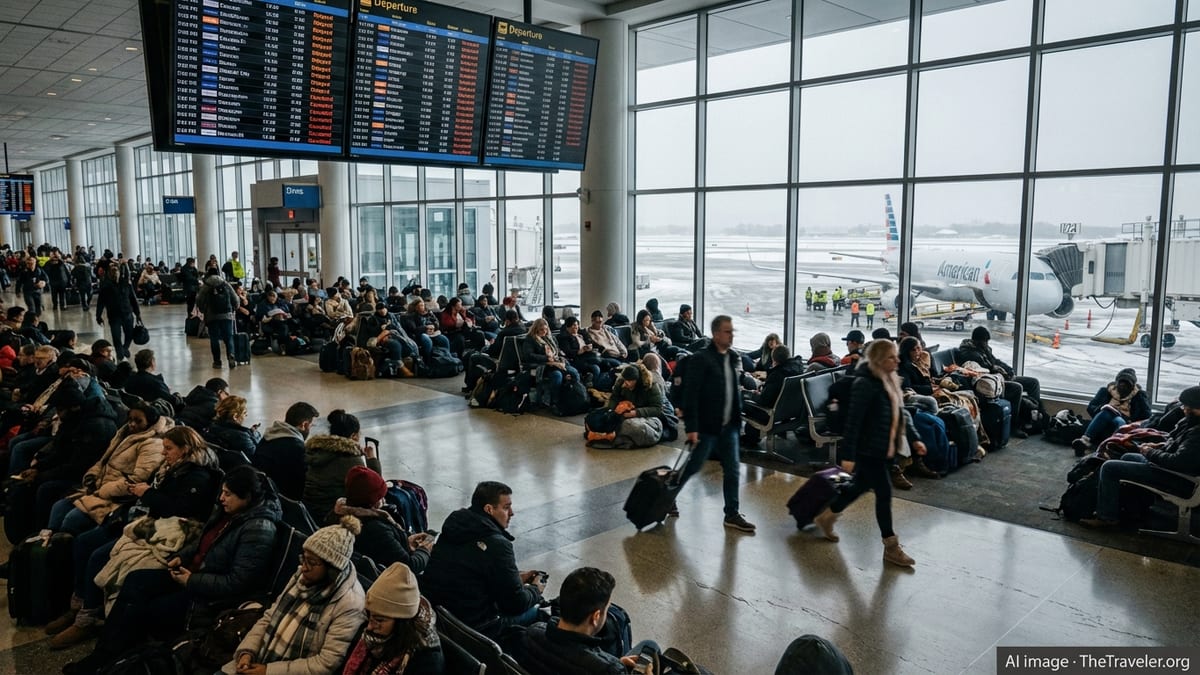
Two jets, one identifier over Phoenix
According to published coverage and widely shared air traffic control audio, the incident unfolded just after midnight near Phoenix Sky Harbor International Airport when two American Airlines flights were operating under the call sign American 2482. One aircraft was flying from Chicago O’Hare to Phoenix, while the other had departed Phoenix for Chicago using the same numeric identifier.
Reports indicate the potential conflict was linked to delays on the inbound leg from Chicago. The original aircraft operating the round trip was late reaching Phoenix, and a different jet was assigned to fly the return leg. Despite the equipment change, both flights ended up with the same call sign in the air at nearly the same time, a combination that can cause serious confusion on a busy radio frequency.
Publicly available information shows that a Phoenix air traffic controller noticed the duplication and quickly intervened, issuing course changes and clarifying instructions to keep the aircraft separated. The onboard collision avoidance systems, designed to warn pilots if another aircraft comes too close, did not have to command last second evasive maneuvers, but analysts say the situation came closer to that threshold than industry practice considers acceptable.
While no collision occurred and both flights continued safely, recordings and radar reconstructions circulating online suggest the jets briefly occupied converging paths, prompting pointed questions about how duplicate call signs were allowed to take to the sky in the same sector.
How duplicate flight numbers slipped through
Airlines routinely reuse flight numbers on out and back routes, with a single number sometimes covering both the outbound and return journeys on the same day. Aviation analysts say that practice is usually safe because the same aircraft and crew operate both legs, so only one plane with that identifier is airborne at a time.
In this case, delays appear to have broken that assumption. Coverage of the Phoenix event indicates that when the inbound flight from Chicago ran behind schedule, American Airlines assigned another aircraft to operate the return Phoenix to Chicago leg but kept the same flight number and radio call sign. As a result, both jets carried the American 2482 identifier while flying near the same airport, on the same frequency, in overlapping time windows.
Industry commentators note that many dispatch systems are designed to flag this scenario, and some carriers use alphanumeric or modified call signs, such as adding a letter suffix, when similar or identical identifiers could be active simultaneously. The Phoenix episode is being viewed by aviation safety specialists as evidence that those safeguards were either missing, overridden, or not robust enough in this instance.
Observers also point out that the Federal Aviation Administration’s flight plan system allows airlines to file simultaneous plans with identical call signs so long as they are technically separate flights. That framework places much of the responsibility for deconfliction on airline dispatchers and internal software, which may now come under renewed pressure to impose stricter rules on duplicates.
Risks of call sign confusion in crowded skies
Unlike the flight number printed on a boarding pass, a call sign is the critical label that pilots and controllers use to exchange instructions. When two aircraft on the same frequency share an identifier, there is a risk that a clearance or heading change meant for one will be read back and executed by the other, potentially setting up a hazardous situation.
Aviation safety studies and past incident reports have long warned about the danger of “similar sounding call signs,” in which even partial overlap in numbers can lead to misheard clearances. In the Phoenix case, analysts say the risk was more acute because the call signs were not just similar but identical, removing one of the normal layers of defense against misunderstanding.
Public commentary from air traffic controllers and pilots reacting to the event stresses that, in complex terminal airspace, seconds matter. A misunderstanding over which aircraft should turn, climb, or descend can quickly erode safe separation when jets are on intersecting tracks. Technology such as the Traffic Collision Avoidance System is built as a last line of defense, but safety specialists emphasize that it is not a substitute for clear, unambiguous radio communication.
In this context, the Phoenix scare is being cited by experts as a textbook example of how human procedures, airline dispatch practices, and regulatory frameworks must work together to prevent call sign overlap from ever developing into a true mid air emergency.
Spotlight on airline and regulator responsibilities
The near miss has intensified discussion over where responsibility lies for preventing duplicate call signs and whether existing rules are adequate as traffic levels grow. Airlines control how they assign flight numbers and internal call signs, while the FAA sets standards for flight plan acceptance and airspace management.
Analysts note that some carriers have already adopted stricter internal policies that block dispatchers from releasing a flight if its call sign could conflict with another aircraft anywhere along its planned route. These systems may automatically require a different identifier or append letters to ensure uniqueness when overlap is detected.
Following the Phoenix episode, industry observers expect closer examination of whether similar constraints should be mandated more broadly, particularly in congested hub airspace where multiple flights on the same city pair operate in tight succession. Safety advocates argue that as schedules tighten and airlines look to optimize aircraft utilization, pressure on dispatch operations increases, raising the odds that conflicting identifiers slip through.
Regulators are also likely to face questions about whether the national airspace system should reject flight plans that create call sign duplication within defined regions or time windows. The incident is being compared in commentary to past runway incursions and near collisions where communication breakdowns played a central role, reinforcing calls for systemic, rather than ad hoc, fixes.
Passengers and industry weigh broader safety lessons
For passengers, the Phoenix scare arrives amid heightened public sensitivity to aviation incidents and staffing pressures in air traffic control facilities. Social media reactions and traveler forums show a mix of alarm at how close the two jets reportedly came, and relief that controllers and crews maintained composure and resolved the conflict without last second evasive action.
Travel industry observers say the event is likely to feature in upcoming safety discussions between airlines, pilot unions, and controllers, particularly as American and other large carriers review their flight numbering strategies. There is growing speculation that the practice of using identical numbers for same day out and back trips may be scaled back or paired with more aggressive safeguards.
Aviation experts emphasize that commercial air travel remains statistically very safe, and that near misses, while unsettling, often drive improvements that further reduce risk. In the Phoenix case, the combination of rapid controller intervention, standard cockpit procedures, and existing separation rules prevented a serious accident, yet the underlying error in call sign management is being held up as a preventable weakness.
As investigators and safety analysts reconstruct the sequence of events, the duplicate American Airlines flight numbers over Phoenix are emerging as a powerful illustration of how even a small data field in a dispatch system can have outsized implications once an aircraft is airborne. For travelers, it is a reminder that behind every routine flight number lies a complex network of safeguards that must operate flawlessly to keep the skies safe.