


More news on this day
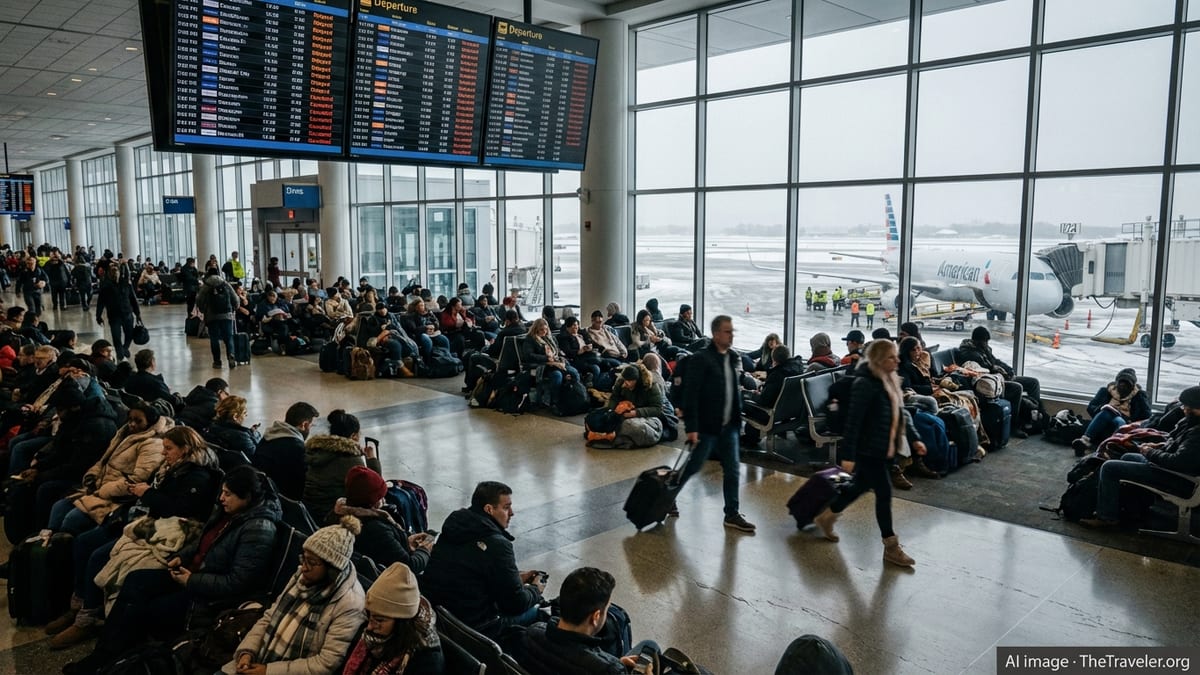
American Airlines customers traveling through the carrier’s two largest hubs, Chicago O’Hare and Dallas Fort Worth, are facing mounting delays and cancellations as a busy summer weekend air show on Lake Michigan coincides with rounds of severe storms sweeping across North Texas and the broader Midwest.
Get the latest news straight to your inbox!
Air Show Activity Tightens Airspace Around Chicago
Chicago’s annual Air and Water Show is drawing large crowds along the lakefront, but it is also tightening already congested skies over the region. Publicly available information on the event indicates that demonstration flights and aerobatic teams are operating in controlled windows over the downtown lakefront, which requires temporary adjustments to surrounding airspace and routing. While the show center is miles from Chicago O’Hare International Airport, air traffic managers typically build in buffers that can slow arrival and departure flows during peak display periods.
Reports from local travelers and aviation watchers over the weekend describe longer-than-usual taxi times and holding patterns as commercial flights queue around the show schedule and intermittent low clouds or showers over the lakefront. Some passengers connecting through O’Hare on American Airlines say they encountered rolling delays attributed to congestion and changing runway configurations once air show activity ramped up.
Data published by aviation tracking services for recent Air and Water Show weekends in prior years also suggest that even modest constraints in Chicago airspace can ripple across the national network. American, which runs one of its most important midcontinent hubs at O’Hare, relies heavily on tight banked schedules. When arrival rates are temporarily reduced to accommodate special events, those banks can quickly slip, pushing delays into the late afternoon and evening.
The timing is particularly challenging because the air show coincides with a mid-August leisure peak, when load factors are already high and spare seats for reaccommodation are limited. Travelers who see their O’Hare departures delayed by weather near the lakefront or minor airspace holds may find that missed connections are harder to resolve than during quieter travel periods.
Severe Weather Compounds Disruption at Dallas Fort Worth
While Chicago manages airspace constraints from the lakefront event, Dallas Fort Worth International Airport, American’s largest hub, is contending with rounds of severe thunderstorms typical of late summer in North Texas. Forecast discussions and radar imagery for the region show slow-moving storm cells producing lightning, heavy rain and gusty winds at various points through the day, conditions that often trigger ground stops and flow-control programs for major hubs like DFW.
Passengers and employees posting on public forums in recent weeks have highlighted how quickly DFW’s operation can unravel when storms park over departure or arrival corridors. Thunderstorms not only halt ramp activity for safety reasons, they also reduce the number of usable runways, forcing air traffic control to cut arrival and departure rates. That creates long lines of aircraft waiting to push back or depart, and inbound flights may be held at origin or diverted while the weather passes.
When a hub as central as DFW slows, the impact extends far beyond North Texas. American uses the airport as its primary connecting point for large portions of its domestic and international network. Flow restrictions there can delay aircraft that are scheduled to operate multiple subsequent legs, leading to a cascade of late departures and missed connections across the country.
Operational alerts shared in recent months for similar weather patterns at DFW show that ground stops can last an hour or more, with recovery often stretching well into the evening as crews and aircraft are repositioned. For travelers starting or ending their journeys in Dallas, that can mean long queues at customer service desks, while connecting passengers may find themselves automatically rebooked onto later flights or alternate routings when possible.
Network Effects for American’s Summer Schedule
The combination of a high-profile air show near one major hub and severe weather near another illustrates how sensitive American’s tightly wound summer schedule is to external disruptions. At both Chicago O’Hare and Dallas Fort Worth, the airline builds banked waves of arrivals and departures designed to maximize connection opportunities. Any constraint on runway or airspace capacity during a bank can create a backlog that is difficult to absorb before the next wave begins.
Industry analysts often note that large hub-and-spoke networks trade efficiency for resilience. When conditions are ideal, carriers can move large numbers of travelers through a small set of key airports. When weather, special events or infrastructure hiccups occur at more than one of those hubs simultaneously, delays and cancellations can quickly multiply. With two of its largest operations under strain at once, American faces limited flexibility to reroute traffic away from the affected airports.
Historical performance data published for prior summers indicate that recovery from multi-hub disruptions typically takes more than a single day. Aircraft and crews end up out of position, and mandatory rest requirements mean some flights remain canceled even after weather improves or airspace restrictions lift. That dynamic can leave travelers facing residual delays and scattered cancellations the following morning, even if skies are clear in both Chicago and Dallas.
Travel demand patterns add a further complication. Mid-August still carries a high share of leisure travelers, many of whom have inflexible schedules around school calendars or vacation rentals. When flights are disrupted at key connection points like O’Hare and DFW, these passengers may have fewer acceptable alternatives than business travelers, increasing pressure on agents to find creative rebookings or alternate routings through smaller hubs.
What Passengers Can Expect in the Coming Days
Publicly available forecasts for the Chicago and Dallas regions indicate that unsettled weather could persist into the early part of the week, with scattered thunderstorms possible across the central United States. Although the Air and Water Show is confined to the weekend, any lingering low clouds or additional showers along the Lake Michigan shoreline may continue to influence arrival and departure rates at O’Hare, particularly during peak periods.
Travelers booked on American through either hub over the next several days may encounter longer security lines, fuller flights and limited same-day rebooking options. Industry practice in similar situations suggests that airlines will prioritize maintaining long-haul and international links while trimming some shorter domestic segments when aircraft and crews are constrained. This can leave small and midsize cities more exposed to delays and cancellations as schedules are adjusted on short notice.
Passengers connecting through DFW should be prepared for potential last-minute gate changes and extended taxi times if storm cells redevelop during afternoon and evening departure banks. Those flying through Chicago may see schedule adjustments if air traffic managers opt to stagger arrivals more widely around any residual constraints linked to the recent air show period or related weather.
Consumer advocates typically recommend that travelers operating through major hubs during volatile periods build in extra connection time, monitor their flight status frequently via airline apps and consider morning departures, which often have more recovery options if conditions deteriorate later in the day. With American’s two principal hubs pressed by different operational challenges at the same time, travelers may benefit from anticipating a slower-than-normal experience even if their specific flights ultimately depart close to schedule.
Operational Scrutiny and Planning for Future Events
The strain on American’s network this weekend is likely to draw renewed attention to how carriers and airports prepare for recurring events and seasonal weather patterns. The Chicago Air and Water Show is a long-standing fixture on the city’s calendar, and severe summer storms are a predictable feature of North Texas climate. Industry observers often argue that better contingency planning, including more flexible staffing models and additional spare aircraft, could soften the blow when such challenges overlap.
Airport planning documents and improvement programs for both O’Hare and Dallas Fort Worth outline ongoing investments in runways, taxiways and terminal facilities that are intended to improve long-term capacity and resilience. However, these infrastructure projects can themselves cause short-term complexity, as construction areas and temporary closures force adjustments in traffic patterns just as airlines are operating at or near record volumes.
Regulatory and political scrutiny of air travel reliability has intensified in recent years, particularly during peak travel seasons when high-profile disruptions attract national attention. While the current mix of air show traffic and severe weather affecting American’s hubs appears to stem from external factors, the way carriers communicate with and re-accommodate passengers during such episodes remains a central focus for consumer groups and policymakers.
For now, travelers routed through Chicago O’Hare and Dallas Fort Worth in the wake of this weekend’s disruption are likely to feel the effects in the form of crowded terminals, longer waits and occasional last-minute schedule changes. How effectively airlines and airports manage the recovery may shape traveler perceptions for the rest of the summer and inform planning for future seasons when special events and storm systems once again converge on the nation’s busiest hubs.