


More news on this day
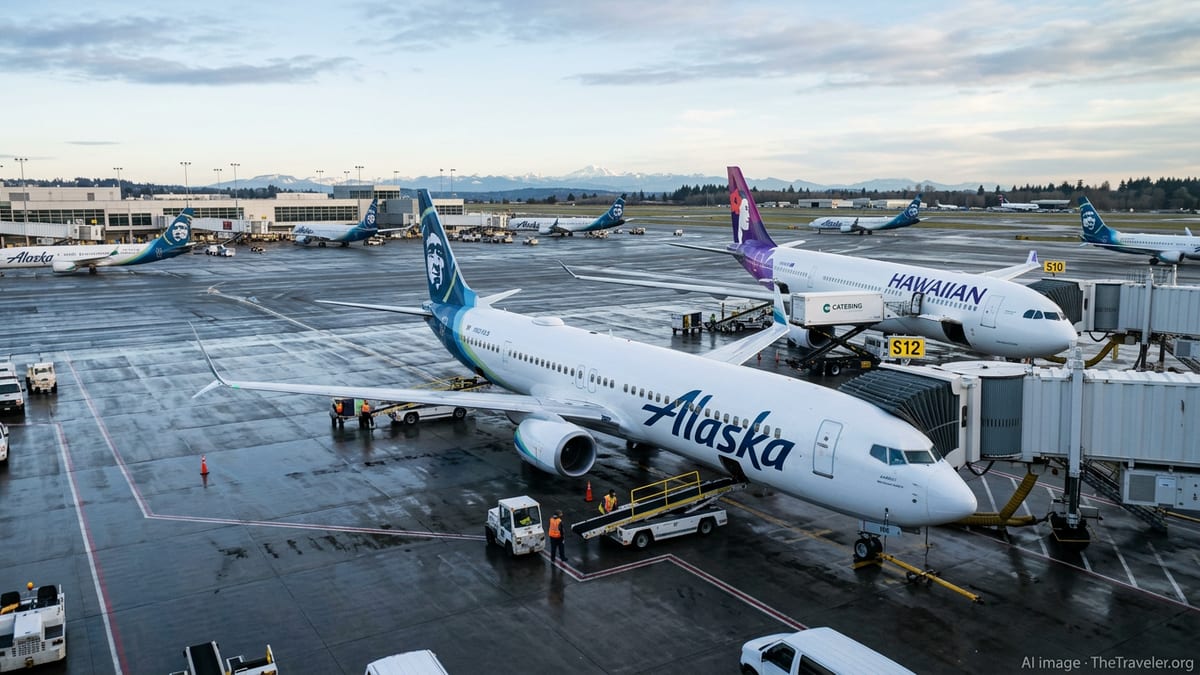
Hurricane Lala’s close pass south of the Hawaiian Islands over the weekend has led to widespread schedule disruptions for Alaska Airlines and Hawaiian Airlines, with dozens of inter-island and transpacific flights canceled or curtailed and thousands of travelers facing delays, diversions, and extended stays on both sides of the Pacific.
Get the latest news straight to your inbox!
Storm Skirts Islands but Slams Flight Schedules
Publicly available advisories from the Central Pacific Hurricane Center indicate that Lala intensified to a Category 1 hurricane on Saturday, August 15, as it moved northwest near the Big Island, bringing strong winds, heavy rain, and localized flooding to parts of Hawaii. Although the storm’s center remained offshore and forecasters suggested it was unlikely to make a direct landfall, the system’s outer bands created hazardous conditions for aviation.
As Lala’s wind field spread across the island chain, Alaska Airlines and Hawaiian Airlines began trimming schedules to keep aircraft out of the worst of the weather. A service update cited in local coverage described a near shutdown of operations at Hilo on the Big Island, with all flights canceled there, and widespread cuts to afternoon and evening departures at Kona. Reduced flight programs were also put in place to Maui’s Kahului Airport and to Lihue on Kauai, while Honolulu on Oahu maintained most of its services but remained under close operational review.
By Saturday, carriers had proactively canceled dozens of flights, both between islands and on long-haul routes connecting Hawaii with the US West Coast. Adjustments continued into Sunday as Lala slowed and interacted with the terrain of Hawaii Island, keeping bands of rain and gusty winds over key air corridors longer than initially projected.
Alaska and Hawaiian Implement Targeted Cancellations
Operational summaries reported in airline communications and local news coverage show that Hawaiian Airlines and Alaska Airlines focused their cancellations on routes most exposed to the storm’s forecast track. Services to and from Hilo were halted for the day, while Kona flights after midafternoon were removed from schedules, reflecting concerns about deteriorating conditions on the leeward side of the Big Island as Lala passed to the south.
On Maui, both airlines shifted to reduced operations at Kahului, where high winds and low visibility can quickly affect takeoffs and landings. Flights were consolidated or retimed to operate within weather windows that forecasters considered more favorable. Neighbor island flights to Lihue also ran on a trimmed schedule to avoid convective cells rotating through the northern end of the archipelago.
For Honolulu, which serves as the primary hub for both carriers, Alaska and Hawaiian attempted to preserve as much of the schedule as possible while keeping options open to delay or reroute aircraft if conditions worsened. Industry observers noted that maintaining core Honolulu services helps airlines reposition planes and crews, which can speed up the recovery of the broader network once the immediate weather threat passes.
Despite these efforts, the volume of cancellations quickly added up. Reports circulating over the weekend referenced more than 50 neighbor island sectors and over a dozen transpacific flights being canceled in a single day, with additional flights scrubbed or retimed in advance for Sunday to limit last-minute disruption.
Travelers Face Long Delays, Scrambled Plans
Accounts shared across travel forums and social platforms illustrated the human impact of the rapidly changing schedules. Visitors already in Hawaii described unexpected extensions to their stays after outbound flights were canceled, while residents returning from the mainland reported diversions, lengthy rebookings, or being stranded in transit hubs as connections fell apart.
Some passengers reported receiving notifications that their flights to Maui or the Big Island had been canceled and automatically rebooked one to two days later, reflecting the limited seat availability once airlines consolidated operations. Others with flights to Honolulu noted that their services were still showing as operating, but expressed concern that further schedule changes might occur as Lala’s rain bands shifted over Oahu.
Travelers preparing to depart for Hawaii from West Coast cities described weighing whether to voluntarily postpone trips, particularly when airlines issued flexible change policies indicating that itineraries could be adjusted without standard fees if travel fell within the storm window. Many reported checking and rechecking departure boards, with some discovering that flights they had planned around were suddenly advanced, delayed, or canceled as carriers attempted to move aircraft before conditions deteriorated at specific airports.
For those in resort areas such as Waikiki and Wailea, local commentary suggested that most hotels and visitor facilities remained open, even as guests were urged to stay indoors during periods of high winds or heavy rain. However, uncertainty around outbound flights kept many travelers glued to airline apps and airport alerts, trying to anticipate whether they would be able to depart as scheduled once the immediate effects of Lala eased.
Operational Recovery Hinges on Weather and Aircraft Positioning
Aviation analysts following the storm noted that the pace of recovery for Alaska and Hawaiian will depend on both the speed at which Lala weakens and the position of aircraft and crews once the system moves away from the islands. Because many Hawaii flights operate as part of complex rotations linking multiple mainland and neighbor island destinations, a cancellation in Hilo or Kona can ripple into schedule gaps in places like Seattle, Portland, Los Angeles, and San Diego.
Publicly available airline operations updates indicate that both carriers have been proactively canceling select flights on the day after the height of the storm, suggesting an attempt to create a more predictable, stabilized schedule rather than reinstating services only to scrub them again. This approach can offer travelers slightly more certainty, even if it means longer delays in some cases.
Once conditions improve and airfields are inspected for any damage or debris, Alaska and Hawaiian are expected to gradually ramp up service, prioritizing routes with the highest concentrations of displaced passengers. Industry practice suggests that hubs such as Honolulu and key mainland gateways will see additional capacity first, followed by restoration of thinner routes and late-night services.
Observers also point out that aircraft and crews caught on the wrong side of the storm can take several days to work back into normal positions. With Lala arriving during a busy late-summer travel period, that process may be complicated by fuller-than-usual flights, limiting the number of open seats available to rebook stranded travelers quickly.
Guidance for Current and Upcoming Passengers
Consumer advocates and travel commentators monitoring the situation stress the importance of staying informed through official airline communication channels as Lala’s remnants continue to influence weather over parts of Hawaii. Because conditions and schedules can change rapidly with tropical systems, travelers are being urged to rely on real-time flight status tools and not assume that previously published timetables remain accurate.
Passengers with trips scheduled over the next few days are being encouraged to check for any travel waivers or flexible change policies posted by Alaska Airlines and Hawaiian Airlines. Such policies, when issued for storm-related disruptions, can allow customers to shift itineraries to later dates or different airports without incurring standard change penalties, although any fare differences may still apply.
Travel specialists also advise building extra time into connections involving Hawaii during the recovery period, especially when transferring between airlines or airports. Even once Lala has fully moved away and the weather clears, residual delays from repositioning aircraft and crews can lead to knock-on disruptions across the network.
For those already in the islands, local travel advisories emphasize caution on the roads, particularly on routes prone to flooding or landslides, as they make their way to or from airports. With Hurricane Lala now weakening but still influencing conditions, the coming days will likely determine how quickly Alaska and Hawaiian can restore their full schedules and clear the backlog of travelers left waiting on both sides of the Pacific.