


Backroads has become almost shorthand for high-end cycling and hiking trips, the kind of small-group adventures where you ride a titanium bike through wine country by day and sit down to a chef-driven tasting menu at night. But with so many premium tour operators now offering similar experiences, many travelers are asking a practical question before they put down a deposit: how expensive is Backroads compared with other premium tour companies, and is the difference worth it?
Get the latest updates straight to your inbox!
Where Backroads Sits in the Premium Price Spectrum
Among upscale active travel companies, Backroads operates squarely in the premium tier. Look at a sampling of its United States bike tours and you see starting prices that typically range from roughly 3,600 to more than 6,500 dollars per person for four to six days, excluding flights. For example, recent listings show a five day Kentucky Bourbon Country bike tour from about 3,799 dollars per person, a six day Vermont to Quebec bike trip from about 5,299 dollars, and a six day Yellowstone, Tetons and Paradise Valley itinerary starting around 6,599 dollars per person. Those are representative of what you will see across its catalog of North American trips.
That price band immediately places Backroads above mid-market bike tour brands and many large coach-tour operators, but not necessarily at the very top of the luxury pile. Companies such as DuVine and Butterfield & Robinson, which cater to a similar audience of fit, affluent travelers, often advertise published rates for comparable destinations that are equal to or higher than Backroads. At the same time, cultural walking specialists like Classic Journeys and educational brands like Smithsonian Journeys may charge per-day rates that overlap with Backroads, even when the focus is less on cycling or hiking and more on immersive touring.
This means that if you are looking at Backroads for the first time, sticker shock is normal, but the important comparison is not against a self-planned vacation. It is against other fully guided, small-group, high-service tours that include most on-the-ground costs. In that context, Backroads is expensive, but it is usually competitive rather than anomalously high.
Where Backroads becomes notably pricey is on certain international trips or peak-season departures. For instance, some European biking itineraries now push close to or above 1,000 dollars per person per day once you factor in single supplements and pre- or post-tour nights. Yet if you look at similar length and style itineraries in Italy or France from DuVine or Butterfield & Robinson, you will often find those companies charging equal or higher per-day rates, especially for their most luxurious hotel collections.
Comparing Backroads With DuVine and Butterfield & Robinson
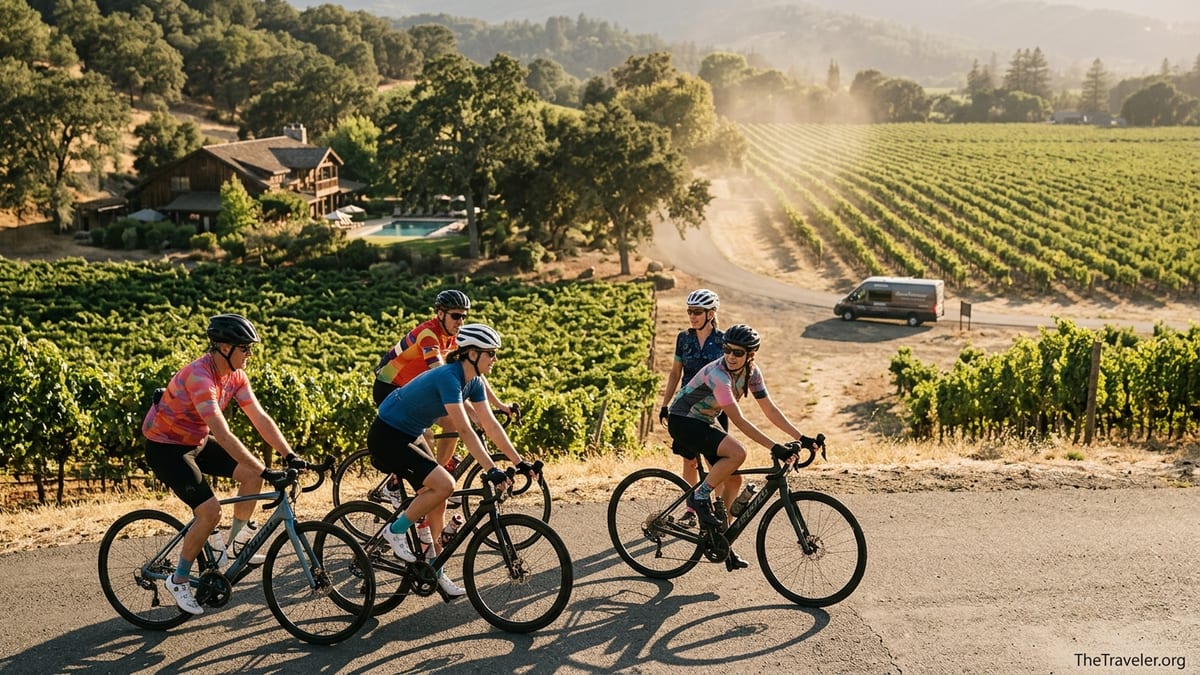
To understand how Backroads compares on concrete numbers, it helps to set similar trips side by side. Take wine-country cycling in California as one example. Backroads lists a six day California Wine Country bike tour through Napa and Sonoma with premiere hotels from about 5,099 dollars per person. DuVine, another specialist in high-end bike vacations, currently advertises a Napa and Sonoma bike tour priced from about 6,695 dollars for a comparable six day format, also including boutique hotels, most meals, support van, and high-quality bikes. On a simple price-per-trip basis, DuVine comes in higher, often by more than 1,000 dollars for roughly the same duration in the same region.
In the United States desert southwest, the comparison can tilt the same way. Backroads offers a four day Death Valley bike tour getaway from around 3,799 dollars per person, including use of its titanium bikes, guides, support van, and lodging. DuVine’s classic four day United States itineraries, whether in Utah’s canyon country or other national park regions, frequently start around 4,895 dollars or more per person. While the exact inclusions and hotel categories differ, travelers scanning prices quickly notice that DuVine’s trips generally cost more per day than Backroads, especially on marquee routes.
Butterfield & Robinson sits alongside or even above DuVine in perceived luxury and pricing. The company is known for very high-touch service, intimate group sizes, and an emphasis on top-tier properties. While published prices vary by destination and year, many of its classic European cycling journeys trend into the high hundreds or low thousands of dollars per day range. For travelers who have compared bids for bespoke or small-group trips in places like the Dolomites or Burgundy, it is common to find Butterfield & Robinson costing more than Backroads for a similar sample itinerary, particularly when five-star heritage hotels and elaborate food and wine experiences are included.
The implication is that while Backroads is not a budget choice by any measure, it often undercuts some of its most obvious competitors when you hold truly like-for-like trips side by side. Travelers who want the boutique bike-tour experience but are weighing value often conclude that Backroads sits in the middle of the top tier: more expensive than mass-market options, slightly less expensive than the most rarified cycling brands.
How Backroads Compares With Other Premium Cultural and Walking Tours
Not every traveler is interested in long cycling days. When you compare Backroads with premium walking and cultural operators, the pricing picture looks a little different but still broadly similar. Classic Journeys, for instance, is a long-running company focused on small-group walking tours with strong cultural content. Aggregated data from tour comparison platforms in 2026 shows its trips generally priced between about 3,700 and 5,300 dollars per person, often for six to eight day itineraries featuring boutique hotels, daily walks, and guided visits. On a per-day basis, that places Classic Journeys in the same broad band as many Backroads hiking departures.
At the more educational end of the spectrum, Smithsonian Journeys offers land itineraries with expert lecturers and local guides. A recent example is a Classical Greece tour with published pricing in the high 9,000 to low 11,000 dollar range per person, depending on cabin or room category. That trip runs about ten to eleven days, includes many meals, internal transport, and in-depth touring. When you break that down, the per-day cost overlaps with what Backroads charges for several of its marquee European or multi-country active tours.
The key difference is where the money goes. On a Smithsonian or similar cultural tour, a significant portion of the budget is allocated to expert lectures, private museum access, or special events. On a Backroads trip, a large share of the cost is directed toward athletic logistics: high-end bikes or e-bikes, extra support vehicles, bike mechanics, and multiple guides positioned both on the road and in the van. Travelers who do not particularly value the active component may feel Backroads is expensive for what they personally use, while those who relish long rides or full-day hikes often view that support as essential and worth the price.
If your primary goal is to explore cities and historic sites at a leisurely pace, you may find better value with an operator that specializes in cultural journeys rather than athletic ones. If you want an intense week of cycling in Tuscany capped with luxury lodging and serious wine lists, the cost comparison tends to favor Backroads and its direct biking competitors over more generalist premium tour brands.
Breaking Down What Drives Backroads Pricing
Looking at a Backroads line item in isolation, it can feel like a blunt number. To evaluate whether it is expensive relative to peers, you need to see what is built into that figure. First is accommodation. Backroads categorizes hotels as casual, deluxe, or premiere. A four day Death Valley trip that uses casual or deluxe hotels will be priced lower than a six day itinerary in Napa that strings together top-rated wine country resorts. When you see a Backroads trip climbing above 1,000 dollars per day, it almost always reflects a combination of premiere hotels, peak dates, and high local operating costs.
Second is equipment and on-the-ground support. Backroads remains unusual in providing high-quality titanium bikes, e-bikes, or performance road bikes as part of the base price on its cycling and multi-adventure tours, along with helmets and accessories. It also sends multiple guides and at least one support van on virtually every departure. That is logistically expensive, but it places the brand on a similar operational footing to DuVine and Butterfield & Robinson, both of which also emphasize top-tier bikes, small groups, and strong guide ratios.
Third is what is included in meals and activities. Backroads generally includes most breakfasts and many dinners, often in well-regarded restaurants, and it builds in tastings, museum visits, or local experiences depending on the route. Alcoholic beverages are partly included on some trips but not all, and lunches may be a mix of included picnics and on-your-own time in towns. DuVine often leans even further into culinary inclusions, with multi-course wine-paired dinners front and center, which partly explains its higher prices on some routes. Meanwhile, more educational outfits like Smithsonian Journeys may bundle in high entrance fees, special events, and expert talks that justify their own premium.
Once you map these components across companies, Backroads looks expensive but not out of step for what is included. The distortion often comes when travelers compare those bundled prices with a self-organized trip where they might choose simpler hotels or fewer organized activities. In that comparison, virtually all of these premium operators will appear steep, and Backroads is no exception.
Real-World Itinerary Comparisons and Per-Day Costs
To get a clearer sense of relative expense, it helps to think in per-day terms with specific itineraries rather than headline trip totals. Consider a six day Backroads bike tour in Vermont priced at about 5,249 dollars. That works out to roughly 875 dollars per day before tips and flights. A similar-length Classic Journeys walking itinerary in Europe priced at around 5,295 dollars would equate to a bit under 900 dollars per day, while the Classical Greece example from an educational brand comes in somewhere around the high 800s to low 1,000s per day depending on the exact length and cabin choice.
Now look again at California wine country. Backroads’ six day Napa and Sonoma itinerary at about 5,099 dollars translates to roughly 850 dollars per day. DuVine’s comparable Napa and Sonoma bike tour starting around 6,695 dollars for six days equates to about 1,115 dollars per day. Here Backroads is, quite literally, hundreds of dollars less per day than a key competitor on a similar route, though factors like hotel selection and group size will still matter.
On the shorter end, Backroads’ three day Sonoma weekend bike getaway at about 2,999 dollars runs near 1,000 dollars per day, a level that tends to surprise travelers because fixed costs are squeezed into a brief window. DuVine’s four day trips in the United States that start at about 4,895 dollars are in the same ballpark on a per-day basis. If you are primarily motivated by value, these short, concentrated itineraries may feel disproportionately costly compared with longer six or seven day versions where overhead is spread out.
Across multiple examples, Backroads frequently lands in the 700 to 1,000 dollar per-day band, depending on length, destination, and hotel class. DuVine and Butterfield & Robinson often slide higher, while cultural walking companies and educational brands overlap toward the lower and middle end of that range. At almost every point, though, you are operating in a premium environment relative to mainstream group tours or independent travel.
Hidden Costs and Savings: What You Really Pay Out of Pocket
When travelers ask whether Backroads is more expensive than its peers, they are often reacting not only to the sticker price but also to the question of what is and is not included. On most Backroads trips, you will be responsible for flights, some lunches and dinners, bar drinks beyond what may be poured at hosted events, and optional spa treatments or independent activities. You will also need to budget for guides’ gratuities, which many guests treat as a quasi-mandatory part of the experience.
Guided active-tour companies generally suggest tipping within a certain percentage of the trip price. While precise guidelines vary and can change, it is not unusual to see recommendations that total between about 7 and 10 percent of the trip cost, shared across the guide team. That means on a 6,000 dollar Backroads or DuVine itinerary, you might set aside 400 to 600 dollars for gratuities. Some travelers tip more, others less, but it is a real addition to your effective price per day, whichever brand you choose.
On the savings side, there are also quiet cost offsets that make Backroads look more competitive. High-end bike rental at home for a week can easily run several hundred dollars, and performance e-bike rentals can cost more. Because Backroads bundles use of its bikes into the trip price, you avoid that separate line item. Similarly, the company absorbs the cost of route planning, vehicle support, mechanical assistance, luggage transfers, and many entrance fees that independent travelers would pay a la carte.
Compared with other premium operators, Backroads is relatively mainstream in its approach to discounts. You may see modest savings for early bookings, shoulder-season departures, or filling last spaces, but you are unlikely to find deep, last-minute cuts. DuVine and Butterfield & Robinson follow similar patterns. Educational or cultural outfits occasionally bundle in airfare or offer more aggressive seasonal promotions, which can tilt the value calculation if you are flexible about dates and destinations.
When Backroads Represents Good Value, and When It Does Not
Whether Backroads feels expensive or reasonably priced compared with other premium tour companies depends heavily on what you value in a vacation. If you care about high-mileage cycling days, support vans on call, carefully scouted routes, and the option to push your physical limits while returning each night to well-chosen hotels, then Backroads is usually competitive within its tier. In head to head comparisons of wine country, national park, or alpine itineraries, Backroads often costs slightly less per day than DuVine or Butterfield & Robinson while delivering a similar level of support and comfort.
Backroads also represents solid value if you are a multi-generational group or couple with very different fitness levels. Many itineraries are designed to accommodate e-bikes, shorter routes, and wellness-focused days alongside challenging rides. Paying a premium for that level of flexibility makes more sense if you would struggle to design a trip that satisfies everyone on your own, or if you simply do not want the burden of logistics during valuable vacation time.
On the other hand, Backroads is unlikely to feel like good value if your primary goal is cultural touring rather than active days. A traveler who would be just as happy with shorter walks, museum visits, and a focus on food and history may find that a company like Classic Journeys or an educational operator delivers more of what they enjoy for a similar or slightly lower per-day rate. Likewise, if you are comfortable renting a car, choosing your own hotels, and downloading route maps to your phone, you can often replicate much of the Backroads experience for significantly less money, especially in destinations with abundant lodging and restaurant options.
Backroads also tends to feel most expensive on very short trips that pack in only three or four nights, on peak holiday weeks, and on itineraries that rely almost exclusively on top-tier boutique hotels. If your dates are flexible, you can usually find similar experiences at gentler price points in the shoulder seasons, or by choosing itineraries that combine a mix of casual, deluxe, and premiere properties rather than all-out luxury every night.
The Takeaway
Backroads is undeniably expensive in absolute terms, but when you compare it with other premium tour companies operating in the same space, its pricing looks more measured. On many routes, particularly in North American wine regions and national parks, Backroads undercuts DuVine and often finishes below or in line with Butterfield & Robinson on a per-day basis, while still including high-quality bikes, strong guide support, and well-located hotels. Against cultural walking brands like Classic Journeys and educational operators, Backroads generally lands in a similar per-day range, with differences driven more by inclusions and activity focus than by pure cost.
For active travelers who prize long days of riding or hiking supported by attentive guides and comfortable lodging, Backroads can represent good value within the luxury-adventure category, especially when compared with other boutique bike-tour brands. For travelers who are more focused on culture than on athletics, or who feel comfortable designing their own itineraries, Backroads will often feel expensive for what they personally use, and a different style of operator or a do-it-yourself trip may stretch their budget further.
The most practical approach is to start with one or two specific destinations, line up itineraries from Backroads and at least one competitor, and calculate per-day costs including probable gratuities and incidentals. When you view real-world numbers side by side rather than reacting to a single price tag in isolation, it becomes clear that Backroads usually sits in the middle of the premium pack: not cheap, but not uniquely costly either, and often a fair trade for travelers who value the convenience and confidence of a tightly run, high-service active vacation.
FAQ
Q1. Is Backroads generally more expensive than other premium bike tour companies?
In many comparable destinations, Backroads is in the same price range as other premium operators and is often slightly less expensive per day than brands like DuVine or Butterfield & Robinson, though all of them sit firmly in the luxury tier.
Q2. How do Backroads prices compare with cultural walking tour companies?
Per-day rates for Backroads hiking or multi-adventure trips often overlap with those at cultural walking specialists such as Classic Journeys, with differences driven largely by hotel level, inclusions, and the cost of operating active itineraries.
Q3. What is a typical per-day cost for a Backroads trip?
Most Backroads itineraries fall roughly in the 700 to 1,000 dollar per-day range before tips and flights, depending on trip length, region, and hotel category.
Q4. Are DuVine and Butterfield & Robinson more expensive than Backroads?
On many marquee cycling routes, especially in wine regions and Europe, DuVine and Butterfield & Robinson often price higher per day than Backroads, reflecting their emphasis on very high-end hotels and elaborate culinary experiences.
Q5. What extra costs should I budget for on a Backroads trip?
You should plan for flights, some meals, bar drinks, personal expenses, and guide gratuities, which can add several hundred dollars to the total cost on a week-long premium tour.
Q6. Does Backroads include bike rental in the trip price?
Yes, the use of high-quality bikes or e-bikes, along with helmets and accessories, is typically included in the published Backroads price on cycling and multi-adventure trips, which helps offset what would otherwise be a separate rental cost.
Q7. Can I find discounts on Backroads trips?
Significant discounts are rare, but you may see modest savings for early bookings, shoulder-season departures, or filling remaining spaces; last-minute deep cuts are uncommon in this premium segment.
Q8. Why do shorter Backroads trips sometimes look more expensive per day?
Three or four day getaways pack the same fixed costs for guides, vehicles, and logistics into fewer days, which drives the per-day figure higher even if the total trip price is lower than a week-long itinerary.
Q9. Is Backroads good value for travelers who are not serious cyclists or hikers?
If you are mainly interested in light activity and cultural sightseeing, you may find better value with a cultural or educational tour company, since much of Backroads’ cost goes into athletic support that you might not fully use.
Q10. How should I compare Backroads with other tour companies before booking?
Select one or two specific itineraries from each company, calculate the per-day cost including expected tips and extras, and then weigh what is included in terms of hotels, activities, equipment, and guide support rather than looking only at the headline price.