


More news on this day
Passengers traveling through Paris faced mounting disruption today as regional carrier HOP!, alongside Air France and several North American airlines including United, JetBlue, and Air Canada, suspended at least 15 flights and logged well over 100 delays across the French capital’s main airports.
Get the latest news straight to your inbox!
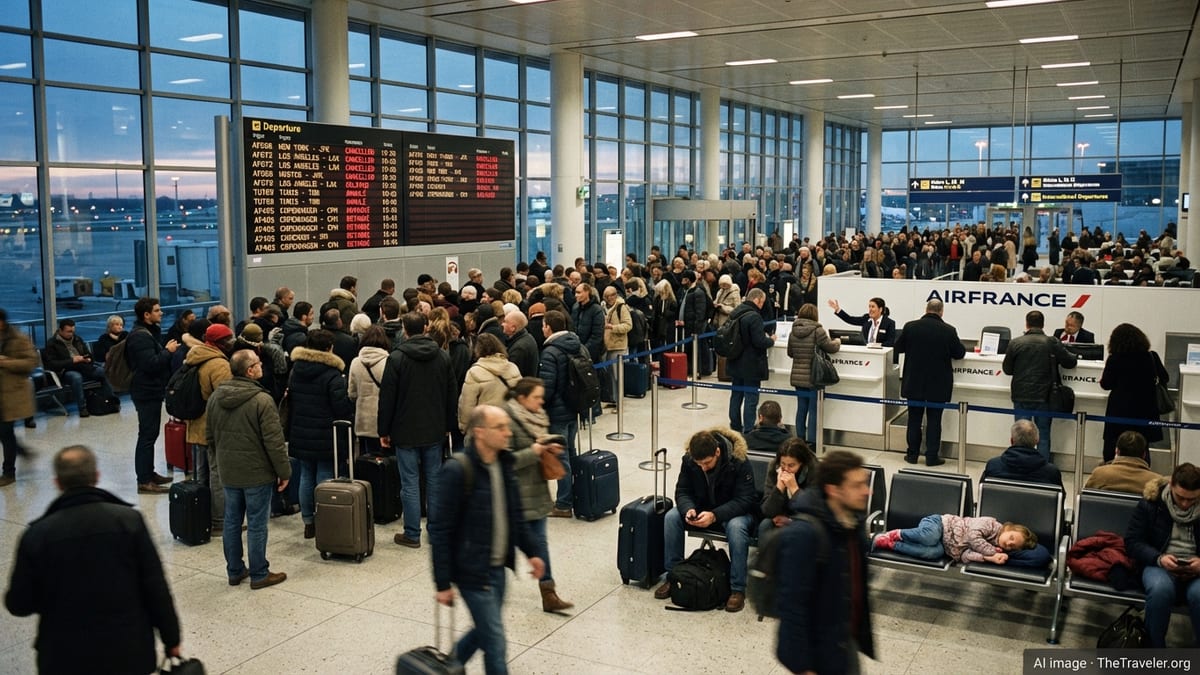
Major Hubs in Paris Struggle With Cancellations and Delays
The latest operational data from airline trackers and airport schedules indicate a sharp spike in same-day disruptions at Paris Charles de Gaulle and Paris Orly, with regional and long haul services affected in parallel. Short haul HOP! and Air France flights connecting French regional cities and nearby European destinations have been among the first to be trimmed, while transatlantic services operated by partners such as United, JetBlue, and Air Canada have seen growing departure and arrival delays.
While the overall European air network has been experiencing a busy early summer period, today’s pattern in Paris stands out for the breadth of carriers involved. Flight-monitoring boards show multiple services marked as cancelled or delayed across alliances, affecting both morning and afternoon peaks. Travelers face late departures on key North American routes to and from hubs such as New York, Atlanta, San Francisco, and Vancouver, compounding congestion in already crowded terminals.
Operational snapshots for individual services show delays ranging from modest schedule slippages of 20 to 30 minutes on European routes to longer hold ups on long haul sectors. Several Paris departures to North America and Asia have recorded revised departure times significantly later than originally planned, feeding into a rolling wave of missed connections for onward flights and tight layovers at Charles de Gaulle in particular.
Knock on Effects for Regional and Transatlantic Passengers
The impact is being keenly felt by passengers relying on HOP! and Air France feeders to connect from regional French airports into long haul flights departing Paris. Publicly available schedule information shows that cancellations and delays on these shorter sectors are cutting into connection windows at Charles de Gaulle and Orly, forcing many travelers to be rebooked onto later services or routed through alternative hubs.
For transatlantic travelers, the pattern is similarly disruptive. Flight status pages for Air France and its North American partners indicate that several Paris departures to major cities in the United States and Canada are operating behind schedule, with some long haul services pushed back well beyond their original departure slots. Even when flights remain in the air, arrival times into Paris and onward destinations are frequently updated, throwing pre planned train connections and regional flights into doubt.
Disruption is also stretching into the evening bank of services. With aircraft and crews arriving late into Paris, subsequent rotations are departing behind schedule, adding secondary delays to routes that were initially unaffected. Travelers booked on late evening departures from Paris to North America and key European capitals are therefore being advised, via airline apps and online status boards, to monitor schedules closely for last minute changes.
What Is Behind the Latest Wave of Disruption
At the time of publication, there is no single publicly identified cause that fully explains the cross carrier disruption, and available information instead points to a combination of operational constraints. Recent weeks in Europe have seen a mix of air traffic control restrictions, weather related congestion, and tight capacity in both aircraft and crews, all of which can translate into rolling delays once the network comes under pressure.
Industry observers note that early summer is already one of the busiest periods of the year for French and transatlantic travel, with demand for both leisure and business trips surging ahead of the main holiday peak in July and August. Under such conditions, even localized issues can ripple quickly through the system, especially at hubs such as Charles de Gaulle that rely heavily on carefully timed banks of connecting flights.
Data from recent travel advisories and schedule analyses also highlight lingering knock on effects from earlier episodes of disruption in Europe this season, including storms and infrastructure issues that left airlines with tight aircraft availability. When combined with strong passenger loads, this can limit the flexibility carriers have to swap equipment or crews at short notice when new operational issues emerge.
Advice for Affected Travelers in France
For travelers currently in France or due to transit through Paris today, publicly available guidance from airlines and consumer groups converges on a few practical steps. Passengers are urged to check their flight status repeatedly on the day of travel using airline apps or departure boards, as schedules can change multiple times before departure. Where possible, travelers with tight connections at Charles de Gaulle or Orly are encouraged to allow extra time between flights or consider rebooking onto itineraries with longer layovers.
Those already at the airport and facing a cancelled or heavily delayed flight are being directed to use official airline channels, including self service rebooking tools, rather than relying solely on airport counters that quickly become congested during major disruption. In many cases, carriers are offering re routing via alternative hubs or placing passengers on later flights once capacity becomes available.
Travelers are also reminded to keep receipts for meals, local transport, and any unexpected overnight stays that arise from significant delays or cancellations. Under European air passenger rules, certain disruptions that are within an airline’s control may give rise to reimbursement or compensation, although eligibility depends on the specific circumstances of each flight and the length of the delay.
Ongoing Monitoring as Summer Peak Approaches
With the summer travel season building, analysts expect operational resilience at major European hubs to remain under close scrutiny. The situation in Paris today offers an early stress test of how airlines and airports will cope with elevated demand, especially when multiple carriers are affected simultaneously by delays and schedule adjustments.
Travel data providers and aviation analysts will be tracking on time performance at Charles de Gaulle and Orly over the coming days to assess whether today’s disruption represents a short lived spike or the start of a more sustained period of strain on the network. Any further clusters of cancellations or rolling delays involving HOP!, Air France, United, JetBlue, Air Canada, and other partners would quickly renew concerns among travelers planning peak season trips through Paris.
For now, the advice for passengers remains focused on vigilance and flexibility. Those with imminent travel are encouraged to remain prepared for potential changes, build in contingency time where possible, and stay closely informed through official airline communications as operators work to stabilize schedules at France’s busiest airports.